
Surf Nite
Audio story by Aneka Edwards
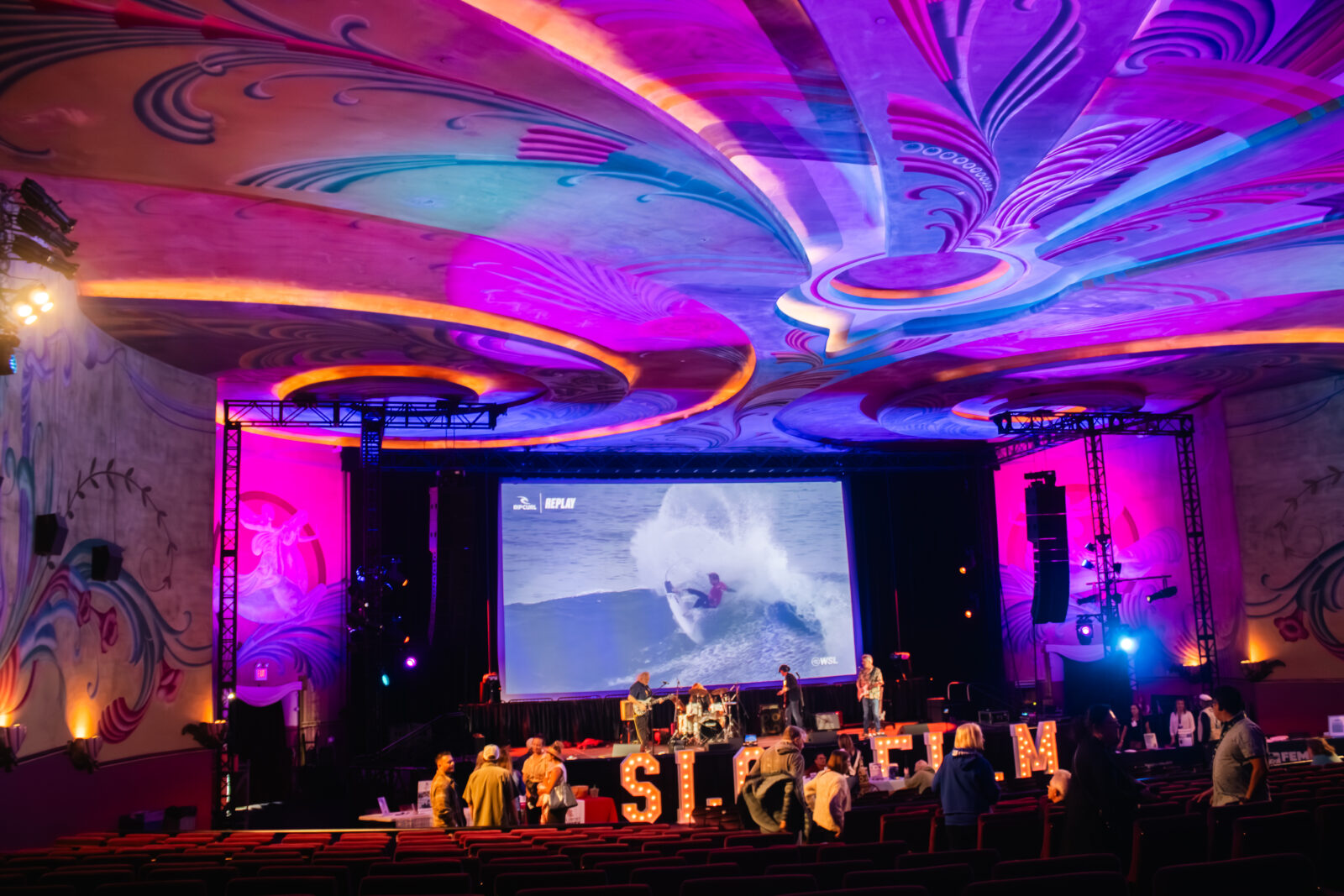
The tide washed in yet another gem for this year’s Surf Nite at the San Luis Obispo International Film Festival on April 24.
The night started off with energetic conversation amongst audience members as people mingled, drank and snacked on popcorn.
After a performance by surf rock band Riff Tide, people leisurely settled into their seats as Tom Spillane and Bob Voglin of Surfing for Hope came onto stage.
The two co-founded a cancer patient recovery group in Pismo Beach in 2011, focusing on getting recovered patients and their families out into the water to foster a place of community, confidence and challenge.
Spillane and Voglin talked about how surfing is a lifestyle, combining mindfulness with a connection to something greater than yourself. The same goes for the San Luis Obispo International Film Festival, and specifically Surf Nite, nicknamed the “Rocky Horror Picture Show” of surf film.

“The Blind Sea,” directed by Daniel Fenech follows Australian Paralympic surfer Matt Formston, who is legally blind as he takes on the storming waves of Nazaré Portugal.
Formston was used to being told no, or that he couldn’t do things. He was told he wasn’t “disabled enough,” or that he should feel like he can’t do things because of his disability. We see in the film how he puts all those ridicules to shame.
“Every time someone said to me, ‘You can’t do it,’ I’d do it,” said Fromston within the film. Driven by the goal of pushing his personal boundaries in the pursuit of what could be possible.
The film shows audiences that so much of life truly is mind over matter. If you want to do something and you think you can, you will. Matt Formston embodies that in “The Blind Sea,” as we watch him train to conquer big wave surfing.
The underlying message of the film shone slightly brighter. Conveying that big dreams are never achieved alone. We always need our people, our team to be there to support us. The film shows this with the immense support system behind Formston, including his wife and kids and his close friends within the surfing community.
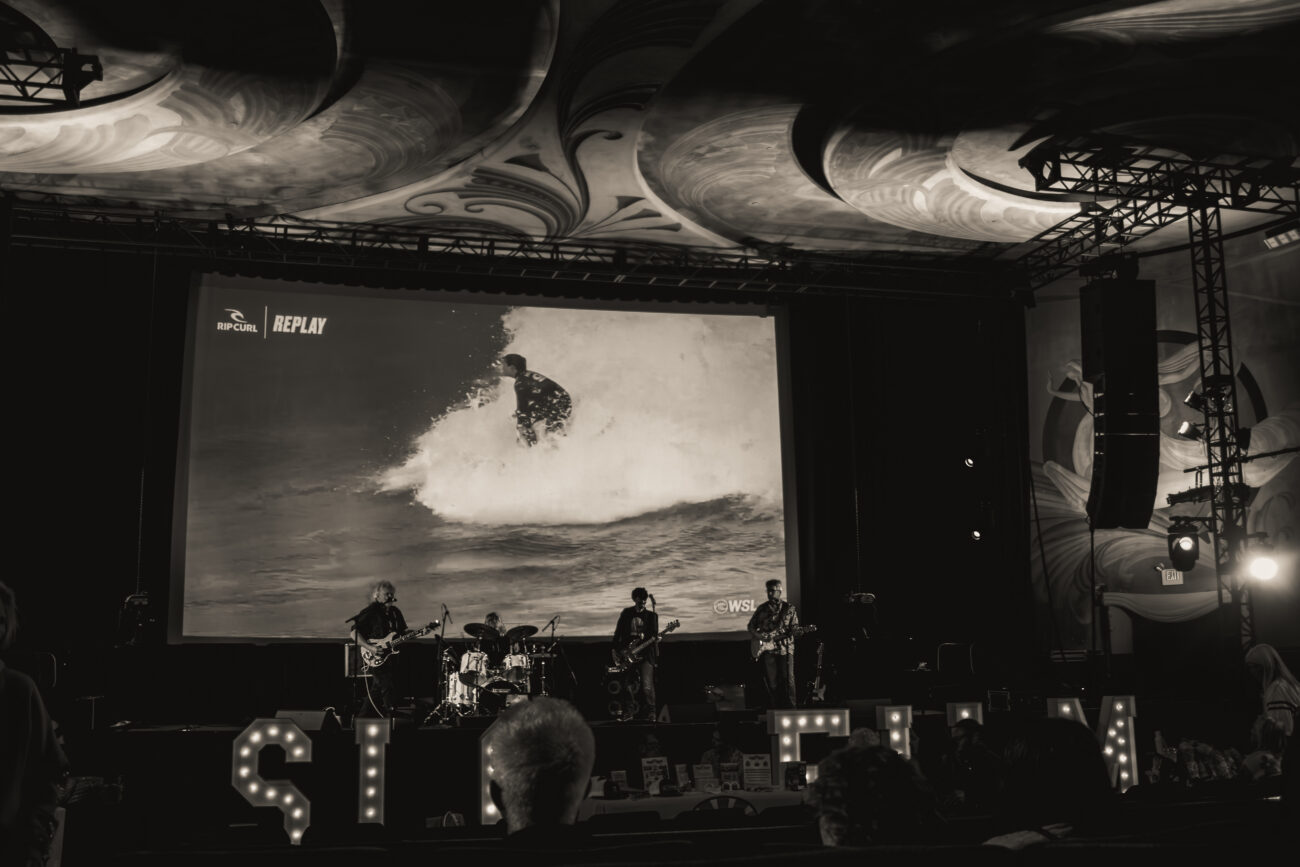
That’s what the night was all about – community. For some people it was their first time attending, for others it was something they showed up for every year. Showing the deep rooted connection that San Luis Obispo, surf and film come together to create every year at the SLO Film Festival.
Community of Skate
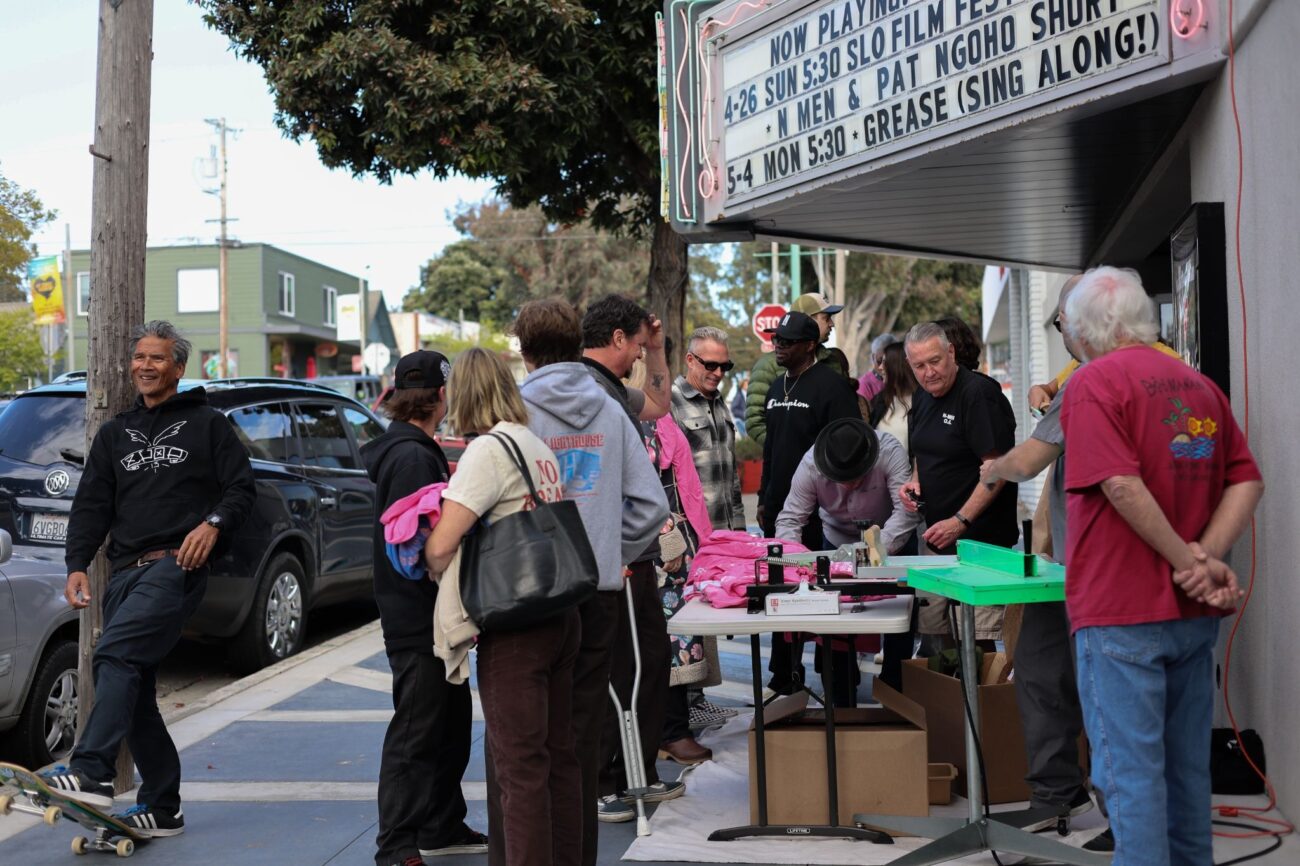
San Luis Obispo International Film Festival’s Community of Skate night returned for the third year at the Bay Theatre on April 26. Outside of the venue, lines of screeching wheels gliding down the sidewalk and invited the lively skate community of all ages inside. Classic rolled beanies, skateboards in hand and skate-branded hoodies overtook the sea of people.
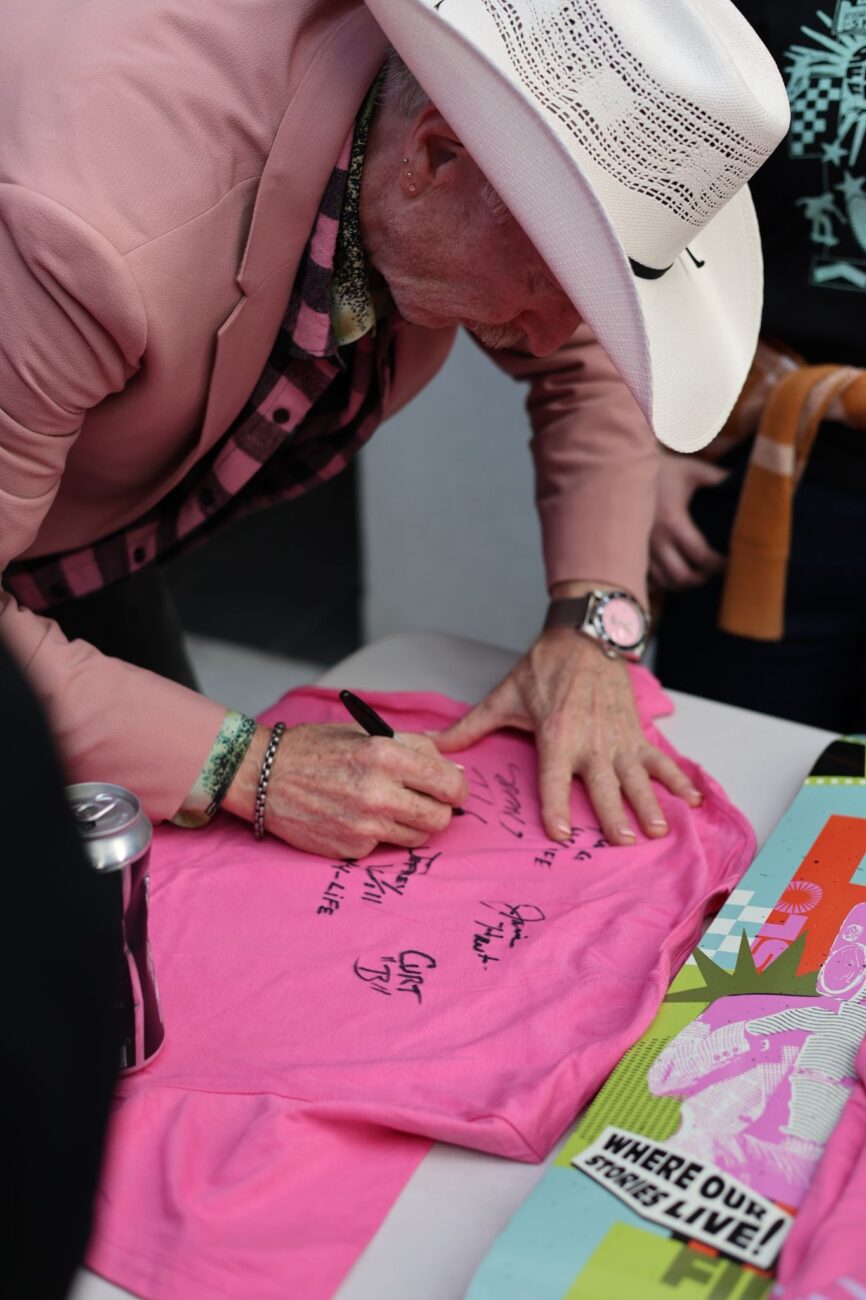
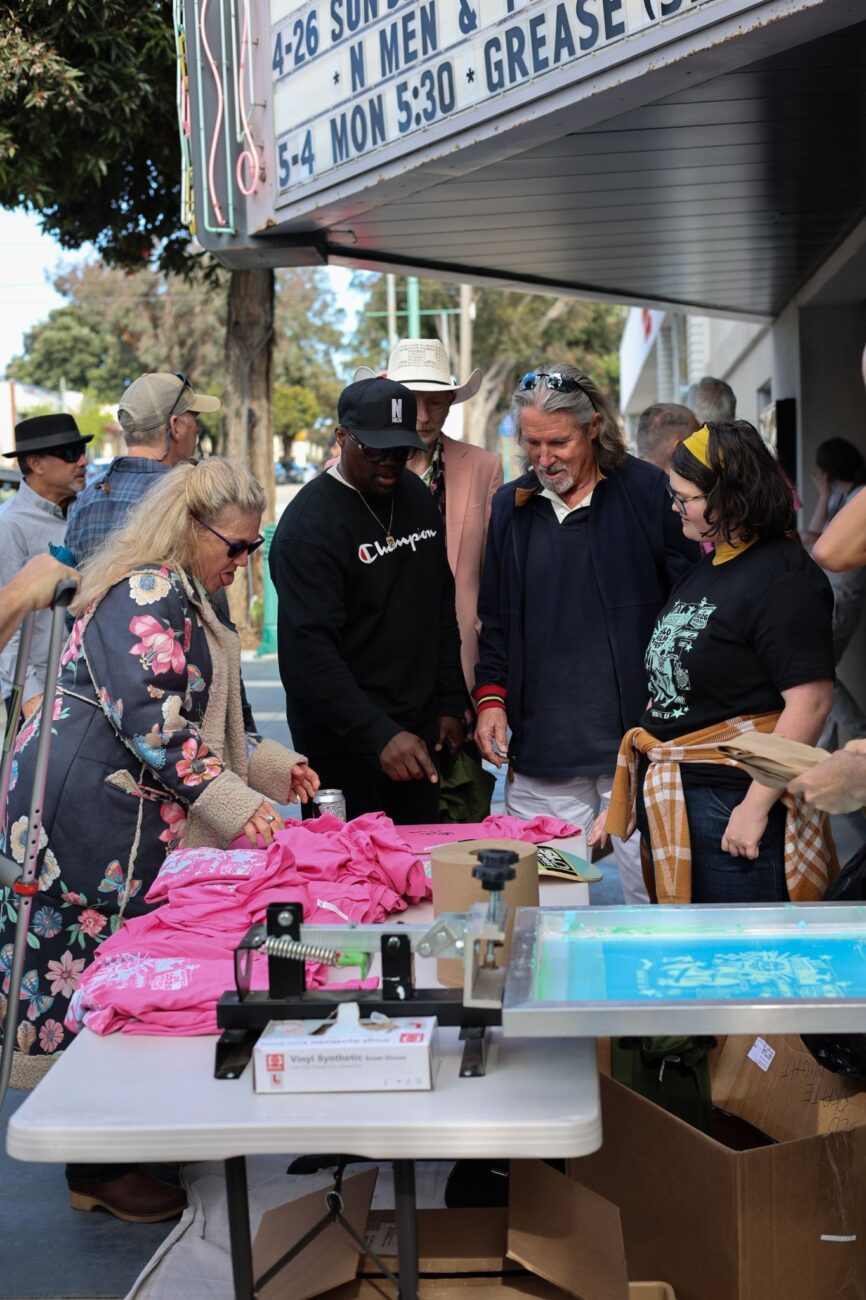
Outside, a limited edition pop-up screenprinting press was set up on the sidewalk. In collaboration with San Luis Obispo High School’s graphic design students, the event had freshly pressed “Skate Night” T-shirts for collectors.
Members of the vibrant Central Coast skate community filled the lobby and expansive theater room, under visuals of vintage grainy camcorder footage being projected accompanied by the whispering sound of soulful instrumentals.
The night kicked off with “Pat Ngoho: A Meditation on Creativity,” a short film illustrating the expression of Pat Ngaho, a skater and artist based in Southern California. In the sit-down style documentary, he expresses the importance of maintaining an individual purpose through creative expression in his personal experience at the intersection of art and skateboarding.
The next film of the evening was “N-Men: The Untold Story,” conveying accounts that have never been properly told in the media prior: The story of the “N-Men,” representing the Northern California skater community in the mid-1970s.
Notability, in the skate community, the N-men were a part of the expansion of skating as a sport around the world, best known for their ruckus of skating the extremes of steep infrastructure to abandoned pools.
The director James Sweigert addressed the crowd before the showing of the films.
“I apologize for all the N-Man who showed up on parole tonight,” he said.
Various N-Men were heckling back in a familiar, humorous tone, “He rules!” and “Thank you Jimmy for making our movie.”
With the film’s 11 years in the making, it sought contact with founding members and reunited them to share the importance of the skate culture movement of the California scene and beyond.
In the film, the N-Men are described as “punks, outcasts that weren’t associated with others, mischievous or driven to do anything to skate.”
Although, that’s not what necessarily represents the organization and community of N-Men. They embrace the skater – no matter the skill level – to encourage self-growth and a space for individuals who did not have a sense of identity.

