
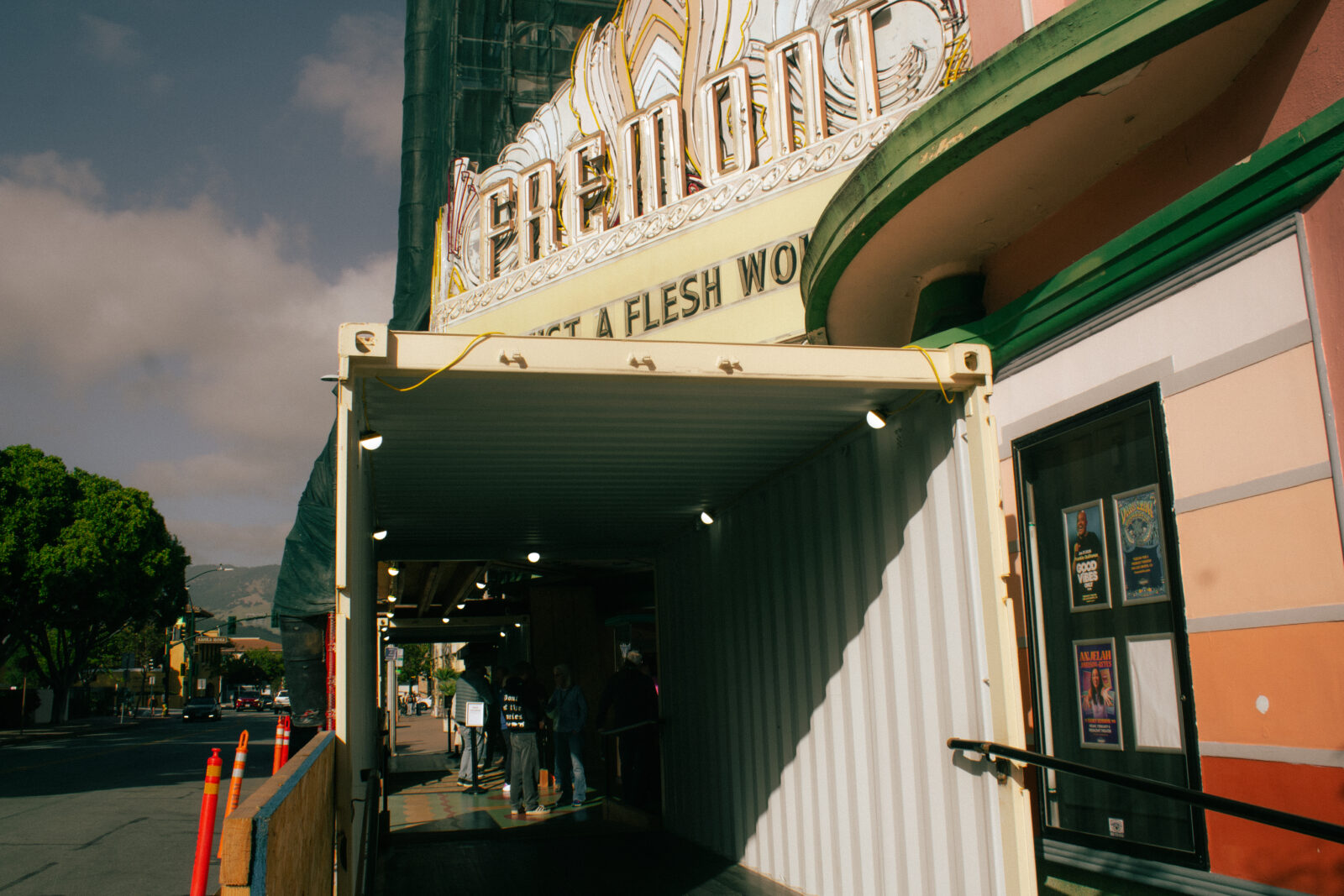
The 32nd annual San Luis Obispo International Film Festival commenced with its essence represented in four short words, “Where our story lives!”
With over 100 films from 25 countries, the 2026 program included narrative features, short films, documentary features and shorts, alongside music videos and festival favorites spanning across six days of magic on screens across San Luis Obispo.
Opening Night
Thursday, April 23
By Asmahan Karam
On opening night, the Fremont Theater was alive with tennis balls, rackets and uniforms celebrating the first movie of the festival, “GIVE ME THE BALL!,” an empowering documentary on Billie Jean King’s journey to being a champion in Tennis and in the world of female sports.
Before the festival went underway, a reception was hosted to bring together a community that grows with each filmmaker, sponsor and movie-lover alike. Cheyenne Omani, a longtime attendant of the festival, spoke highly of her experience on what opening night delivers.
“Getting to mingle with people and enjoying live music before the festival starts is really nice because you’re going to be seeing those same people when you’re in line. Opening up the festival like this is a really fun way to start meeting your new besties for the next five days,” Omani said.
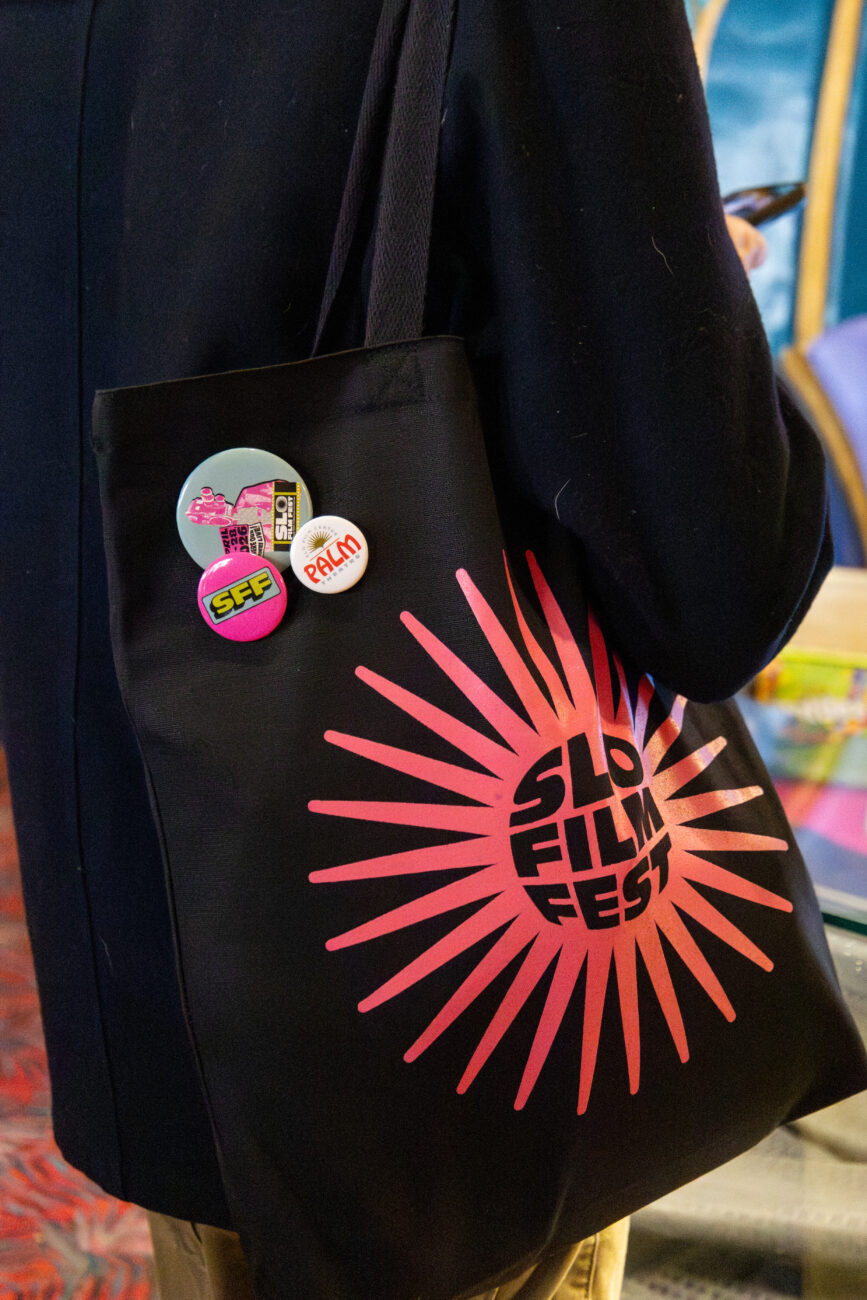
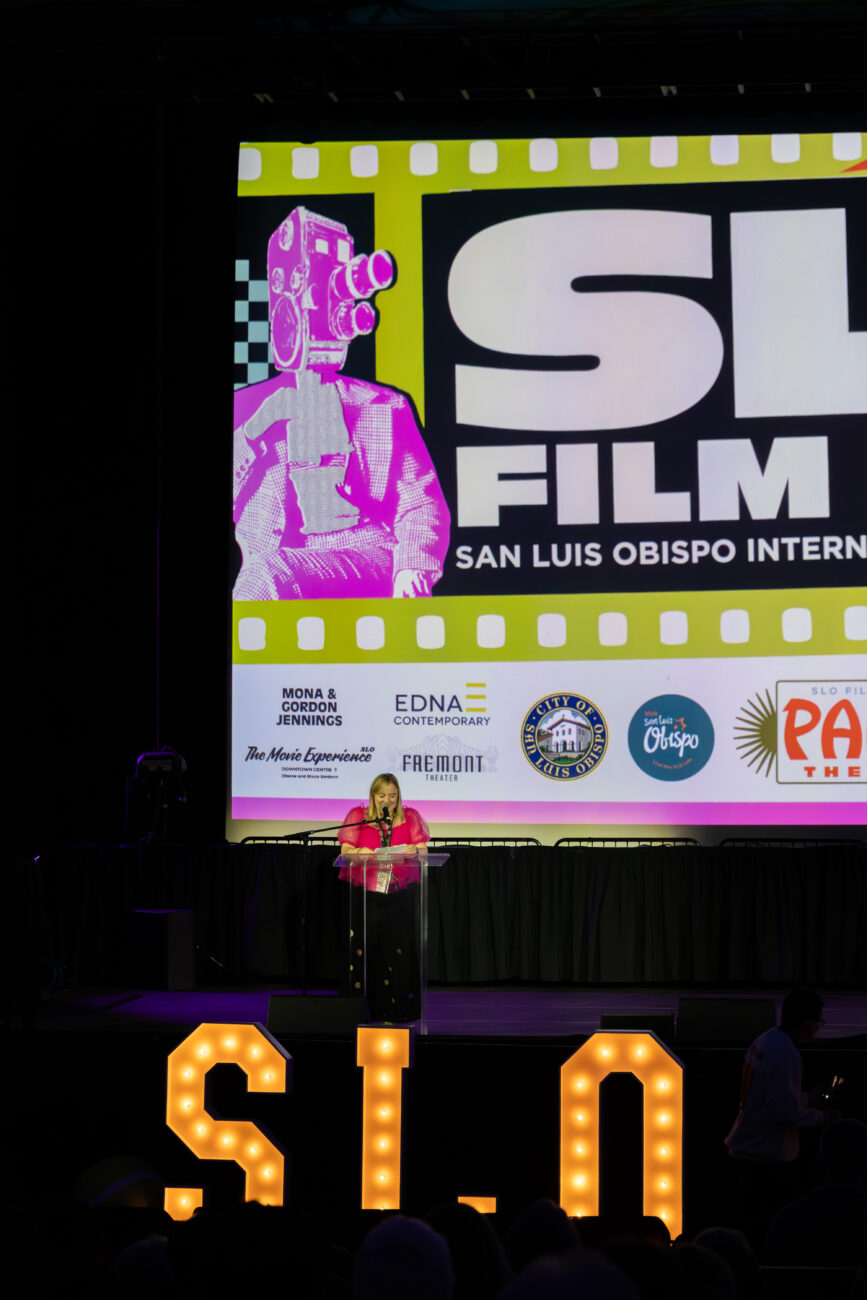
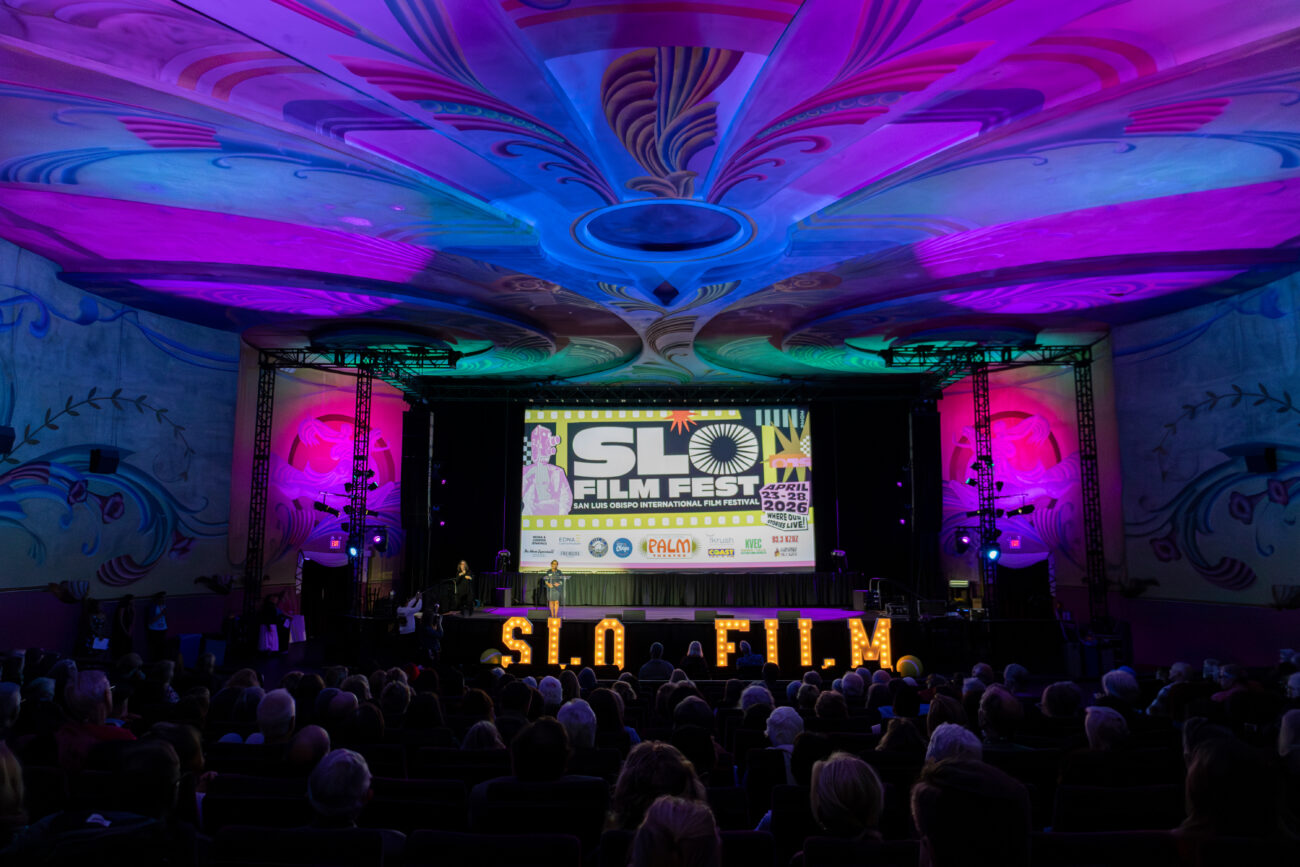
The magic of film rests on the people who believe in it and while the audience soaks in the story for the rest of their lives, none of that can happen without the support of sponsors who believe in making the story come to life. John Swift, for example, believes in the opportunity to help filmmakers deliver their movies to the world.
“You’ve lost an opportunity if you don’t [sponsor the San Luis Obispo Film Festival]. We’re not Hollywood, even though we’re close to Hollywood. You don’t get millions of dollars to make movies. These are budgeted movies, and it helps those filmmakers get the message out that they’ve spent all their passion to make. And if you’re able to sponsor, you’re really helping those struggling filmmakers to show their important message to people.”
Opening night closed with a strong impression enveloping the audience, and the feeling lingered as the credits rolled.
Councilwoman Michelle Shoresman said it best in her speech before the film began, “It’s not just about the films, it’s the conversations they spark.”
Spotlight: Haley Joel Osment
Saturday, April 25
By Lorenzo Cano
The night began at the Masonic Lodge in Downtown San Luis Obispo – a beautifully constructed building with an amazing facade that rivals its surroundings and an interior equal parts unsettling and charming.
Mahogany wood lined the walls and extended onto the floors, with an imposing staircase winding its way to the second floor. Exiting the staircase made way for the red carpet where many filmmakers, writers, directors and actors detailed the dedication behind their projects.
The focus of tonight was a spotlight presentation on the Academy Award and Golden Globe nominated actor, Haley Joel Osment receiving the Craft in Focus Award. The discussion was conducted by Drew Taylor, senior writer at TheWrap, who danced through the talk with knowledge, and a surprising amount of expertise regarding recalling episodes of the show “The X Files.”
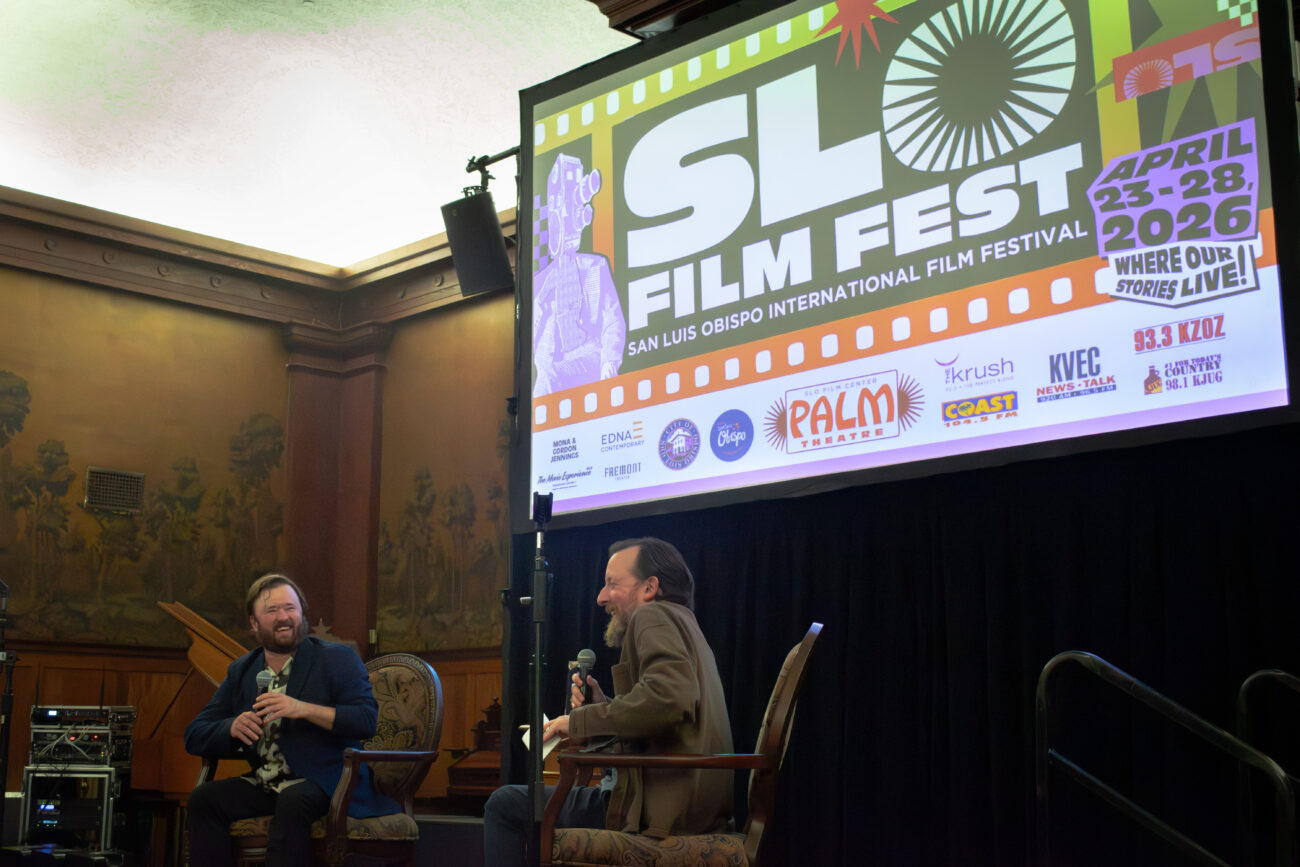
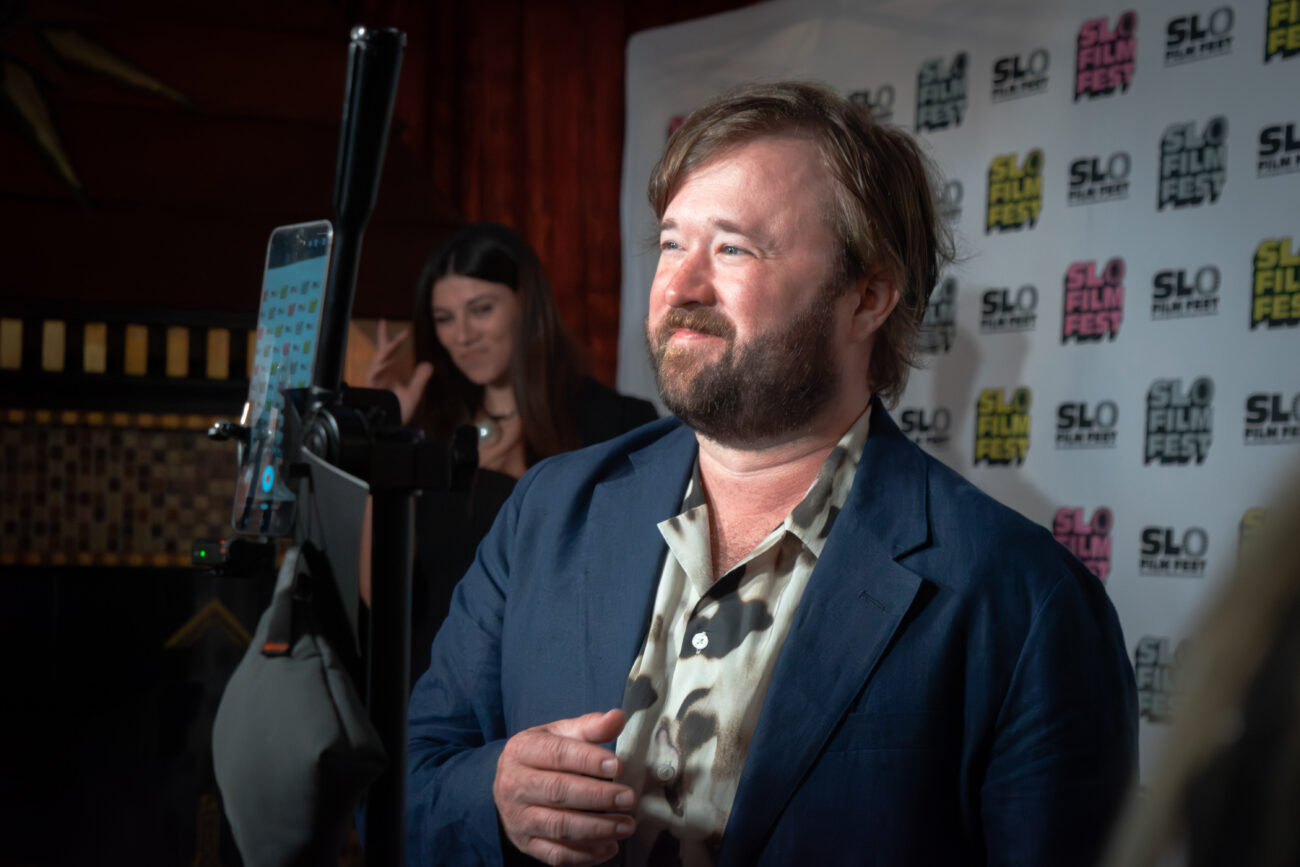
Osment detailed key moments from his career, ranging from his time as a child acting in one of his first roles in “Forrest Gump,” to his seminal works in “The Sixth Sense” and “A.I. Artificial Intelligence,” and finally ended on speaking about his contemporary experiences in film and the works he has coming up, including his latest film “How To Date Again,” premiering at the SLO Film Festival.
Osment commented on his experience acting during his childhood and how the wondrous nature of being a child actually influences the way one acts. “One of the things that’s so interesting about starting working at that age and working as a kid, is that your imagination and your relationship with the real world is developing along with being in these imaginary environments, so it can be really magical.”
Osment reached back into the past, recounting his interactions with Tom Hanks on the set of Forrest Gump, leading to Osment revealing that he learned to tie his shoes on the set of that film.
“That was the first time I had seen a big movie star like that, and seeing any actor, sit in the directors chair with a script and just clearly be very, very focused on the work at hand…that really made an impact on me,” Osment said.
Perhaps one of Osment’s biggest roles, Cole Sear in “The Sixth Sense,” was a long-awaited portion of the discussion. Osment spoke about the regimented process that he and his dad put in place as they practiced lines and the performance after each subsequent audition in a very long, intense and drawn out sequence of auditions.
“I just remember that was an experience that forced me to be on my game that day, and this really helped me really grow as an actor, going through all that,” he said.
Osment’s arrival to San Luis Obispo for the film festival is one marked by an award for his excellent career thus far, and a celebration of the art that he has created. Through recounting memories and telling tales of his time in the industry, Osment leaves the film festival highly regarded and with a new film debut under his belt.
Music Video Showcase
Saturday, April 25
By Sarah Jagielski
Presented by Music Roadtrip and supported by KCPR, the showcase transformed the interior of the San Luis Obispo Masonic Lodge into a vibrant hub of creativity, sound and vision. SLO Film Center Board of directors members Suzanne Schonig and David Hardberger opened the evening, celebrating the collaborative effort that it took to truly bring Music Video Night to life and make it a recurring spectacle. The venue’s stately, ornate interior absolutely matched the grandeur of the talent on display.
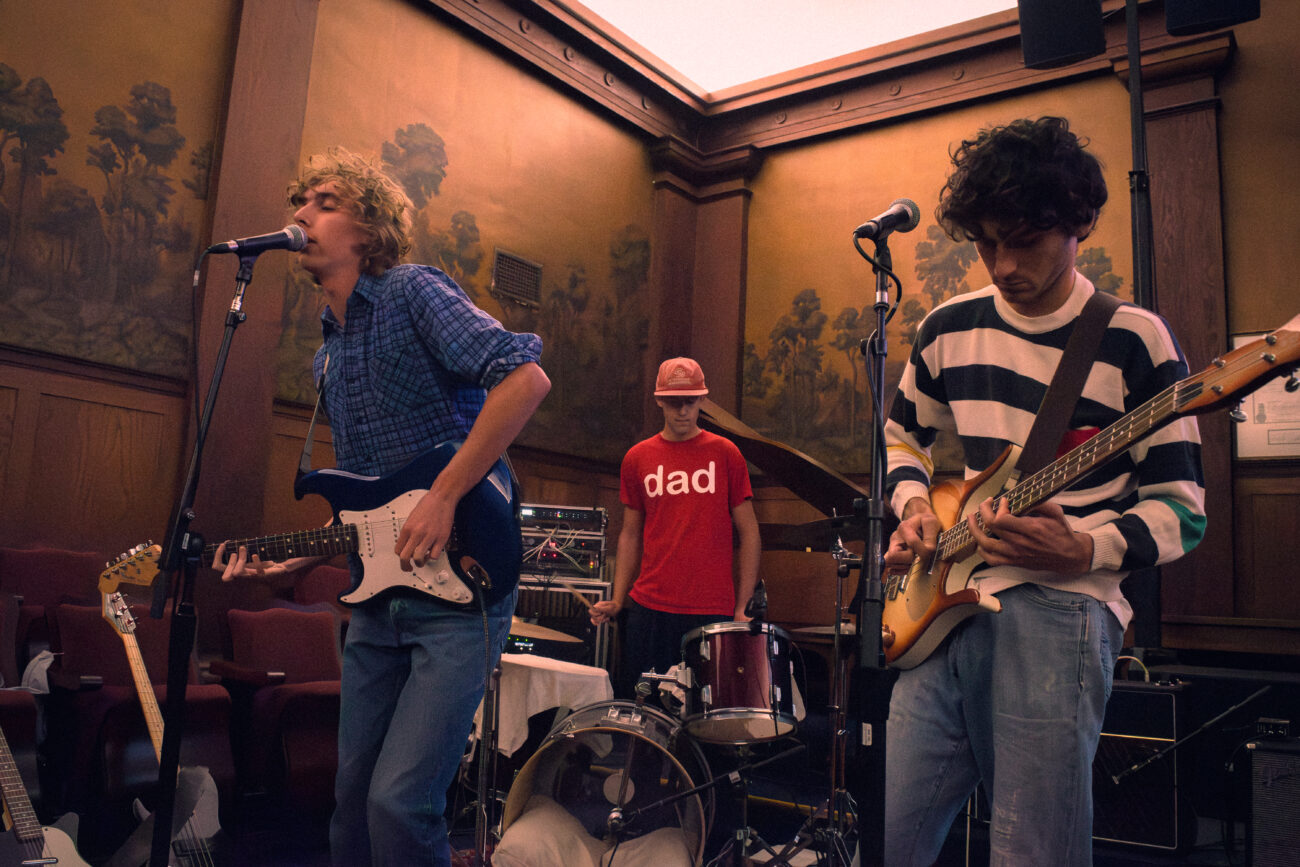
Local trio Evening Gowns set the tone for the rest of the evening with a lively few songs that had attendees moving in their seats. Featuring Trinity di Santo, Ryan Schiesler and Dylan Koch, the group delivered a mix of upbeat originals and covers, not to mention a good mix-in of playful banter between songs. They cite inspiration from the likes of the Velvet Underground and Bob Dylan, closing their set with a rendition of Dylan’s “Million Dollar Bash.”
The screening portion spanned a wide range of genres and styles. “Drive You Like a Cadillac” offered exciting, retro performance energy, “Fishbowl” was sensual and introspective and “Lado a Lado” was beautifully oceanic and identity-driven. The program continued with the dreamy poeticism of “Topanga Canyon,” the powerful visuals and blues roots of “Won’t Be Around,” the hypnotic instrumental storm of “We Collide,” and the surreal, single-take story of “Animus Ignis.”
A highlight of the night was the Q&A with local filmmakers and brothers Phineas and Elliot Peters, joined by collaborator and “honorary brother” Scotty Ryan. Reflecting on the video that they created altogether, “The Thought of Me,” by CITIZEN The Artist (AKA Phineas Peters), they discussed their longtime creative partnership and how collaboration eventually replaced early sibling rivalry.
The concept of the video is cinematic and centered around a magazine aesthetic, commenting on fandom and fame. The team mentions how bright, bold colors as seen in the video were inspired by David Fincher’s films, additionally touching on how they drew inspiration from “Gone Girl” (and even threw in a few Easter eggs).
Panel: Low Budget Film
Sunday, April 26
By Mckenna Zolty
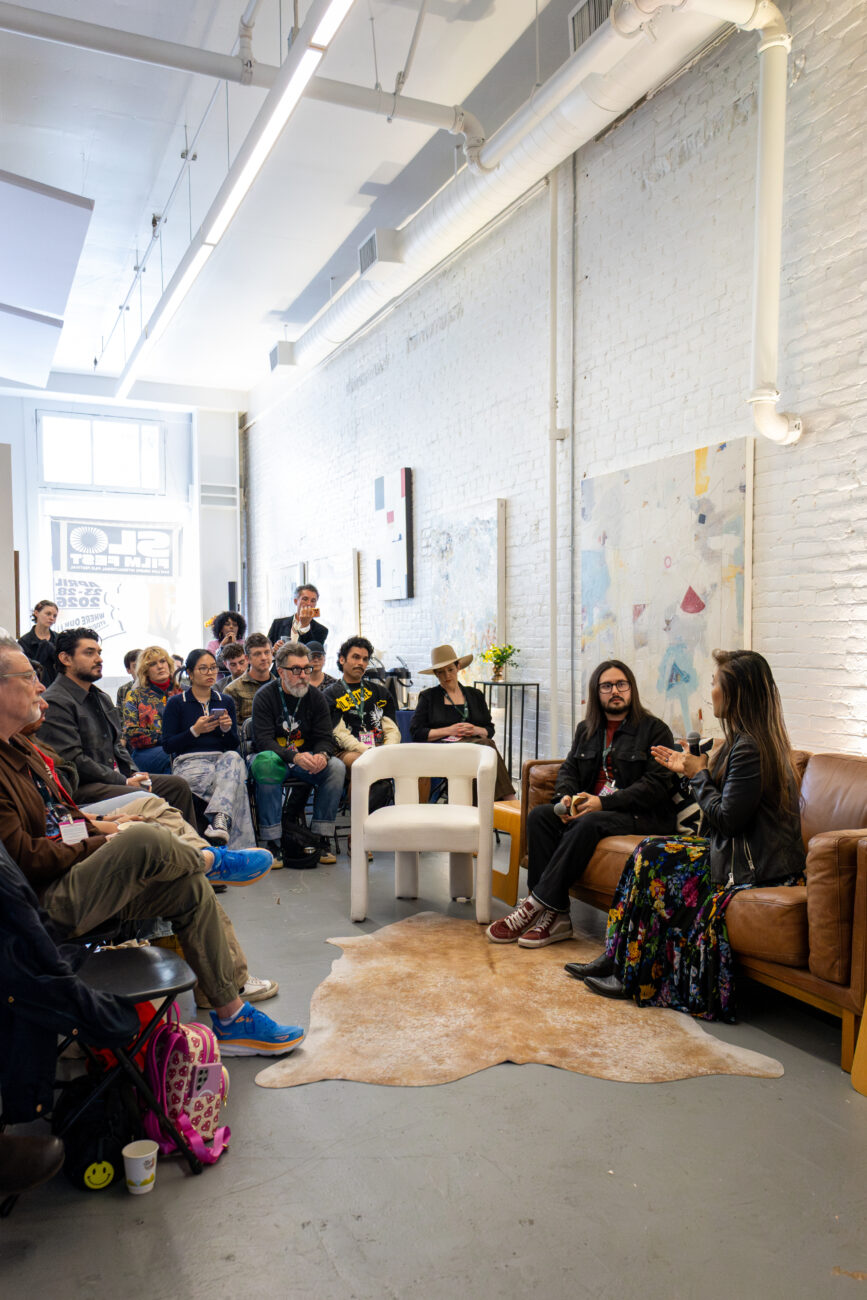
As the final panel for this year’s festival begins, the humming sound of attendees in conversation leads guests to the entrance of the art gallery. A downtown art exhibition hall has been converted into the “lounge,” a place for film fanatics and makers to gather outside of the theater. Chairs arranged in the midst of white brick interior walls with abstract canvas and vendors displayed around the room created an intimate gathering with the panelist.
In conversation with Shih-Ching Tsou, an independent filmmaker, known for her work of “Left-Handed Girl,” “The Florida Project” and “Red Rocket,” Tsou enlightens audience members about her experience over the years creating films on a low budget.
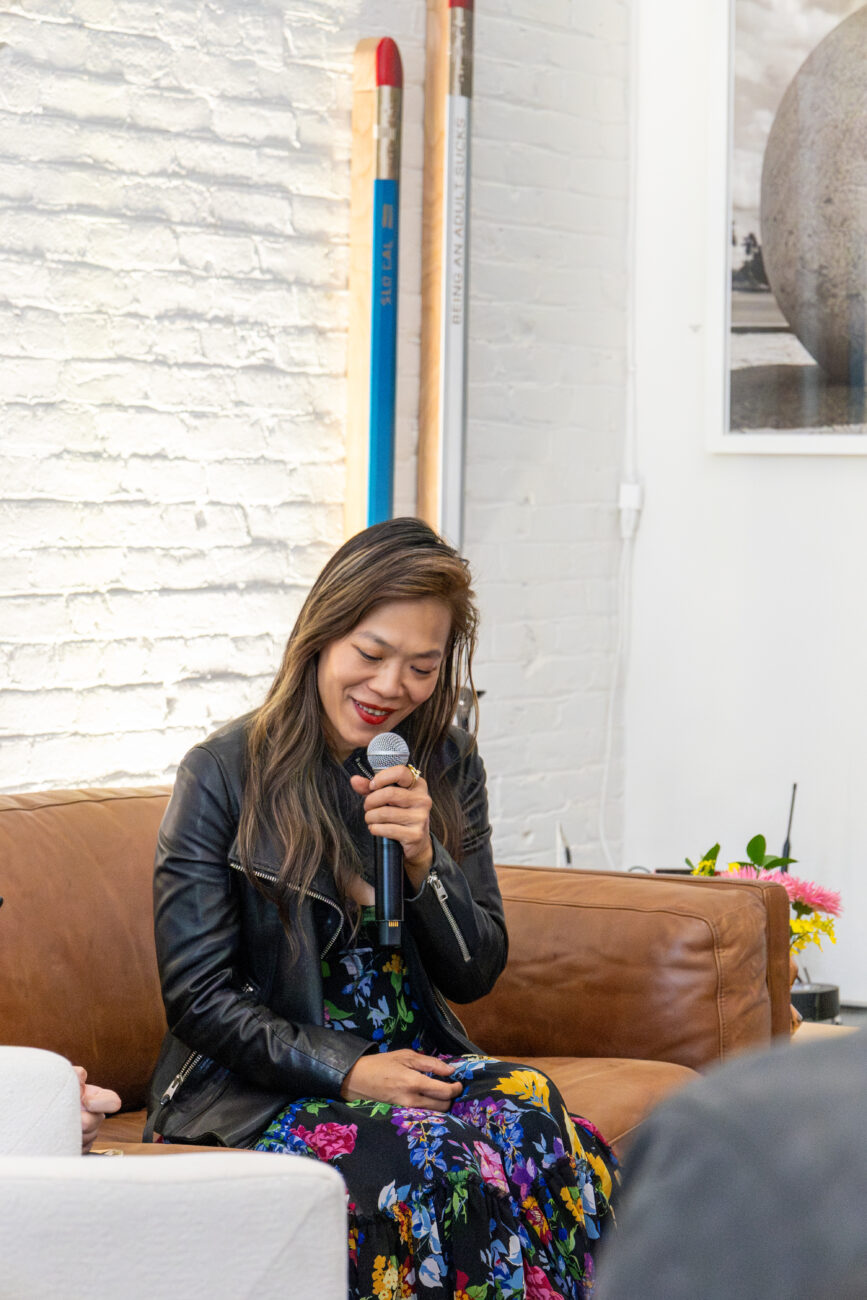
After graduate school, Tsou expressed she accidentally fell into filmmaking and met one of her now long time contributors Sean Baker. As her first concept for the plot of “Left-Handed Girl” was pitched, with minimal funding and no proper gear, she began developing the storyboard and the script centered around Taiwanese culture before returning to film the story years later.
“I think the most important thing about a film is the story, then you don’t have a good story. It doesn’t matter how expensive your camera is or how good it is, if you don’t have a story, then your film will just fill empty,” said Tsou.
The moderator expressed that low-budget filmmaking is achievable for anyone to engage with. In smaller budgeted organizations, the community aspect on these sets is what helps drive and create an inviting environment for crew and beyond.
“Start with resources first, don’t think about what you don’t have, you don’t have money, you don’t have a big camera,” Tsou said. “Everybody has an IPhone in their pocket, so you shouldn’t have any excuse about equipment. Look at all the big directors in Hollywood. They all started shooting IPhones. You can shoot anywhere you go and is actually a good way to practice. You get better every film.”
Spotlight: Britt Lower & Sender
Sunday, April 26
By Olivia Nieporte
Raised in a farm town 20 minutes south of Normal, Illinois, Britt Lower recalls her lifelong fascination with the moving tent. She and her mother running a face-painting business, turning children into butterflies and tigers — drawing Lower to spend time in small tent circuses around the country. Wire walkers, human pyramid builders and jugglers are really just mobile artists.
It’s not often folks from the Central Coast and exceedingly small towns in Illinois are exposed to independent film crews and Hollywood-engrossed media, but even Lower had an escape hatch. SLO Film Festival board member, Janice Ran smiles, “It’s fantastic at bringing the community together.”
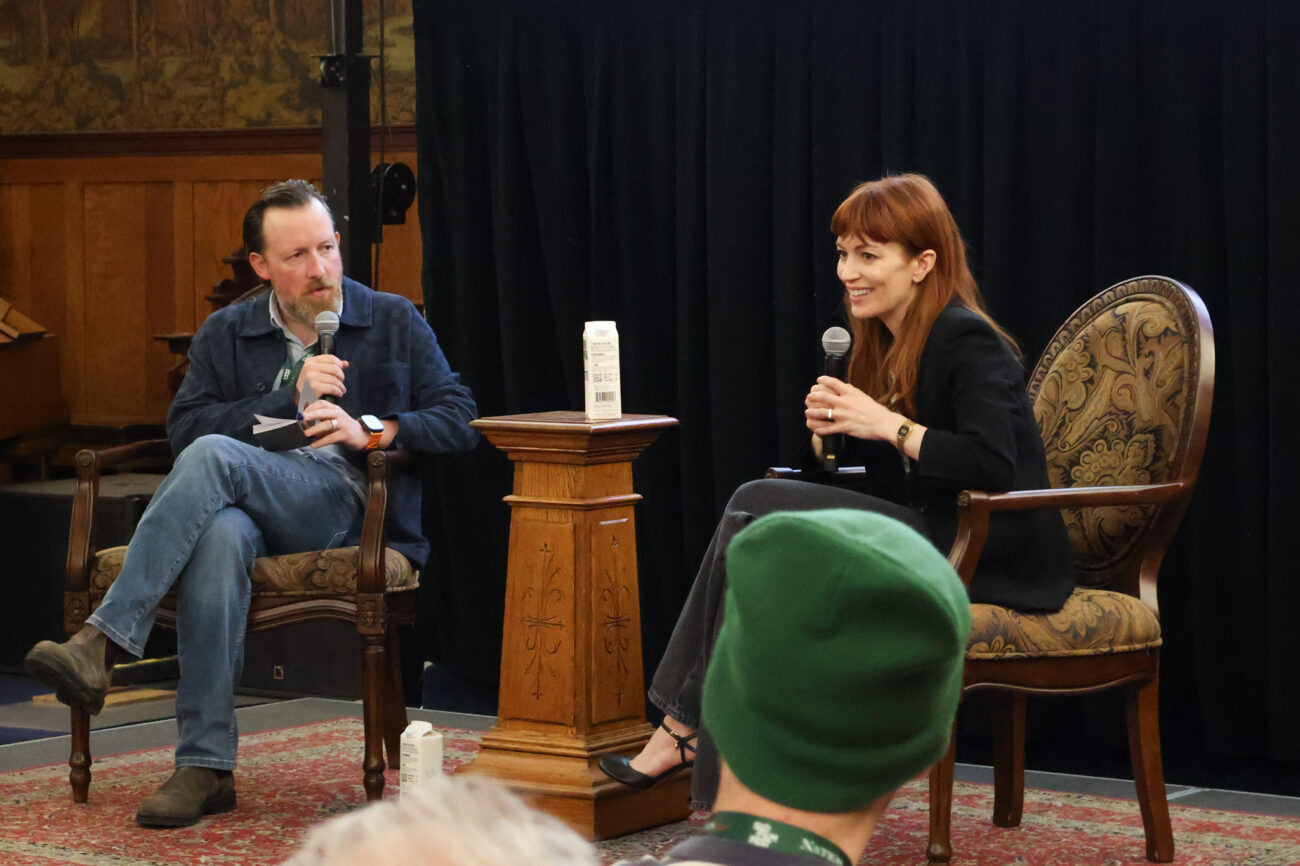
Tonight, Lower accepts a Spotlight Award for Craft in Focus, sporting dark-wash denim and a black dress blazer over a white tee, her spherical-ended heels far from Midwestern fashion. Clips from her feature films, shorts and series circulate on a projector against the Masonic Lodge’s eastern wood-paneled wallpaper.
Most know Lower from “Severance,” drawn to “characters with a complex inner life,” her self-tape for Helly relished the chance to inhabit an entirely different persona, even if she didn’t secure a part. After a chemistry read with Adam Scott and other Hollywood notables, she called her best friend.
“I was like, ‘I made Ben Stiller laugh … but I’m never going to get this job.’”
She got it.
Lower and her interlocutor transition from career probes and outrageous fan art and theories to the showing of her independent ninety-two minute film “Sender.”
Five years ago, director Russell Goldman received a package he never ordered — a sweat-soaked pair of shin guards rather than a dress for his wife, an alarming bell ringing havoc, the feeling of having something you never asked for in your home.
“It made me think a lot about the relationship between obsession and addiction and paranoia and depression and these cycles that we find ourselves in.” Adapted from a 2022 short film version, “Sender”had him underlining the truth that a feature film can be a “different animal,” especially as a physiological horror.
The premise sits in a world of mass surveillance, internet tracking and packages appearing uninvited on doorsteps. Julia (Lower), a recovering alcoholic, “quits” her job at a travel agency, circumnavigating A.A. meetings and unemployment, all while receiving packages from an Amazon-esque delivery site “Smirk,” objects she swears she didn’t order — or had only thought about — arrive via a stilted delivery driver. As she loses sanity and space in her once-empty apartment, Julia convinces her sister turned over-the-top realtor of her delusions, claiming an uncooperative A.A. member is her sponsor.
Shot in 17 days in Santa Clarita, California, Lower and Goldman jest production was a competition to get each other to laugh behind camera, curtailed by the fact that Jamie Lee Curtis actually “hates horror,” despite it being her most prominent genre, though the “supernova” producer, sponsor and actor takes the opening shot seriously, shaking boxes physically in an auburn wig. The duo wanted the film to feel like a song.
Goldman: “I think Julia is a drum. She just kind of keeps moving. She keeps tapping.”
Lower ends, “Making an independent film is like … making a record. A record is a record of an event that’s happening in real time. All of these people coming together with their hands and their hearts and carving the grooves out into that record together. It’s a circle.”
Cal Poly Short Cuts
Monday, April 27
By Ayla Boose
Audio story by Alyssa Parikh
Energy was high at the Fremont Theater, and Cal Poly Short Cuts were the main attraction.
The student-produced short films, a collaboration of ISLA 341 and ART 483 classes, are annually shown at the San Luis Obispo International Film Festival. The line was out the door and wrapped around the side of the newly repaired venue. Made up primarily of energized college students, whether they were a part of the student-made shorts being shown or loyal friends who came to support – the crowd of strangers and friends buzzed with conversation.
The lobby was similarly overwhelmed with chatter as people piled in front of the mini red carpet, taking pictures in front of the “SLO Film Fest” printed backdrop, soaking in the evening and the memories before heading to their seats.
Professors Randi Barros and James Werner took the stage to introduce Short Cuts and its significance to the audience.
“The teams work rigorously over a six week period – reediting scripts, doing auditions with actors and then shooting those films and editing them. And that is a lot of work, and really really hard to do over a six week period,” said Media Arts professor James Werner.
The six films covered a variety of themes from grief to academic competition, growing up and even the unique experience of getting to know your college neighbors.
Mustang Film Society additionally screened a short film of their own making titled, “You Jump, I Jump.”
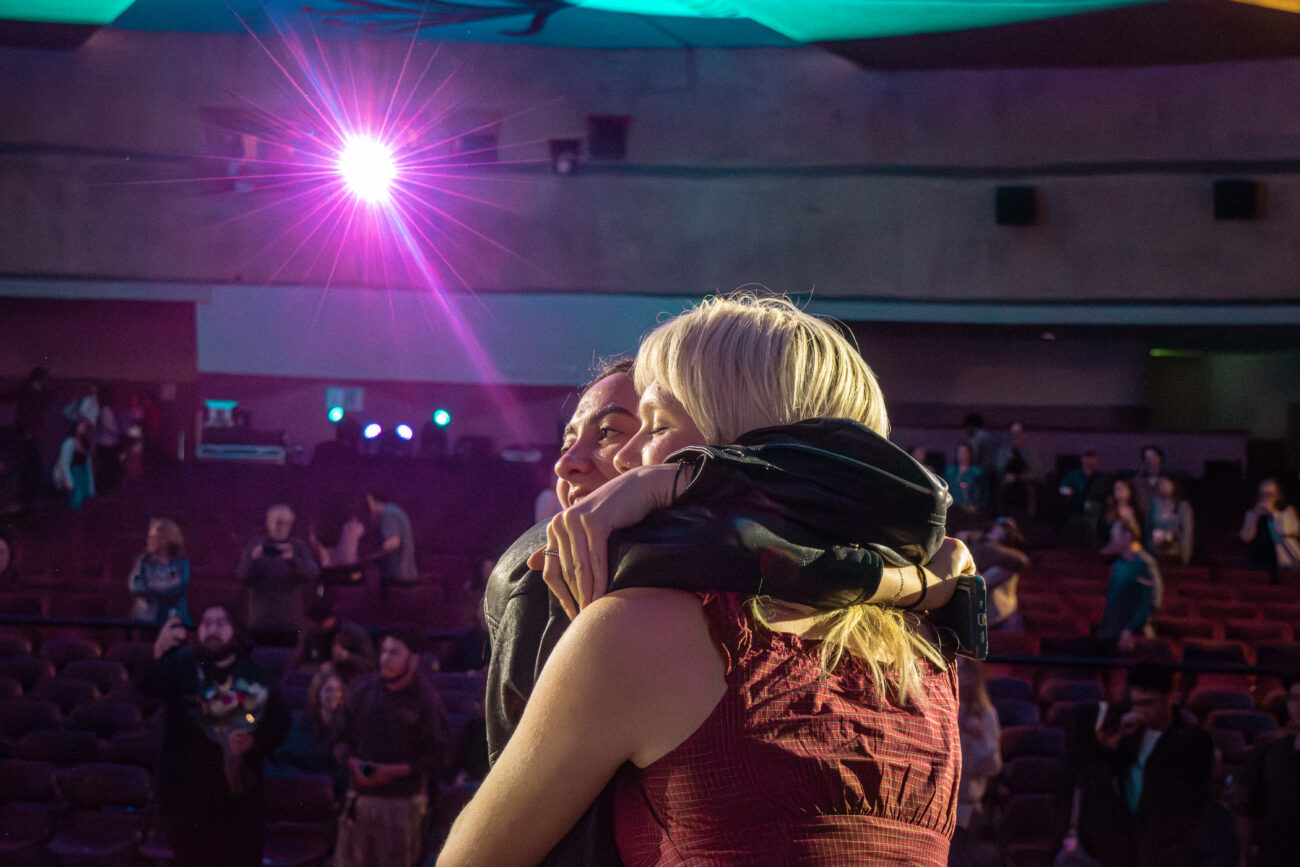
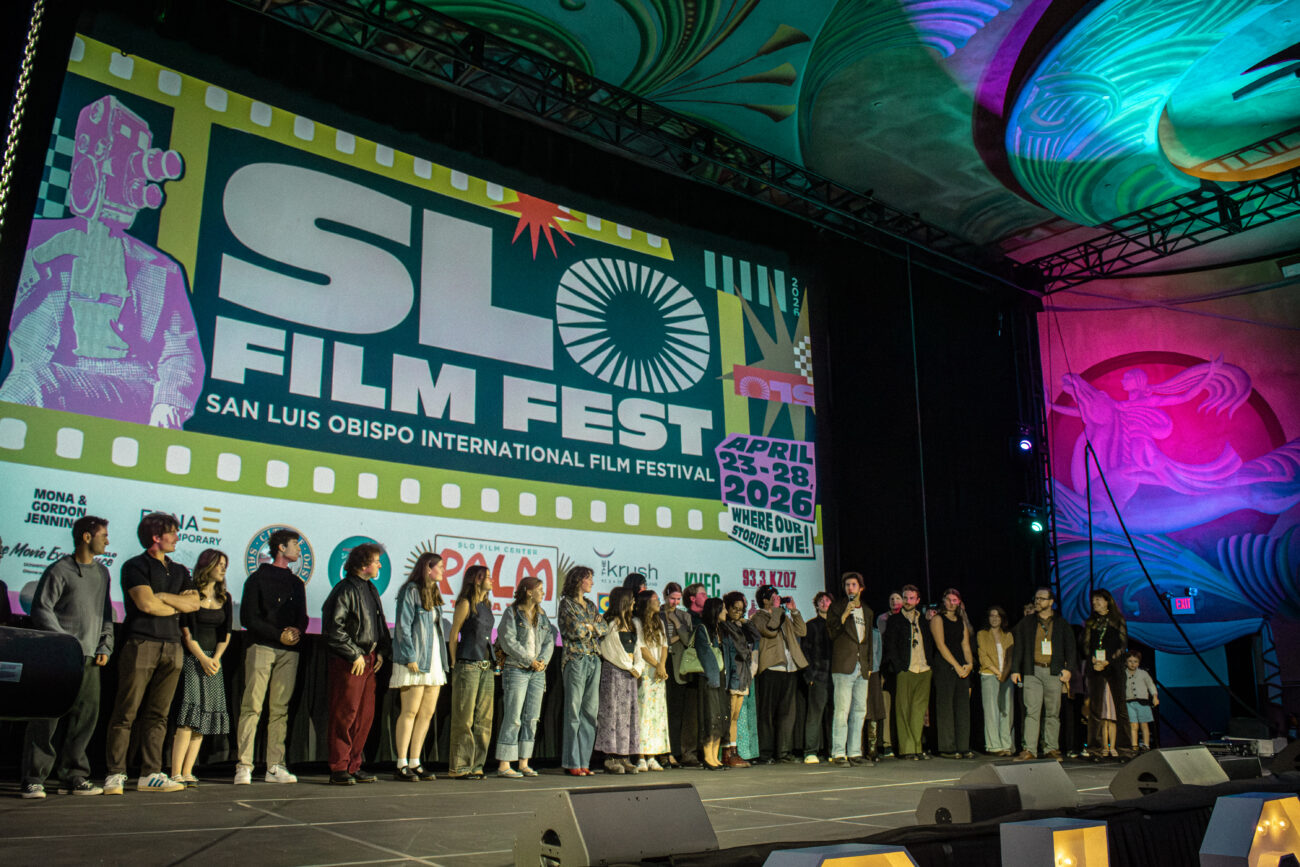
As the dark theater became illuminated once more by golden, purple and blue lights, the crowd erupted in applause. The night concluded with a Q&A with the student filmmakers, who shared their experiences getting to write and produce these short films.
Closing Night
Tuesday, April 28
By Max Brode
Closing night at the Fremont Theater gave a bittersweet conclusion to the festival and all the storytelling, community and independent cinema the week had to offer.
The festival’s executive director, Skye McLennan, opened things up with a heartfelt speech, thanking everyone involved for their hard work and highlighted the collaborative effort that the event couldn’t have existed without.
“I’ve had so many lovely people come up to me and share how much they loved and appreciated what we put our hearts and souls into,” she said. “You know, we don’t do this for lots of money, we do this because we truly just love our community and we love film.”
The evening continued with an award ceremony that honored both juried and audience-determined winners. Recipients of a wide array of awards were presented with clapboard style trophies and given a chance to speak on stage.
After the final award was handed off, the event had its final screening: a sneak peak of John Carney’s new music driven comedy, “Power Ballad.”
As the credits began to roll and the theater lights came back on, the audience filed their way through the Fremont seats and out onto the dusk-lit downtown streets. The 2026 San Luis Obispo International Film Festival had officially come to a close.

