
‘Mee Heng Low’ to premiere at the Palm Theatre, giving audiences a look into the restaurant’s complex closure
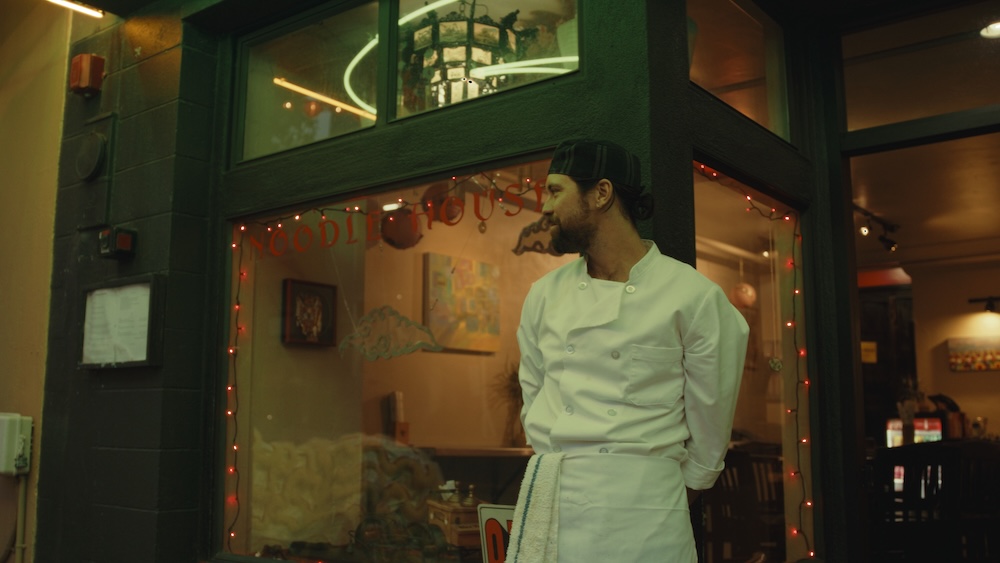
As the last Chinese-run business in San Luis Obispo’s historic Chinatown, according to chef and restaurant operator Russell Kwong, Mee Heng Low had long felt the weight of its legacy. When Kwong began to question whether he could continue running the 99-year-old restaurant, he knew he faced a decision that would affect more than just himself.
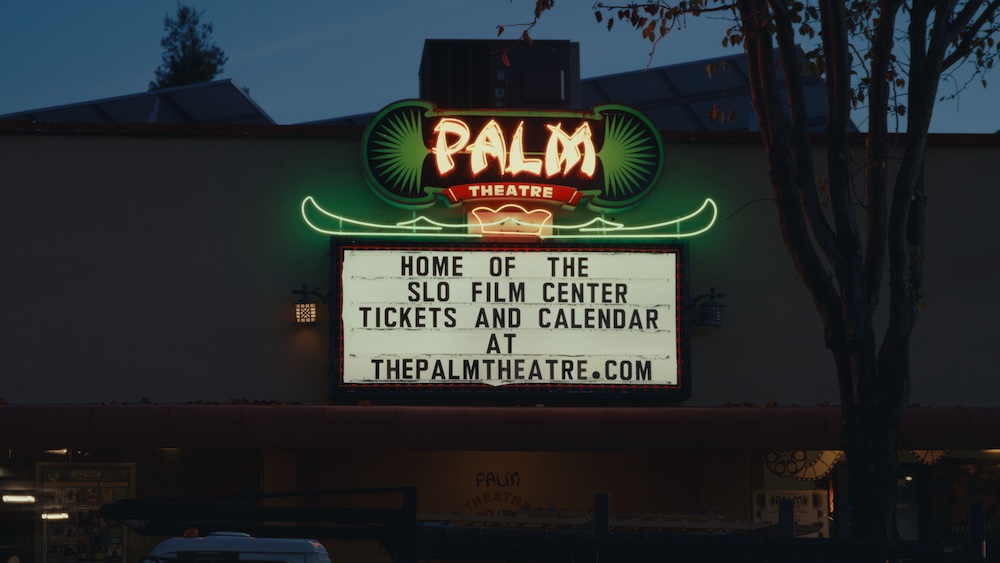
On Saturday, Nov. 7 at 1:30 p.m., “Mee Heng Low” will premiere at the Palm Theatre, next to the now-closed restaurant. The 18-minute documentary follows Kwong as he grapples with the potential of his future and the history of an entire community. The screening will be followed by a Q&A with co-director Kristie Chow.
“The movie is really about [Kwong’s] journey of how he’s trying to build the life that he wants while keeping it all going,” Chow said. “He cares a lot about the work that he’s doing. He cares a lot about Chinatown.”
“I feel like the compelling part of the story worth mentioning is the central fear,” Wu added. “How the story hit me was mainly one man’s fear of killing a community.”
The film focuses on this decision, but after the cameras stopped rolling Kwong ultimately decided to close the restaurant. It was anything but an easy choice for him, given its history and legacy within San Luis Obispo’s historic Chinatown district.
“I miss the camaraderie and having just like kind of a good gathering space,” Kwong said. “And I do miss making that food. I haven’t had a bowl of noodles since we closed.”
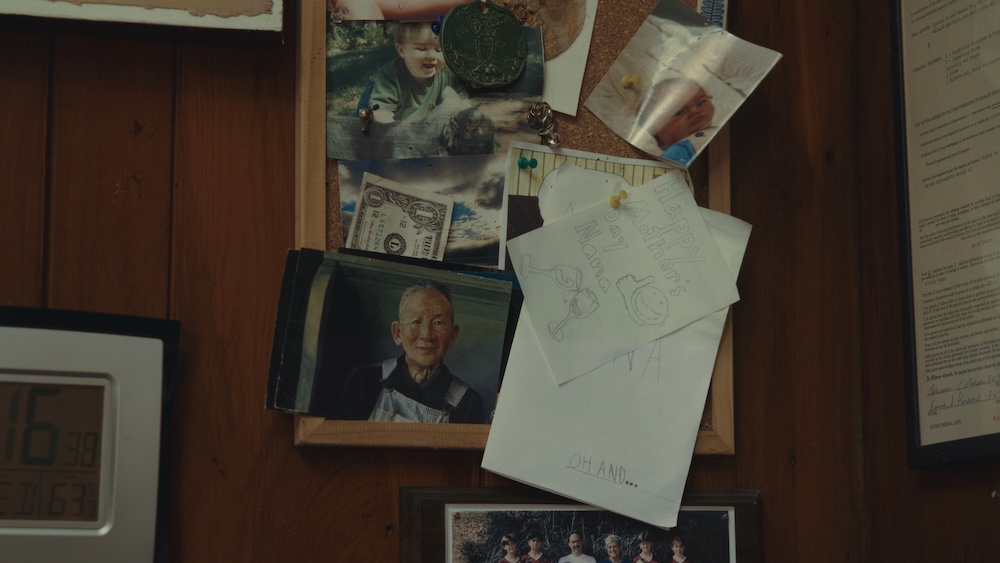
Mee Heng Low opened its doors in 1927, owned by the Gin family. Ownership passed between various Chinese American families and eventually it became one of the few remaining buildings from the city’s original Chinatown. In 2009, Russell Kwong’s father, Paul, bought it.
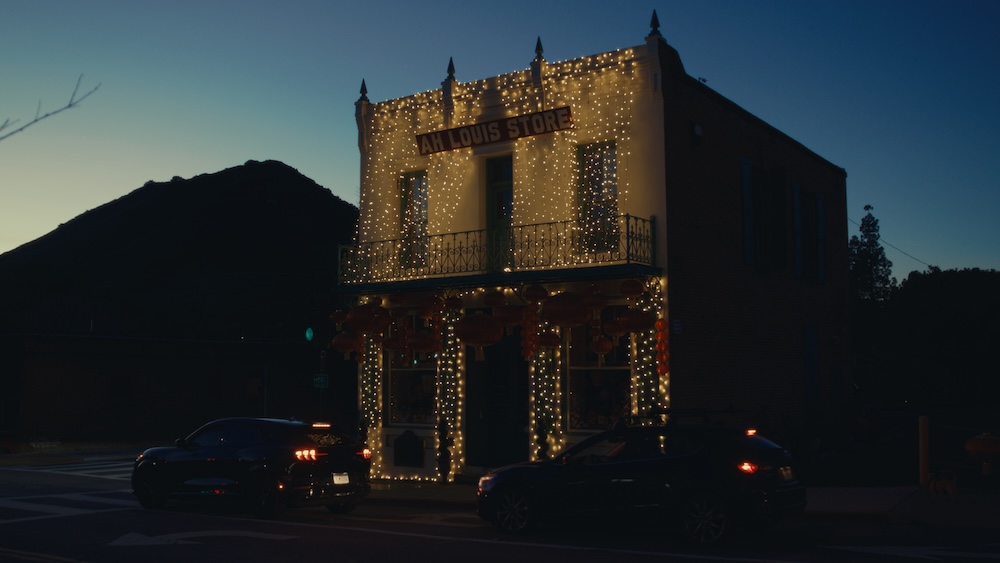
When Kwong decided to close the restaurant, Karson Butler Hospitality Co. took it over. With the vision of a gathering place for the Mahjong Social Club San Luis Obispo and the larger community, company co-founders and twin sisters Amber Karson and Emily Butler will reopen the business as Mee Heng Low Social Club. The company also runs the Ah Louis Store, another historic business from San Luis Obispo’s original Chinatown district.
READ MORE: Mee Heng Low to reopen as social club and pop-up space
With Mee Heng Low under new direction, historic Chinatown is left without Chinese-run businesses. Cal Poly Ethnic Studies professor Grace Yeh, who is featured in the documentary, said the restaurant represented a “diminishing” physical representation of the city’s Chinese culture and history.
“I think Chinatown was important in a different era, but in the current moment, it doesn’t serve Asian Americans in the community in the same way,” Yeh said.
Despite the decreasing prominence of the original Chinatown district, Yeh continues to have an optimistic outlook.
“I think maybe Palm Street itself isn’t what defines the community or communities today,” Yeh said. “But now there’s other spaces where different Asian American groups have found that sense of community.”
This perspective recognizes the evolution of these communities, rather than focusing on the physical space. Chow said she initially had a very “black-and-white” mindset about the importance of keeping historic places alive, but that Yeh helped her understand the deeper context of Kwong’s predicament.
“She was saying how the community stewardship shouldn’t rest on one person. It should be a community effort. And at that point, the community was just Russell [Kwong].”
Kristie Chow
Kwong has worked “on and off” at Mee Heng Low since his father took ownership. In 2020, Kwong began running his father’s restaurant, largely out of necessity.
“When COVID hit, it was kind of like, what do we do?” Kwong said. “My dad’s a senior, so he couldn’t work, basically. And I was like, ‘It’s fine. I’ll just run the restaurant by myself. I can do this. It’s all good.’”
Five years later, Kwong found himself still managing Mee Heng Low, now at a crossroads between continuing its legacy and pursuing his own aspirations outside of the restaurant. It was during this period of uncertainty that Chow and Wu entered the picture with a desire to document the intricacies of Mee Heng Low’s story.
According to Kwong, others have shown interest in making a documentary before, but it never went anywhere. With Chow and Wu, this time was different.
“Kristie [Chow] just showed up in the restaurant one day, ordered food and then at the end of her meal, she goes, ‘Oh, I’d like to make a documentary,’” Kwong said. “I was like, ‘Okay, sure,’ and didn’t really expect her to follow up. And sure enough, I got an email from her like a month later, and then she came back, and we talked more.”
These conversations allowed the directors to determine how they wanted to tell the story of Mee Heng Low and Kwong.
“Apparently, there was a dispute over whether the documentary should be about the restaurant or about me,” Kwong said.
Ultimately, Chow and Wu decided to focus on Kwong and his personal journey.
“It is kind of like me at this breaking point where I don’t know what to do exactly,” Kwong said. “I guess [the directors] just wanted to capture the difficulty I was going through, and not that I wanted to close or anything, but just having all this pressure on basically one person and just me trying to deal with that.”
According to Wu, the complexity in Kwong’s relationship with the restaurant made for a great film subject.
“I think that’s what makes Russell [Kwong] so interesting,” Wu said. “It seems polarizing online, maybe even polarizing as a person, but not even in necessarily negative ways. You can see him in two mirror images.”
Kwong recognized the influence of these contradicting forces on his own perspective of the restaurant.
“I think what I was getting out of it was the pride of having this historical business and kind of carrying on this legacy and representing Chinatown and, you know, being that guy was cool,” Kwong said. “But it was also ruining my life.”
Despite the “taxing” hours and lack of life outside work, Kwong said he would not change the choices he made.
“I’d do it again if I had another chance,” Kwong said. “Cooking is kind of in my blood.”
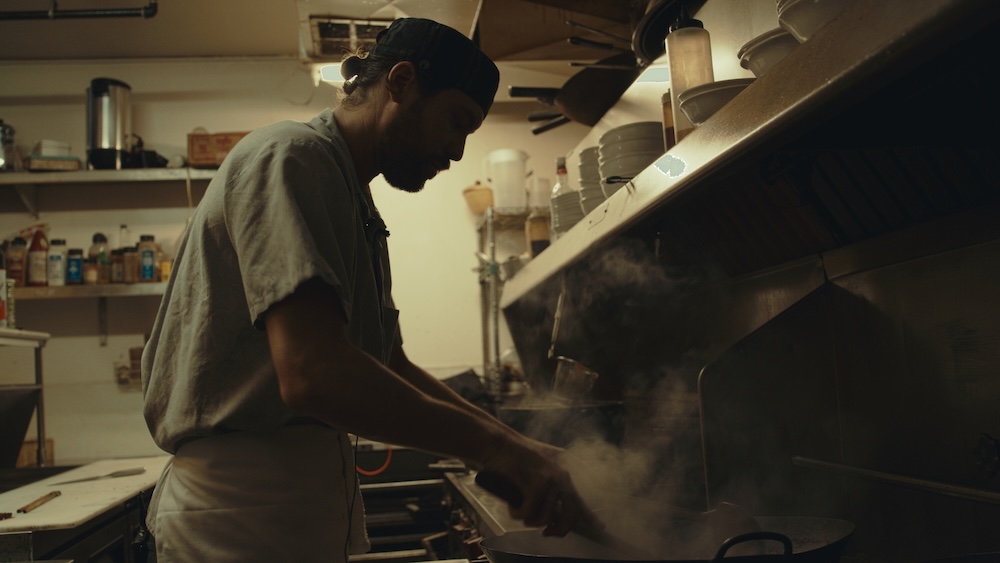
While it may be the most prevalent, cooking is not the only shared passion in the family. On the side, Kwong creates experimental and contemporary music, something he said his dad influenced.
“My dad was forced to go to music school as a kid, and he really hated it and managed to get out of it after a very short period of time,” Kwong said. “But he wishes that he hadn’t and that he was a musician. He claims that he is able to express his artistic side through cooking and food, instead.”
When Chow found out Kwong created music, she knew she wanted to include it in the film. Kwong is credited for the entire score.
“[Chow] suggested that I write some music specifically for the documentary, but it turns out what was already available online was good enough to just put in,” Kwong said with a laugh. “It makes me a little bit nervous because a lot of the stuff I have uploaded isn’t very serious or polished. It was just kind of stuff I’d throw up every once in a while.”
Through the restaurant, Kwong’s two passions intersected.
“The band I played with, we would rehearse upstairs after the restaurant closed, and that was just a really nice thing to have and be able to set up and break down just in the upstairs dining room,” Kwong said. “It became a kind of familial gathering place. It was the home base for a lot of people, like anyone that worked downtown or just a myriad of purposes.”
This community was yet another factor that made it difficult to close Mee Heng Low. Kwong remembered some of the customers that dined in the restaurant during the last week it was open.
“There was the same guy sitting out front of the restaurant multiple days in a row, waiting for us to open, like he got there before 11. And I was like, ‘Dang, I’m kind of like ruining this guy’s life,’ you know?” Kwong said. “Or maybe not ruining his life, but he’s missing out on something too now. And we had these guys that would eat every Wednesday, and it was their thing. It was where they got to see each other.”
It was stories like these that inspired Chow to create “Last Weekend,” a second companion piece to the film. The photo gallery features 30 customers from Mee Heng Low’s final days of service, detailing their memories of the place.
“‘Last Weekend’ is a lot about trying to keep records of all this,” Chow said. “How can we capture as much as we can? Who went there in the last day? What did they eat? What was the first time they actually ate at Mee Heng Low?”
Despite the complex relationship Kwong had with the restaurant, it was important for him to leave his mark on the building.
He did so by restoring its nearly 100-year-old neon sign, which spelled “Mee Heng Low” and “Chop Suey” below the restaurant’s iconic dragon.
“Getting the sign finished was kind of my goal, and it’s like my legacy at the building,” Kwong said. “So, you know, even if I’m gone and the restaurant is closed, like, every time that sign gets turned on, that was my doing.”
While its relighting is featured in the documentary, the directors highlighted the actual restoration of the restaurant’s iconic neon sign in a companion video called “The Dragon Returns.”
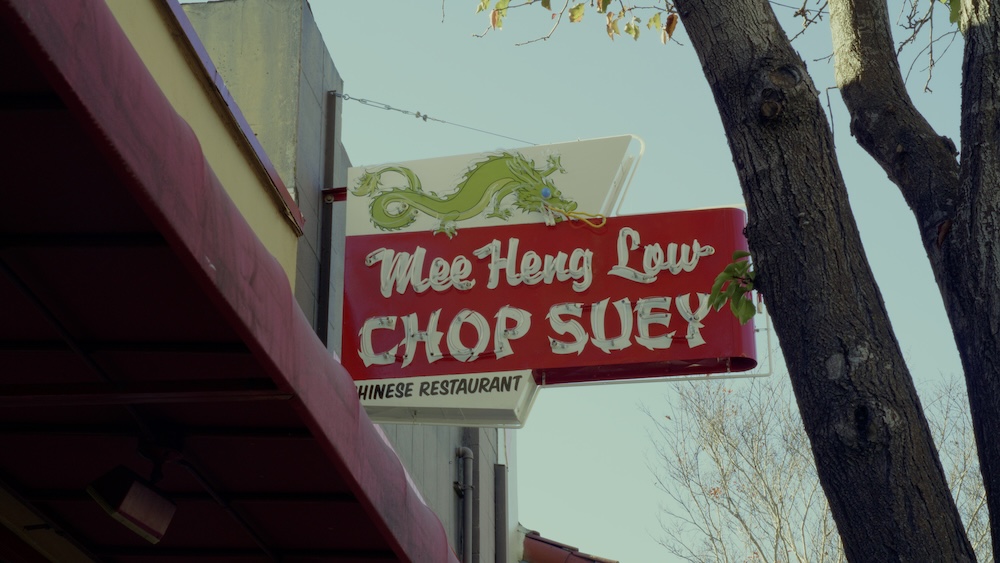
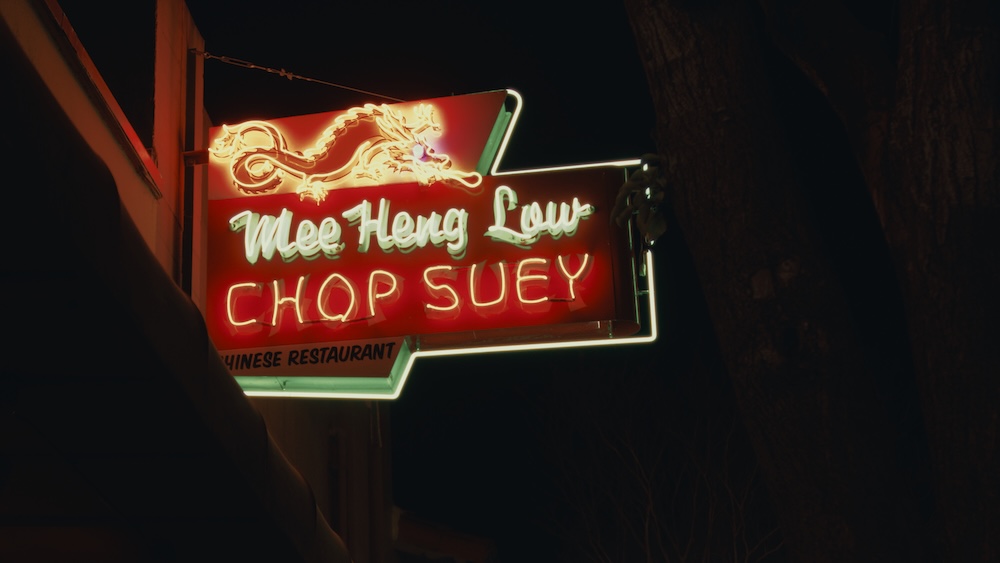
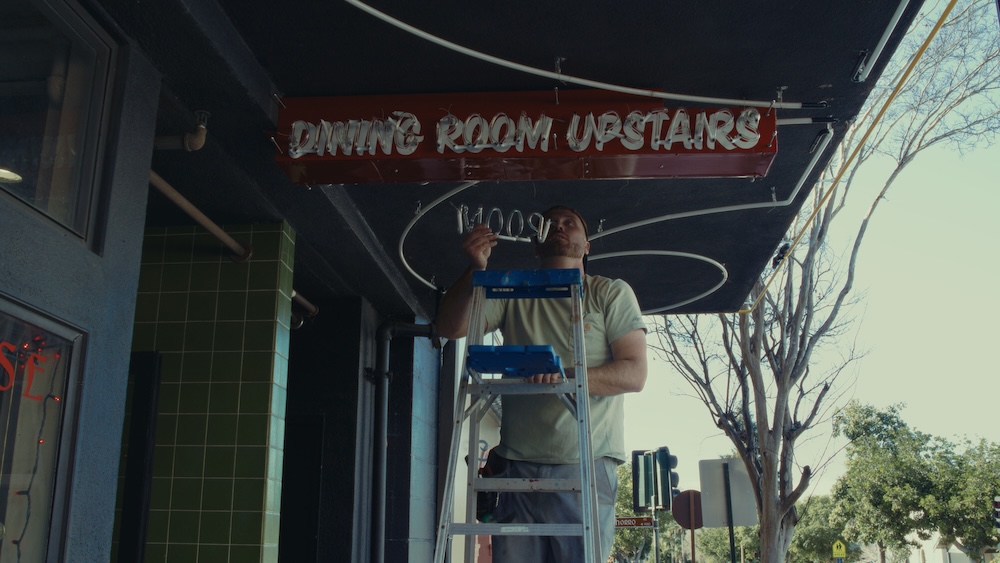
“We ended up not including any of the restoration work [in the documentary] because we wanted to focus the story more,” Chow said. “But the restoration process was just gorgeous, and there’s not that many craftsmen left anymore. We can’t just let that footage go away, so I decided to just edit a very short piece from it.”
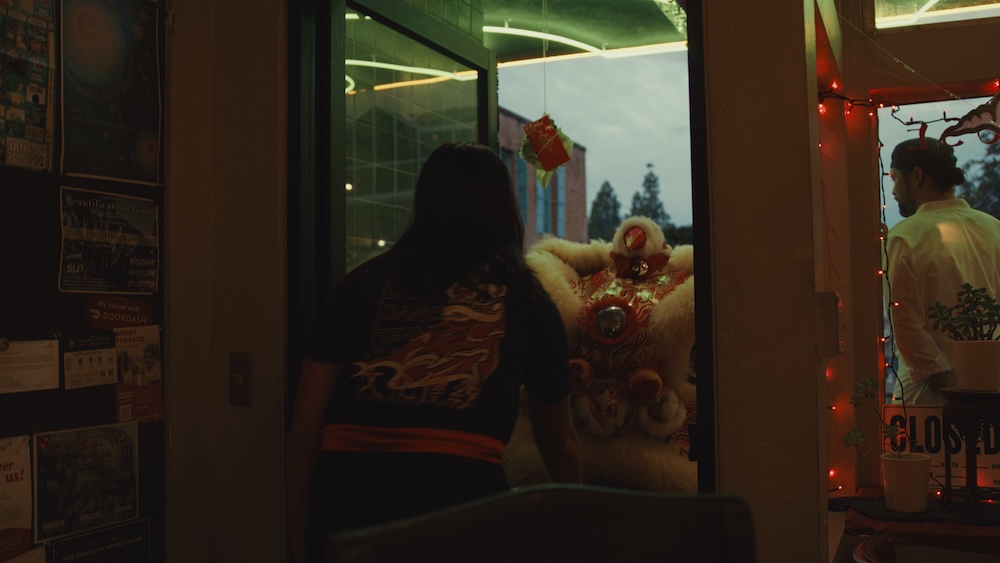
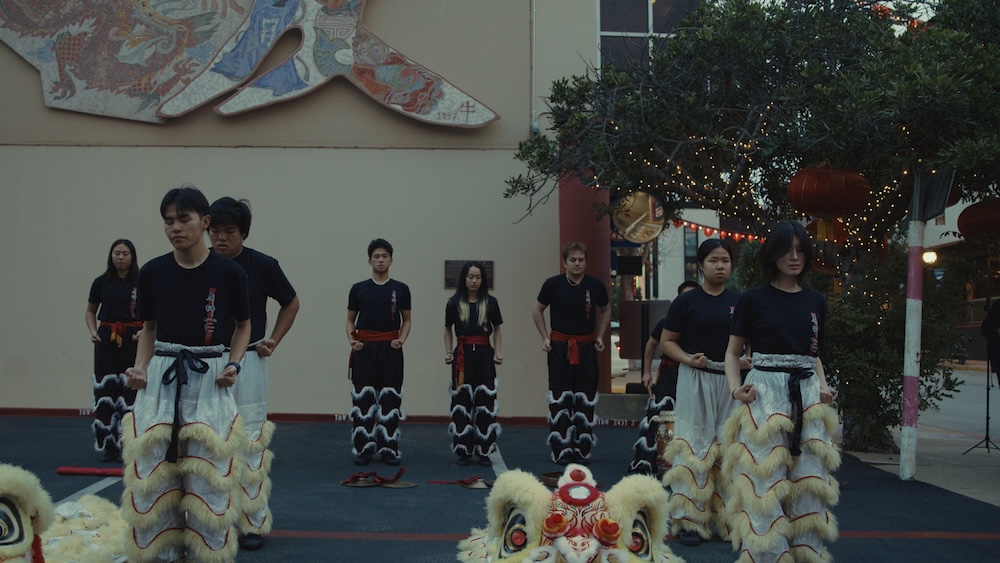
To celebrate the restored sign, Cal Poly’s Lion Dance Team performed at its relighting. The Lion Dance Team’s 2025-26 co-captain and mechanical engineering senior Alyssa Wu acted as the main point of contact between the team and the directors in scheduling the performance.
“Typically for businesses, [the lion dance] is supposed to symbolize bringing prosperity and good luck,” Alyssa Wu said. “It was really sad to hear that the restaurant was closing, though, since the neon sign had just been reinstalled earlier in the year.”
For Jeffrey Wu, the lion dance ended up being his favorite part of the film.
“Just the afterglow, like everyone’s hanging out at the restaurant and everybody had a good time,” director Jeffrey Wu said. “I’m watching kids receive the red envelopes, and you see the colorful confetti on the sidewalk being swept up by an uncle, and then just feeling the warm fuzzy feelings of being around everybody and feeling comfortable.”
Even with the context of the restaurant’s closure, Kwong hopes moments like these stick out to the viewers.
“I don’t want it to have a sad ending, but maybe it will, I don’t know,” Kwong said. “I don’t remember how I was acting when we were making that movie, but I think I certainly had a bit of doom and gloom at certain points.”
Chow and Jeffrey Wu said they were hopeful for Kwong and the restaurant during filming. But when they heard of Kwong’s final decision, they felt an “angst.”
“I am still personally grieving,” Chow said. “I am excited for bringing new communities to the space, but at the same time, I’m still processing it.”
But Chow noted that her grief is not directed at Kwong. Instead, she said she was “really proud” of him for making the tough decision.
“I think the biggest personal change I’m sure we both made was just that me and Kristie [Chow] are both idealists, and we would love for it to continue on,” Jeffrey Wu said. “But ultimately, interacting with Russell [Kwong], hearing the community’s opinion and input and context about it, there’s a part of me that’s like, it’s like a sigh of relief.”
The shared idealism between the two directors is part of the reason they began working together. Separately, they each have experience in highlighting Asian American culture through videography and storytelling.
Chow, an independent public historian, is the creator of the American Chinese Food Show on YouTube, which highlights Chinese restaurants and food throughout American history. Meanwhile, Jeffrey Wu co-founded Popeye Media, a two-person, director-led studio creating advertisements, music videos and documentaries that bridge countries and cultures. When Chow wanted more visual direction in her projects, she turned to Jeffrey Wu.
“I love Jeff [Wu]’s work because he’s actually a professional filmmaker. So I just approached him saying, ‘I would like to take better care of telling all these stories,’” Chow said. “How do we tell the story in a way that is different than the traditional narrative and have the story be intimate and personal, but also is meaningful to the audience?”
From that initial conversation, a partnership was formed, and they embarked on their first project: exploring historic Chinese restaurants in California, with “Mee Heng Low” as their second film on the topic.
“Me and Kristie [Chow] both have a sense of urgency in telling stories about Chinese people in Chinatowns,” Jeffrey Wu said. “I feel like these places truly will not be around for long, so it’s very important to capture these stories as soon as possible.”
He also described the significance their films hold as records of meals no longer served.
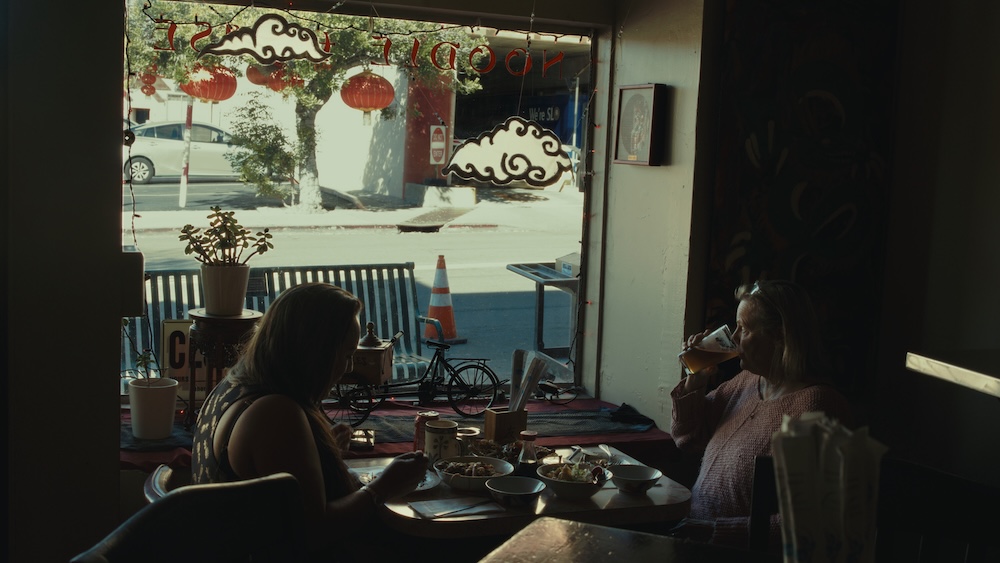
“With these restaurants closing, I think it was important to capture the food and as much of the food as possible in a clear light,” Jeffrey Wu said. “That was something I was really thinking about approaching the production and the cinematography of it. And now that Mee Heng Low has closed, these are depictions that we won’t be able to see anymore.”
But Chow and Jeffrey Wu said creating “Mee Heng Low” was different than previous works because of how it changed their perspectives.
“This documentary kind of broke this romanticism that I had for inheriting multi-generational businesses,” Jeffrey Wu said. “Like, it wasn’t as picturesque. It was more realistic and with actual stakes involved for Russell [Kwong].”
But facing this harsh reality encouraged Chow and Jeffrey Wu to continue highlighting the legacies of Chinese restaurants across the state. They hope audiences of the documentary will walk away with a deeper respect for Asian American history and culture.
“The history of Chinatown is the history of California,” Jeffrey Wu said. “If we want to understand our history as Californians, and maybe even the larger history as Americans, it starts in Chinatown. And it’s something we should appreciate.”
The film’s showing is free to attend, but requires an RSVP.

