
‘Lost in Reverie:’ Orchesis Dance Company’s 57th annual fall dance concert
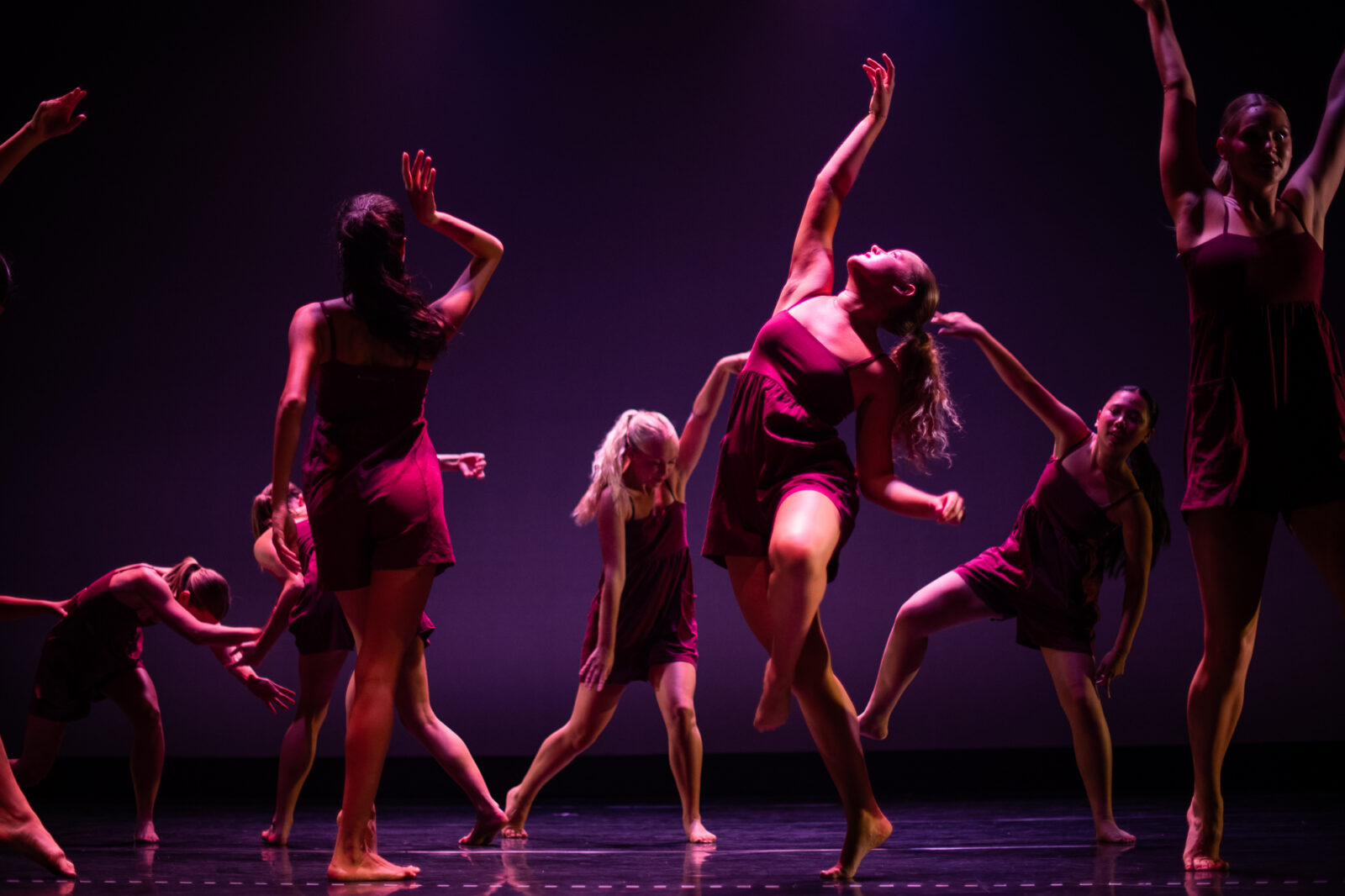
The lights dim and a hush falls over the crowd as audiences are transported to a world of movement and mesmerization. A reverie, or a state of being lost in one’s thoughts, entices audiences to blur the lines between imagination and reality. That sense of wonder takes center stage in the Orchesis Dance Company’s 57th annual fall dance concert, “Lost in Reverie.”
The show opens with dancers backlit by a red spotlight, their bright red gloves pulling focus amidst a sea of black costumes. The asymmetrical, jazz-inspired movements set a dramatic tone, conveying a sense of female empowerment and confidence. The show’s opener provides a new interpretation of reverie, a concept often associated with gentleness and ease.
Orchesis Dance Company held auditions in August, giving the company just under three months to choreograph, stage and design the entire production.
With choreography from faculty and students, the performance allows for a mix of creative vision and interpretation of the concept of reverie.
The show continues with a dance that completely flips the style, as it blends tap and modern dance. The dancers begin the number in seemingly opposition, with the different styles in competition for the audience’s attention. As the number progresses, the styles seem to blend into creative moments of partner work, perfecting encapsulating the dance title “A Common Language.”
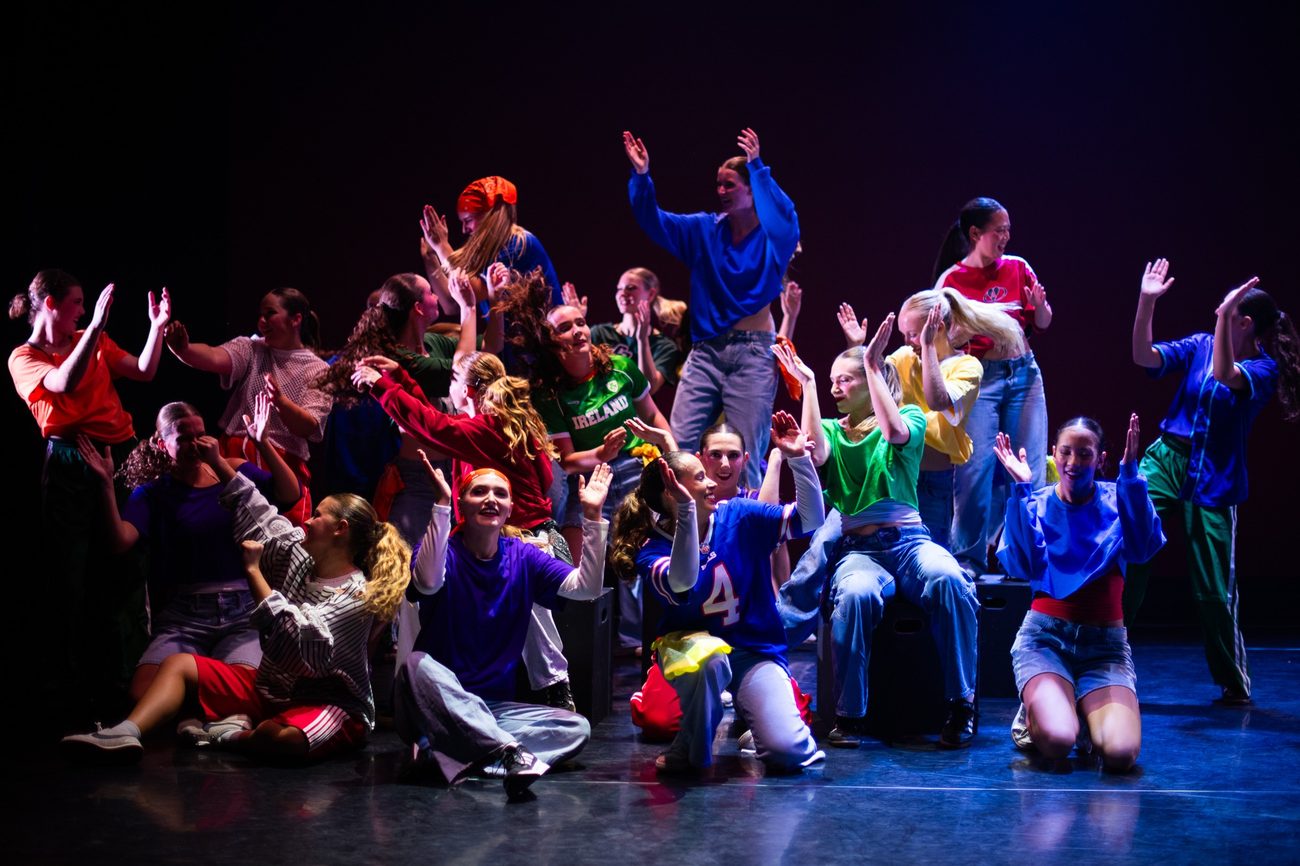
After a few numbers of inventive modern and jazz pieces, the energy completely transforms with the piece “A Common Denominator of Rhythm,” featuring classic elements of jazz funk and music by Liquid Soul, a jazz-fusion band that pioneered ’90s club jazz. The dancers’ bright costumes of neon blue, red and green perfectly match their bright and joyous demeanor throughout the piece which often included moments of lighthearted, playful interactions on stage mixed with high-energy movement.
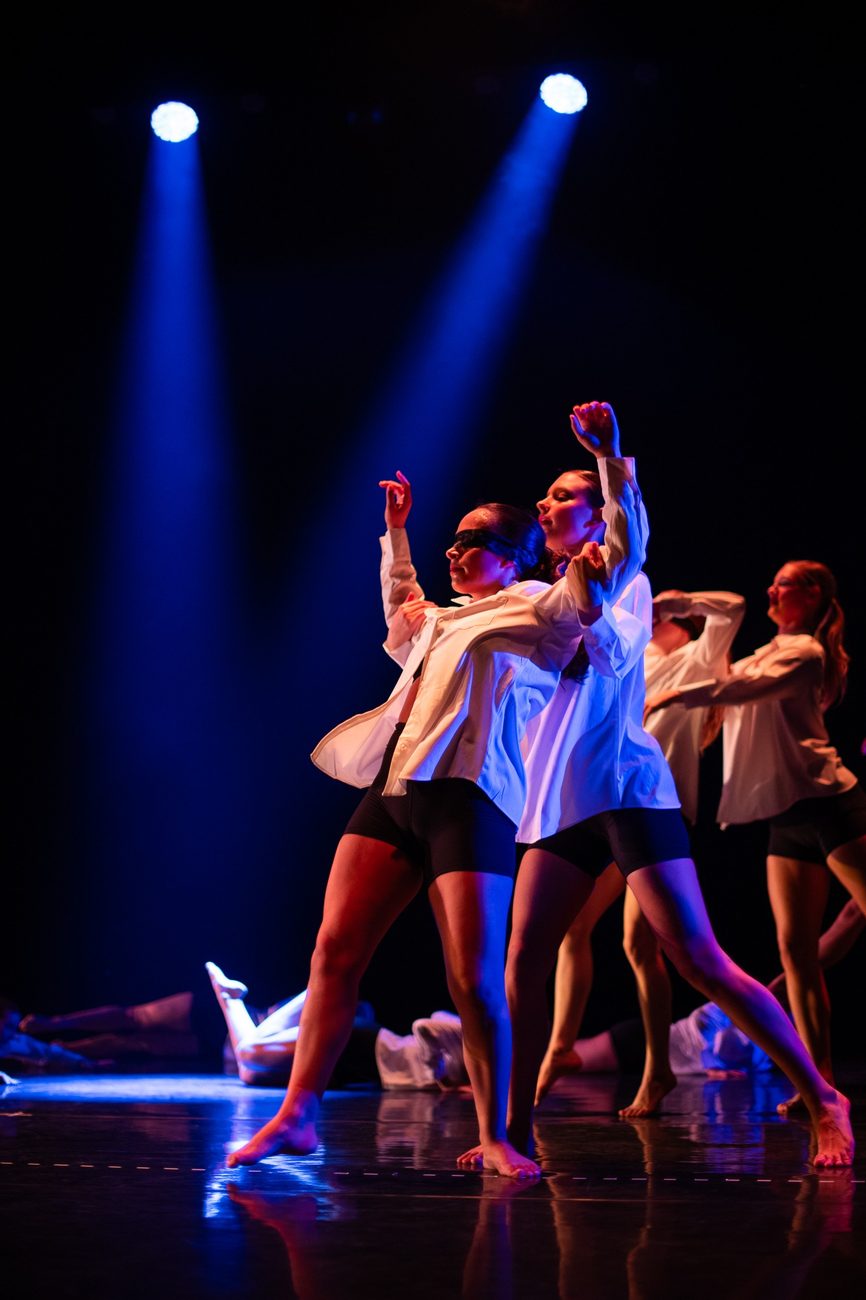
Another standout performance involved the use of blindfolds, in the dance entitled “Reaching Hands.” The piece feels like the ultimate act of trust between the artists on the stage, who allow themselves to be guided and carried by their fellow dancers. As the piece progresses, dancers slowly remove their blindfolds, conveying a feeling of faith and community between the girls.
The closing number ends the show in a beautiful display of femininity and joy, as every single artist graces the stage together for one final moment of unity and connectivity. The piece features music from Florence and the Machine, with recognizable songs that feel warm and hopeful not only for the dancers, but for the audience as a whole.
The production feels like the epitome of girlhood, as the audience witnesses this close-knit community of artists come together to present their hours of hard work into a single concept piece.
From playful moments of high energy in “A Common Denominator of Rhythm” to powerful moments of vulnerability in “Reaching Hands,” the production never shies away from blending non-traditional music, styles, and themes to present pieces that are well-rounded and unique.

