
From concept to the big screen: Reflecting on writing and directing Cal Poly Short Cut ‘You Have the Sun’
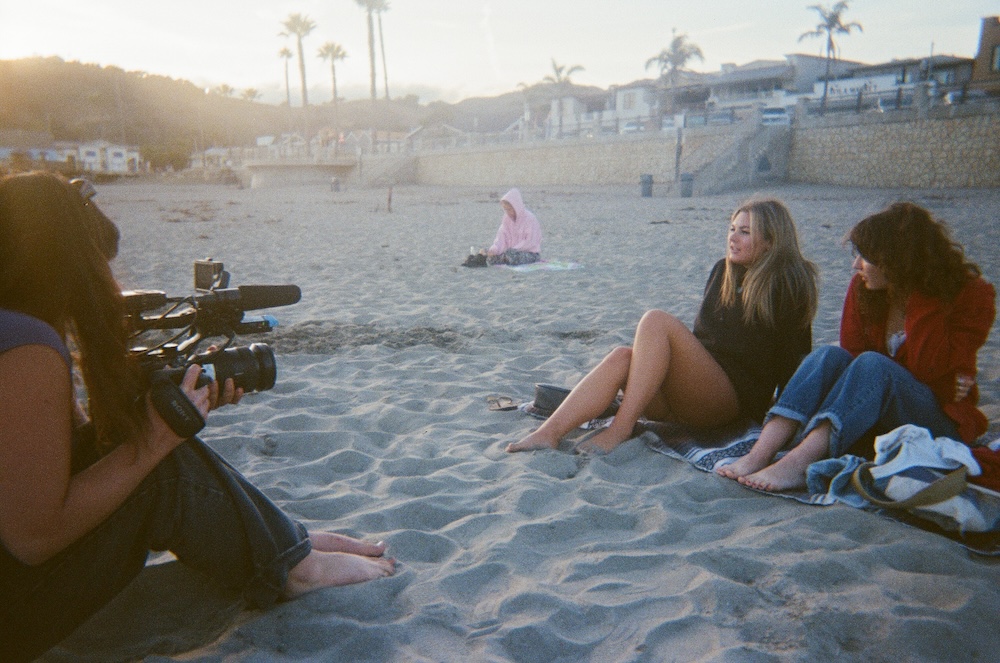
Marley Logan is the content director for KCPR and the writer/director of “You Have the Sun.” This narrative follows her experience during the process of creating a film for Cal Poly’s spring Short Cuts showing.
Following my freshman year at Cal Poly, I spent a warm San Diego summer working at my hometown waterpark (a resident employee of four years, seasonally). With a range of stories to tell, from violent guests to waterslide malfunctions and coworker affairs, my nearly 16-year-old sister had heard them all. She still decided to apply.
Our mornings together started early, running the park’s youth summer camp program. Our nights ended late when I went straight into her room upon getting home. We would talk for hours.
I didn’t realize how second nature it had become until it was closing time and my bags were packed. I had got so acquainted with my sister’s light – the way she understands me, my life and my feelings. She knows me better than I know myself.
Leaving for my sophomore year was harder than moving away for the first time. I arrived at my first ever apartment and she wasn’t across the hall anymore.
I had found out about ISLA 340 and 341 (Media Arts and Technologies: Storytelling and Media Arts and Technologies: Cinematic Process, respectively) months earlier, during the end of the previous school year. A door of opportunity and a spark of hope: I could write and produce a film through Cal Poly and have it shown at local theaters. I was instantly committed to bringing a vision to life, but I didn’t yet know what that vision was. I wanted it to be the right story to tell.
Then, as passing cars watched me walk to class, I found the story I had been searching for in the concrete beneath my feet. A story of sisterhood, of distance and of growth. It was the story of “You Have the Sun,” the Cal Poly Short Cut I soon after wrote and directed, set to premiere at the Palm Theatre on June 8.
In order to write a character, you have to know them. In lessons of character writing and pulling from emotion, I thought of my sister. Predicting her responses, picking fights and meeting myself through her. The main characters, Phoebe and Stella, are made out of little pieces of my sister and I. Her stubbornness against mine, her reservations and my relentlessness, traits evenly distributed between the sisters in the film.
It follows the last day before leaving for college, tracing the words taped into closed cardboard boxes and clear communication in complete silence. The two girls who have practically shared a closet their entire lives must split custody of their possessions – a white shirt getting caught in the middle. A physical manifestation of the difficulty found in growing up and moving away, as they find themselves unable to express their true emotions, instead channeling their feelings into the argument about the shirt.
The process began in winter. I drafted the script the night before it was due. After it was selected to be produced in spring, I was granted the dream team to work alongside: JC Jones, Sadie Levin and Chloe Tahmasebi. Our casting call was put out, and through it we found Ava Romano and Mirabelle Glassman, two strangers who quickly took on the chemistry of sisters five minutes into their first interaction under the low-hanging trees of the Health Center Lawn.
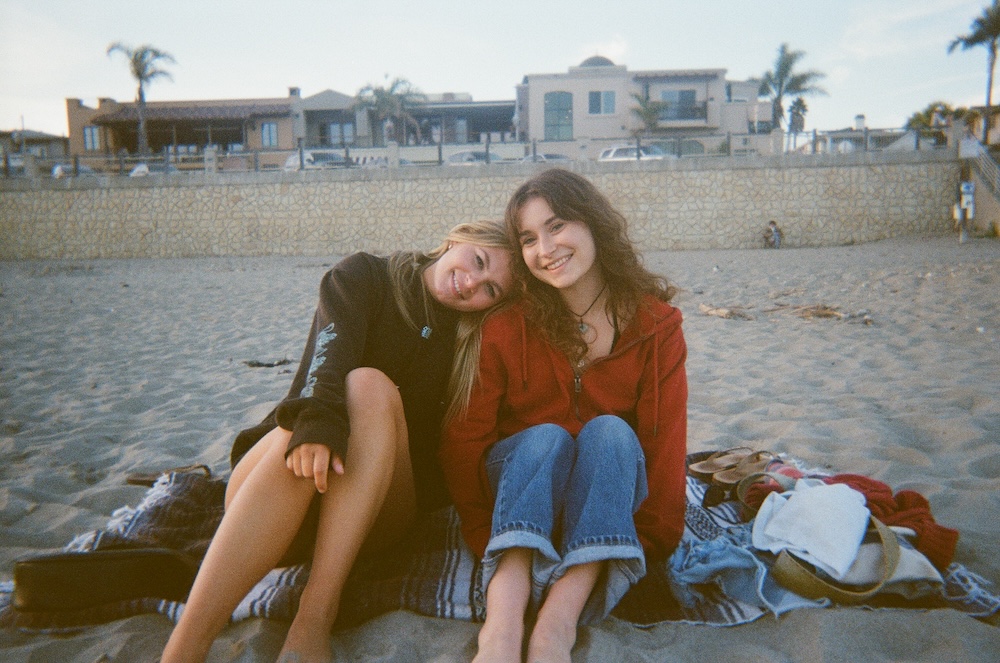
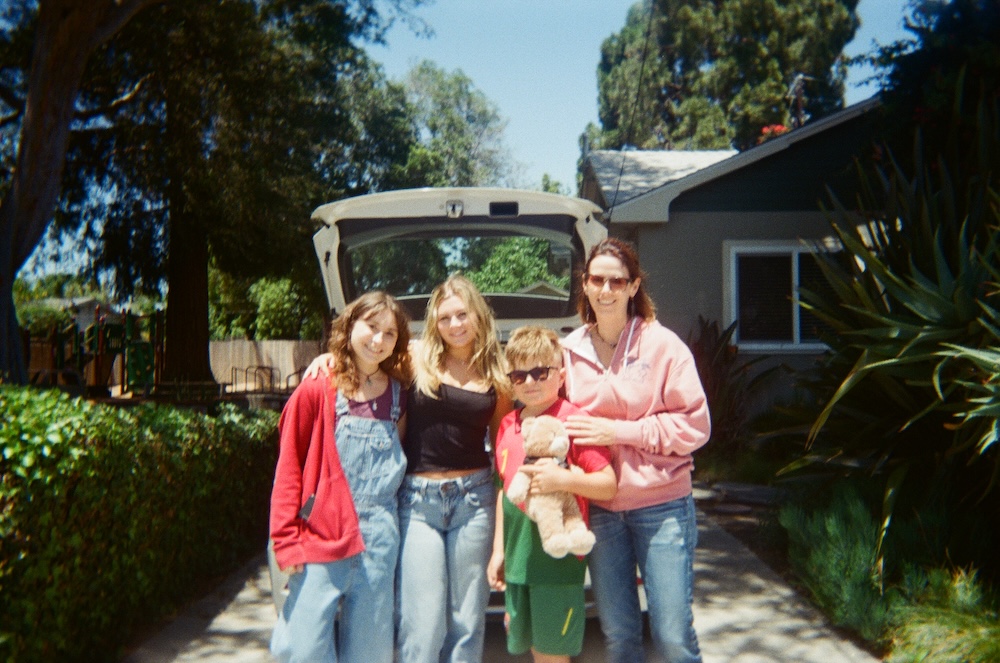
The process was quick, six weeks from start to finish and just over four weeks in between the first readthrough and the final showing. The entirety of filming was packed into five weekday nights of sandy toes, crowded hallways and employee-discounted, celebratory pizza. Late nights were spent at the library computers with Final Cut open, replaying the same audio clip forty times over to get the perfect cut. With the feedback of Randi Barros, our filmmaking professor and our biggest supporter and critic, my team and I were able to craft a product I feel genuinely proud of.
One of the most special parts of the film is the music, all of which was sourced from local musicians and friends. “Victory Song” by Cameron McAllister, the instrumentals of “be good be gone” by KCPR’s very own Olivia Nieporte and an original song handcrafted specifically for the film by one of my best friends, Ana Sage.
On Monday night, I’ll see my writing brought to life on the big screen for the first time – a dream I’ve had since I was a little girl with an iPad, iMovie and a vision.
My gratitude goes to the Interdisciplinary Studies department, The Palm Theatre, Randi Barros, the musicians who gracefully contributed, my team and our actors, all of whom made this possible. And most of all, to my sister: my best friend and my biggest inspiration.

