
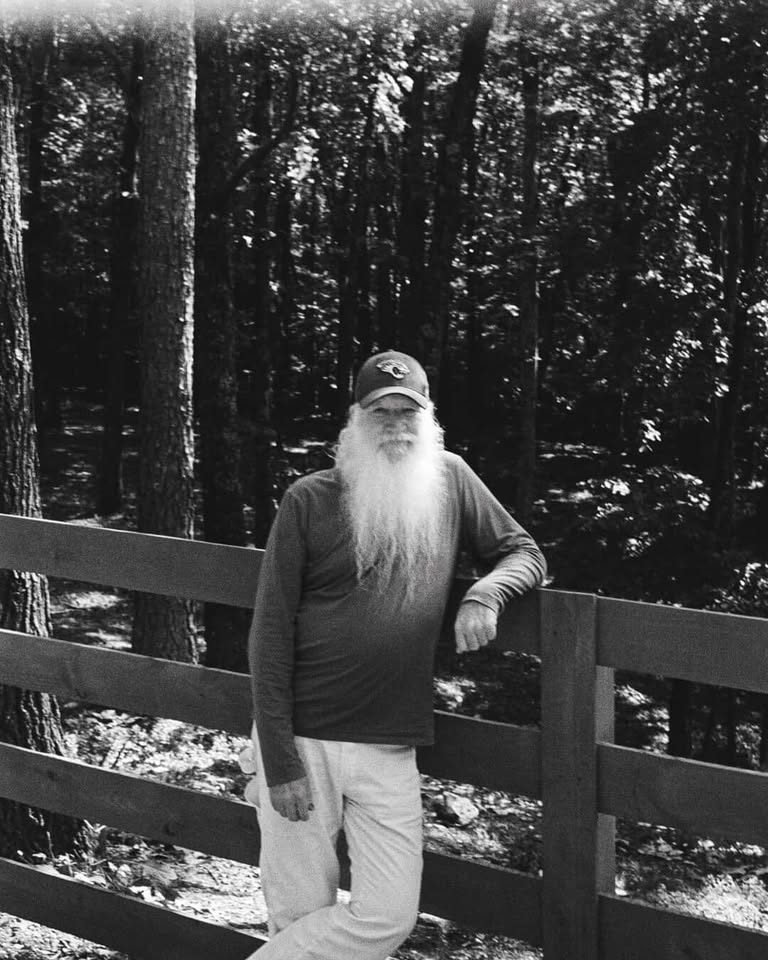
Sitting in Studio B of the KCPR station, the smell of old decrepit paper from records made me feel at ease. In front of the control board, an array of buttons and faders, hunched over my phone, Robert Lester Folsom’s voice filled the small studio. The conversation was contained by the glass windows, encasing me within them.
“The people coming to my shows are the age I was when I first recorded all this music,” Folsom said.
Folsom tapped into the fountain of youth. The majority of his rich musical archive was recorded during the 1970s with little to no exposure at the time of its conception. But in the ripe year of 2026, he now sits at about 554,000 monthly listeners, still somewhat of a hidden gem.
An unknown treasure to most from his time, Folsom’s root folk was subjected to crate collectors and fanatics, people who had given his work a gold star years before Anthology Recordings rereleased his music in 2010, convinced the archival tracks deserved another chance. Leaving it to a whole new generation of listeners to discover later on.
The twang of his soft southern tone is liked amongst those nostalgic for a time they didn’t grow up in, or those who simply have good music taste.
The first time I heard the warm embrace of his track “See You Later I’m Gone,” I was the same age Folsom was when he wrote it. I was 19, about to leave for college and stuck between the liminal emotion of nostalgia for my hometown and the bitter taste of old relationships and strained connection.
It was a time of change. Encapsulated by Folsom’s waning vocals and sepia-toned guitar.
I was the perfect target for Folsom’s music in a new age.
Even though the year in which we experienced this was significantly different, the feelings and emotions were identical. The experiences seem to exist in parallel when we connect through music.
“I’m not alone,” he said in regard to interactions he had while touring, “Other people feel that way everywhere. You represent what you come from, where you come from, but it’s all really the same feel.”
Growing up in Adel, Georgia, his childhood was narrated by the harmonies of the Baptist choir of the church his family went to. Folsom described being amazed by the natural ability of the choir singers to string together melodies without the need for sheet music.
Like many, Folsom’s musical awakening was catapulted by The Beatles. His piano lessons soon became a thing of the past and he traded the keys for a guitar. Strung by his father and encouraged by his mother, the thread of music began to weave its way through Folsom’s life.
Music was a constant. Whether it was being played on the radio, from a record player or in the church – it was like a family heirloom, delicate but demanding.
Using a Sears 3440 two track reel-to-reel tape recorder, Folsom wrote his inner musings of love, yearning and loss. Finding poetry in the melancholy, curbing the ups and downs in song and using it as a way to process and make something out of his experiences.
“When Picasso painted a painting, he didn’t ask somebody to come help him do it,” Folsom said. “I feel the same way about my music. It just has to come how it’s gonna come. I don’t get a writer’s block kind of thing. I never thought of myself having that. I just feel like the songs come when they’re supposed to.”
The songs from “Ode To a Rainy Day” came out of him shamelessly. With ease. Like a painter set in front of a canvas. The music just flowed.
“It’s kind of magical, I don’t make myself sit down and write a song.”
The lyrics and melodies come when they do, and with it, a new look at situations passed and lingering emotion.
However, aside from some local fame, the private pressings Folsom delivered across South Georgia and North Florida had yet to truly give him a name.
He was sitting in the waiting room of success and then it went quiet. Labels didn’t flock to his home recorded sessions. He took a step back into the life of a family man, painting houses to support his wife and baby on the way.
“I call that kind of the void, you know? I was raising a family and, you know, I had a good life,” Folsom said.
Now, 32 years later and the unsung “guitar man” is performing all across the U.S., with a new release coming out in March. Folsom is experiencing a lick of divine timing.
“I have no regrets for what I did and for waiting as long as I did, but I think God has his own timing for people and I think that’s the way it worked for me,” he said. “It was the timing. It didn’t happen way back when, it happened now.”
Though Folsom’s reality of “retirement” is busier than most his age, it’s the energy that the crowds and his team brings that creates a wavelength of vitality.
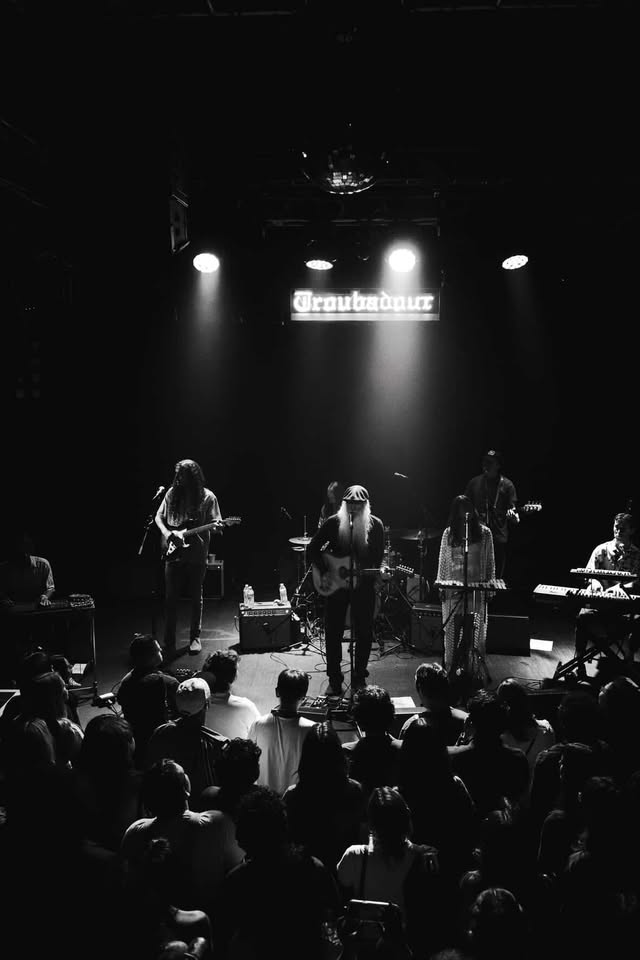
What stuck out to me during our chat was Folsom’s humanity. When one’s life’s work is hidden away from the world and revealed suddenly, it offers a new perspective. His words and way of describing things were veiled by the color of divine timing. Talking about how things happened when they should and having no regrets for how they turned out.
His traveling band is made up of young adults. Going gig to gig in between tours and then hopping on the road to embark on Folsom’s poetic crusade of americana.
“You know, everybody in my band could go out as a solo artist,” Folsom said, like a proud parent.
He spoke incredibly highly of each one of them, listing their achievements and side projects talking of their energetic potential to go out and achieve all they wanted to. Seeing their youth as a mirror or perhaps a missed connection to the thoughts he had when he was first writing and recording music.
At the core, Folsom wanted the things that he created to be loved. To be held to some sort of value by people. To make people feel, connect and love a little bit more. Apart from anything, he was just like everyone else — yearning for a way to make that connection tangible.
“The cool thing about my shows is the people that come to them are coming to hear my music,” he said.
Folsom spends his mornings on the dirt path around his house on his bike, often in silent meditation narrated by the crunch of gravel and dust to think, providing a third space of solace and allowing him to dwell on imagined lyrics or musings. But more importantly to connect that string to something greater that has always been there.
“I meet everybody who wants to meet me and they tell me their stories about how my songs meant something to them and a certain time in their life. I start feeling like a minister or something, you know, like everybody’s leaving church and they’re shaking my hand, saying thank you for helping me through my problems, and I’m like, well, thank you for helping me.”
This place of musical worship is born out of a need for connection.
“In my youth [I’ve gone through] melancholy times, you know, when you think you’re on cloud nine, and then all of a sudden you feel like you’re being left behind. I even feel that now sometimes, even though I’m fine, you know?” Folsom said. “That’s what the people relate to now. They’re like, gosh, I felt that way once. I said, yeah, I definitely felt that way. I was that way.”
A lot of life is figuring out where you fit in. Folsom plainly showed this to me. We all have regrets. We wish we worked at something harder, took that one opportunity or followed a different path.
But Folsom’s story and world view shows that in the most unsuspecting ways we end up right where we need to be, even if it took longer than we thought.
“You can’t help but remember your past. It visits you every now and then, and I feel it. Definitely. And I’m glad I survived it. I’m glad I went through some of it. Some of it was a good thing.”
The words sounded so profound. Maybe it was his soft Southern twang, or maybe that I swore I could hear the faded tone of all those emotions that Folsom was referencing. Either way it was a stark reminder that we are all the things that have ever happened to us. Even if they were bad, they meant something.
When I asked Folsom if his reality was any different than that of the one he might’ve dreamed of as that long haired hippie teen in Georgia, he matter of factly replied that no. It was exactly what he dreamed it to be.
In homage to this process, and to the excitement of Robert Lester Folsom fans across the country, Folsom will be releasing a new album on March 20.
The album will share more of Folsom’s unheard tracks, including a new track titled “If You Wanna Laugh, You Gotta Cry Sometimes.” Folsom shared that the title came from when he was recording in Atlanta. Seeing people out on the street, Folsom’s imagination went to a place of sonder, imagining everyone’s stories and lives. In a moment of overwhelming emotion, he shared that he imagined a woman telling him “if you wanna laugh you gotta cry sometimes.”
Speaking to the highs and lows that shape our lives. The new album opens with “I Don’t Know,” a track speaking to the uncertainty that often fills our relationships. A raw cut of reality and feeling that characterizes and drives Folsom’s work.
As our call came to a close, we talked aimlessly about school, tour and past shows. Everything and nothing at the same time. It was a conversation I didn’t want to end.
As it did, Folsom ended the call by asking what I was doing in school. After telling him my loose plans of becoming a journalist, Folsom simply said “Well, do what you love, okay?”
Above all else Folsom struck me someone who cares. He cares about his music, his family, his fans. Even if our call only lasted a little under an hour, I left studio B with a warm and sunny feeling -– similar to how his songs usually made me feel. Folsom made talking about sadness and vulnerability a simple thing. Matter of fact. Something I think people now shy away from.
Safe to say on March 20th I’ll be carving out a chunk of my day to fade into the copper chime of Folsom’s guitar, along with a cup of tea and a seat by a big window. All the perfect factors to spend some time thinking about everything that’s ever happened to me, potentially with a little more appreciation and maybe even more love.

