
Inside Madonna Mondays, the weekly swing dance event drawing in students and community members alike
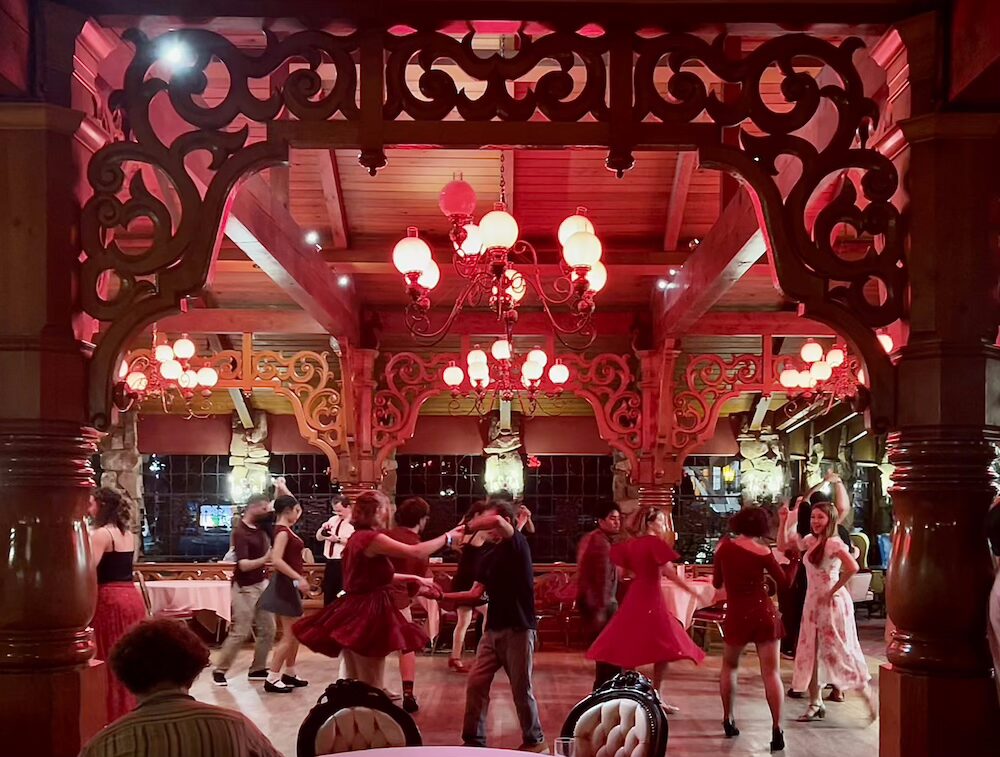
Laughter and 1940s jazz music echo through the halls of the Madonna Inn, as dancers twirl and glide across the hardwood floor. Multicolored lights bounce off the pink walls of the dining room where attendees catch their breath and enthusiastically chat with others. Despite it being a Monday night, not a trace of worry for the week is found amidst the beaming faces and lively footwork of dancers spinning their partners only to rejoin hands.
Every Monday from 8 p.m. to 10 p.m., swing dancers of all ages mix and mingle at the Madonna Inn, bonding over their love for the art form.
For Cal Poly’s Swing Club president, the dance itself is one piece of a much larger community.
“I think Mondays have been one of my favorite nights of the week since I started coming here,” child development and liberal studies junior Eliana Friedman said. “The swing dancing is amazing, of course, but it’s a really lovely community and a great time to just go for the vibes, too.”
A weekly staple for local swing dancers, Madonna Mondays are free to attend and open to everyone. Members of the Cal Poly Swing Club and the SLO Rugcutters made up a large portion of the turnout each week.
Cal Poly Swing Club welcomes any students interested in swing dance. They offer lessons, workshops and social events for all skill levels, including Madonna Mondays. According to Friedman, Swing Club keeps all opportunities as cheap as possible, creating an inclusive and supportive environment.
“I think part of what I really appreciate about our club is that it’s making dancing accessible for everyone, which I think is how it should be,” Friedman said. “I think that’s just part of the culture, at least here and everywhere I’ve seen swing, that everybody’s welcome.”
As the hosts of Madonna Mondays, the SLO Rugcutters are composed of local swing dancers wanting to promote the craft and carry on the legacy, according to Rugcutters dance instructor and Mustang Band Assistant Director Len Kawamoto. The name comes from old-school slang for someone who dances well or can “cut a rug.”
“There [was] a group of dancers wanting to organize Lindy Hop activities back in the late ’90s,” Kawamoto said. “I had just started learning to swing dance… Soon, the group had officially come together and I was asked to join.”
Lindy Hop is a type of swing dance that originated in the 1920s and ’30s in Harlem, New York. The energetic style weaves European structure with traditional African influences and was primarily danced by African American dancers in the 1940s. By the 1950s, swing dance had started going out of style, but it has since seen a revival.
While the Rugcutters mainly focus on Lindy Hop, Swing Club dances Lindy Hop, Charleston, Balboa and more, according to Friedman.
“Charleston is definitely faster than Lindy Hop, and you can do it in partners or in a line,” Friedman said. “Balboa’s a really fast dance, and it’s a close embrace dance. That one’s a really fun one for connection.”
All styles of swing dance are offered at Madonna Mondays, but the community’s partiality for Lindy Hop is prevalent.
“I’m a sucker for Lindy,” Friedman said. “Don’t get me wrong, Balboa and Charleston are super fun, but Lindy Hop is where my heart’s at.”
Lindy Hop is so popular among the community that, when the Rugcutters’ original dance venue, The Graduate, stopped offering it, they created what became Madonna Mondays, according to Kawamoto.
“Around the end of 2001, The Graduate decided to change their weekly dancing schedule, and Lindy Hop was removed,” Kawamoto said. “We started looking for a new venue, and I think within a few months we were offered the time slot at the Madonna Inn.”
The Graduate, once a popular dance and night club, closed its doors in August 2020, but Madonna Mondays live on. In the nearly 25 years since they began, the number of participants has grown, with Swing Club adding to the mix.
“Our venue provides [Swing Club] with the opportunity to dance with community members, some with many more years of experience,” Kawamoto said. “I think, to them, it is a great way to get a more varied dance experience and get connected to a larger dance community.”
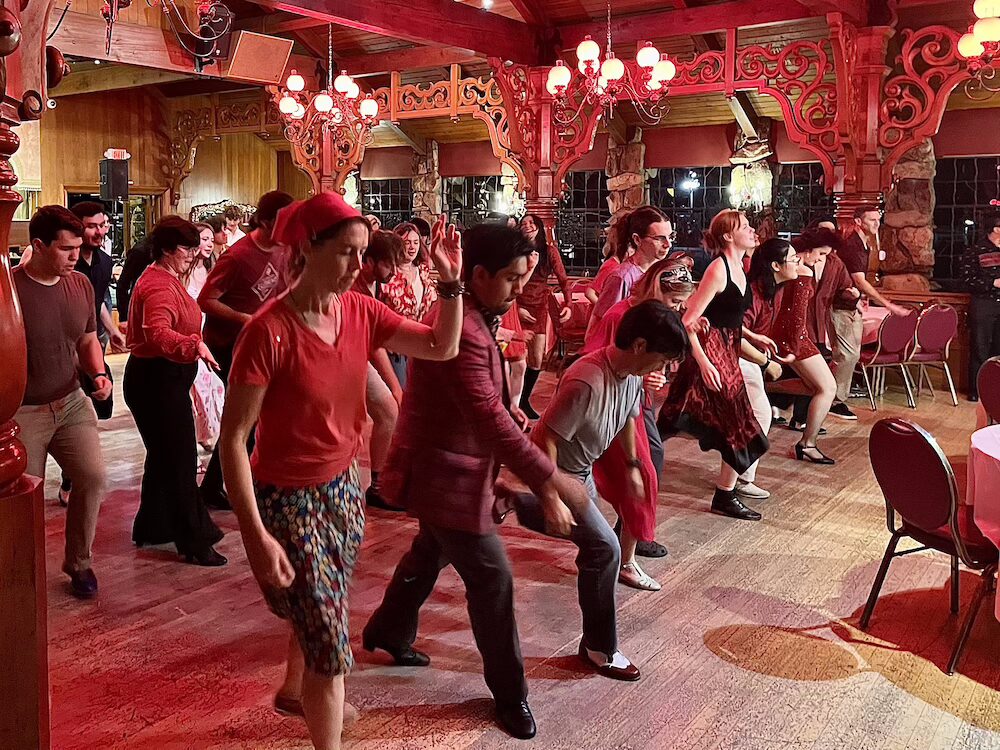
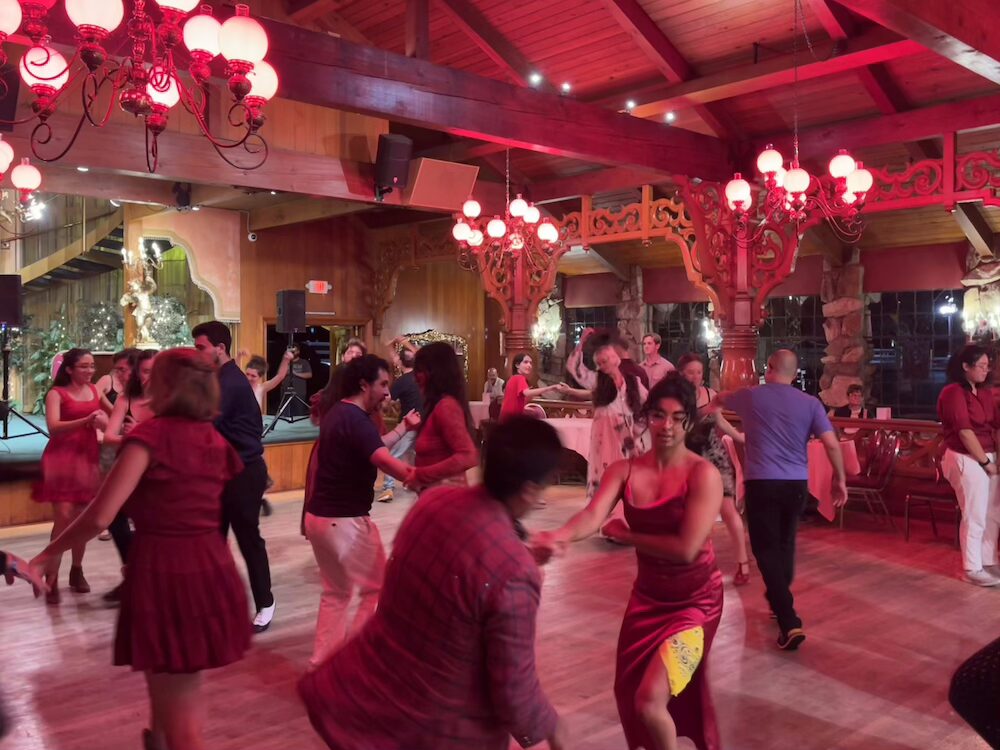
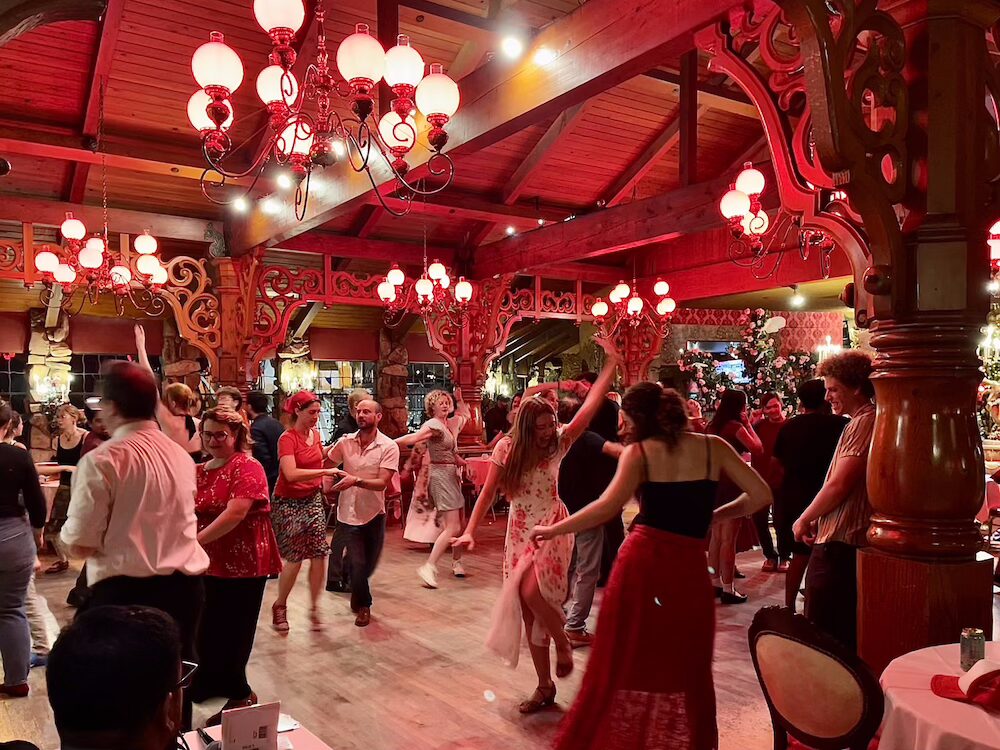
In addition to Madonna Mondays, the Rugcutters provide opportunities for the community to don their best outfits while dancing. Swing Club secretary and nutrition senior Taylor Howe described her penchant for the monthly tradition.
“Something that I love that we do here at the Madonna Inn is the first Monday of every month, we have themes throughout the entire year, and people go all out,” Howe said. “We call them Fancy Firsts.”
As for when Fancy Firsts officially began, Kawamoto could not recall. However, he said the idea came naturally with the progression of Madonna Mondays.
“When we first started [Madonna Mondays], people just dressed up a little bit more than usual, but then somebody had the idea to throw in a theme to the Fancy First Mondays,” Kawamoto said. ”It’s fun to see some folks really get into the theme.”
Phyllis Madonna, co-founder of the Madonna Inn, turned 98 on October 5, the same day as that month’s Fancy First. October’s Fancy First celebrated the birthday by making the theme her favorite color, red.
While not everyone receives a dedicated Madonna Monday for their birthday, the community still shines a spotlight their way.
“The specific 15 minutes around nine o’clock, we do something called jam circle,” Howe said. “So it’s anyone celebrating anything – birthdays, anniversaries, out-of-towners – and the entire dance floor is in a circle around these few people. We steal them for dances and have a whole song just to celebrate them.”
The jam circle fosters a “supportive” energy, a word many Madonna Monday attendees used to describe the community. As her favorite part of the evening, Howe makes sure not to miss it.
“Even if I’m not having a great time or I’m overstimulated, I’ll pop up for those 15 minutes. Then I’ll return to my seat doing homework or something on the side,” Howe said with a laugh. “Whether they know how to dance or not, everyone’s going in there and sharing that good time with them.”
For those who are new to swing dancing, jumping right in may seem daunting. However, experienced members of both the Rugcutters and Swing Club are “always willing to help,” according to Swing Club’s 2025-26 outreach coordinator and mechanical engineering junior Kaleo Lomelin. Even during the event, people are happy to teach newcomers, forming small clusters throughout the dining room.
“I think whether or not you are a good dancer, whether or not you’re confident in it, it’s how kind everyone is with the process of learning, as well as the process of learning how to feel comfortable in yourself,” Howe said.
During each event, Swing Club officers wear yellow bandanas to signify their position. This lets attendees know who can not only teach swing dance steps but also help in uncomfortable situations. Friedman emphasized Swing Club’s commitment to a community of consent.
“By providing those highly visible people, everyone can know where to go,” Friedman said. “If someone makes you uncomfortable, if you need to talk to someone, if you want someone to dance with, like anything at all, you could just come talk to one of us, and we can help.”
Landscape architecture junior Ezra Browers said this support helped him stop overthinking swing dance. He described his first time “nailing it,” dancing with a friend during his sophomore year.
“My worries melted away and I wasn’t thinking about what move to do next,” Browers said. “I was just involved, like developing what the dance was going to become.”
Many attendees shared similar first experiences, highlighting how helpful others were to their improvement as a dancer. Swing Club’s 2024-25 president and recent Cal Poly graduate Saige Smith began their swing dance journey as a freshman, and their passion followed them after leaving college.
“For the first three years that I did swing dancing, I only missed one Madonna [Monday]. That has since changed,” Smith said with a laugh. “I definitely don’t have as much time after graduating, but I come whenever I can now.”
Although post-college life has hindered her free time, Smith’s ties to the community remain unsevered. As one of those ties, Howe reflected on this closeness, both locally and beyond.
“Swing dancing is kind of tight-knit,” Howe said. “The more you get to know people, the smaller you realize the world is. All of us travel and go to different events. I’ve gone to where Saige [Smith] grew up in Austin, Texas, and I’ve danced with people she knows there.”
For Smith, these bonds make returning to the dance floor worthwhile.
“I love the craft, obviously, I love doing it, but the thing that keeps me coming is the community,” Smith said. “This community, as a whole, is so welcoming and so kind. And it’s so cool that not only do we get to dance with college students, but we get to meet people that we would have otherwise never had the chance to meet, and we get to do this together.”
Lomelin echoed a similar sentiment about the community’s devotion to swing dance and each other.
“This group, it kind of feels like a big friend group, like a bunch of friends that help each other out,” Lomelin said. “Some of them, the more senior folks, they help and teach the newcomers, and it’s just like a long chain of helping up the next person.”
This chain is exactly how both Smith and Friedman got involved in Cal Poly Swing Club and became president in their respective years.
“I found out about swing dancing through the Cal Poly Club Fair,” Smith said. “I was asked to dance by the girl who was president during my freshman year, and I fell in love with it that moment.”
Two years later, Smith recreated a similar scenario. This time, however, they were the one greeting Friedman as a freshman.
“I knew I wanted to do dancing when I was in college, and the Swing Club just had such a wonderful energy,” Friedman said. “The president at the time, named Saige [Smith], was just so friendly and welcoming and very engaging. And then the first time I showed up [to a club meeting], Saige remembered my name, and it just made me feel so happy and welcomed.”
While it may seem like a small, polite gesture, this became a lasting impression of the swing dance community for Friedman. The sense of belonging she received from Smith is now something Friedman aims to carry into her leadership of the club.
When asked why she wanted to become Swing Club president, Friedman simply responded: “I wanted to be somebody’s Saige.”
Maintaining this positivity takes constant effort, but the community is willing to put in the work. This also means keeping the swing dance community open to all who wish to join, and Smith wholeheartedly believes in the group’s natural inclination towards inclusivity.
“No matter who you are, no matter if you’ve never danced before or you’ve been a competitive dancer for 13 years, you’re wanted here,” Smith said. “Not just because you want to dance, but because we want to know you as a person.”

