Formally resurging in late December of 2025, the powerhouse trio Ty Segall, Charles Moothart and Chad Ubovich of Fuzz delivered a self-described record of singles, rarities and demos titled “Fuzz’s Fourth Dream.”
Chronologically, it builds upon their 2013 debut album “Fuzz,” followed by “II” in 2015 and “III” in 2020. Composed of both new and old faces, the project blends throwback tracks such as “What’s in My Head?,” their rendition of King Crimson’s “21st Century Schizoid Man,” a cover of the Kinks’ “Til The End Of The Day,” and revisited cuts like “Loose Sutures,” and “This Time I Got A Reason.”
With no shortage of tritones, ominous intervals and Sabbath-esque ballads, Fuzz provides a masterclass in toeing the line between chaotic thrash and complex melodies. For those completely new to the act, I’d suggest sinking your teeth into their track “Earthen Gate” and letting it marinate as you read on.
At their core, Fuzz has held true to developing a modernized take on heavy psychedelic rock and solidified themselves a prominent force of sonic nature. For those familiar with their prowess, whether they were introduced through a skate scene, a herbal-fogged basement or from being thrown about a pit amidst one of their sets, few would hesitate to revere the group as legendary. Aside from the release of their live “Levitation Sessions” in 2021, the band has been relatively dormant as members pursued their own projects and life ventures.
But, following an opening night in Solana Beach, California alongside hometown favorites, Pancho and the Wizards, that debuted Fuzz’s string of upcoming performances, there was no mistake about it: Fuzz was back.
With momentum under their belt, the trio marched north like the ever-looming grim reaper; glimmering scythe dragging behind. San Luis Obispo was next to be struck down.
Being a Sunday night, I anticipated – perhaps obliviously – a slightly more tame turnout than one might expect on a Friday or Saturday. However, rounding the corner of the dim business park that houses the locally-prominent venue SLO Brew Rock, I was pleasantly greeted with a parking lot nearing full.
Given Fuzz’s drummer, Ty Segall, had recently ripped through San Luis Obispo on his solo tour I should have known better as it warranted nothing short of a high-energy turnout.
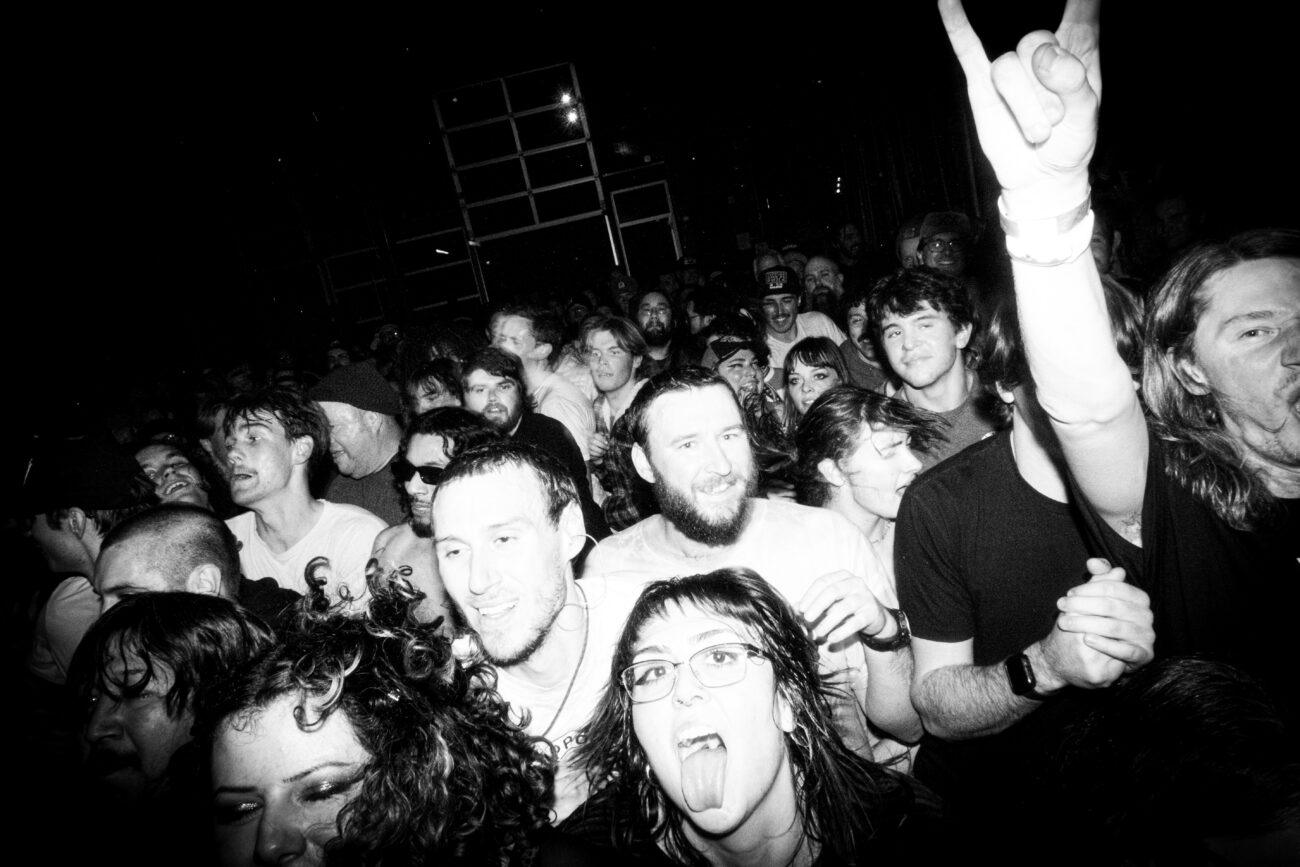
Scattered conversations floated about, some blurred by halos of smoke. Pickup trucks sat with longboards, still wet, hanging out of their beds, while denim and leather-clad figures loosely drifted around the outskirts of the venue. Mingled scents of fresh ales and sweet colognes were carried outwards to the night, riding the tail end of the day’s warm air. A low hum of electric anticipation vibrated through the concrete and into the soles of my boots. Supplementary security hawked the edges of the barricade as shoulders began to drape over and shuffles intensified.
Needless to say, it was obvious that no arm-pulling was needed to congregate Fuzz-enlightened (or Fuzz-curious) minds that night; their hypnotic haze of mysterious, thick riffage and snarling, convinced vocals worked its own transcendental magic on souls of all ages.
Interrupting Charles’s Dinner:
Prior to the show, I was fortunate enough to speak briefly over the phone with Fuzz guitarist Charles Moothart – whom I caught pre-dinner.
Charles: “It’s still just kind of slow cooking. Jackfruit – I made some like jackfruit, fig, carnitas style tacos.”
Both out of intrigue for the dish and respect for his time, I replied,
Evan: “Oh right on! I won’t keep you away from it too long then…”
As an avid Fuzz listener, the release of a semi-revived body of work immediately snagged my attention, yet it also prompted the question of why.
Evan: “Fourth Dream came out at the end of December, and I’m curious about the thought process there. Does it feel like it could be a new chapter, a transitioning phase, or more of a summarization?”
Charles: “Well, some of those singles that we did in the early stages of the band, they were really formative to who we are as a band now and the road to get here.
That was also, you know, some of the first music people heard of this band and some of those seven inches aren’t really readily available anymore.
We’ve been kind of throwing around this idea for a minute, and I guess this just kind of felt like a good moment to do it because, you know, everyone’s been on their own journey for a while and it’s just, it’s just kind of like we’re kind of stepping into like a whole new chapter as as friends, but also as musicians.
We always talk about writing more songs together and jamming on new ideas, but it’s a ‘take it as it comes’ kind of thing, and this felt like the right move. Especially, you know, playing some shows around it, keeping the band going and gives a good excuse to get back out and play this music live.”
For this Fuzz reunion to happen though, there had to have been an initial union in the first place.
Evan: “Moving back real quick, about you guys being friends, how did you and Ty meet? How did that relationship start out in the first place?”
Charles: “Yea, I was like a freshman in high school, he [Ty Segall] was a junior and he was already, you know, playing in bands and they would play house parties and stuff. I think my band opened for his band just at one point, and I was, like, intimidated by him because he was this older kid who was a ripping drummer and doing really cool stuff. Eventually I joined his band that he’d already had going to at the time called Epsilons.
I played bass and he was playing guitar and singing…we were always starting new projects. And around the same time, actually, that same band, Epsilons, before I was in it, played a show with Chad’s band somewhere in LA…Chad was from the San Diego Valley at the time.
So yeah, it’s kind of funny because we all loosely met in high school and then, our lives kind of went different ways for a little while and then all kind of came back together. But yeah, I mean, I’ve known, I’ve known Ty since I was 14 years old and I’ve been playing music with him since I was 16.”
Evan: “As you mentioned, you guys all branched off and were working on your own projects for a while there. Outside of Fuzz, are you guys talking all the time and communicating ideas and staying in touch or does it feel kind of like a reunion, being back together again?”
Charles: “We’re all friends, first and foremost, you know, so I’m in touch, but all three of us are really busy people. I had to stop playing drums in his band because I had a kind of leg injury thing related to touring and stuff. So when I had to step away from that, it was a big shift for us, because we had spent most of our time on the road together. But that was also kind of a nice reset. Like two old friends able to go back to a place where, when we did see each other and catch up and stuff, it didn’t have to just be because we had to talk business or talk about tour or whatever.”
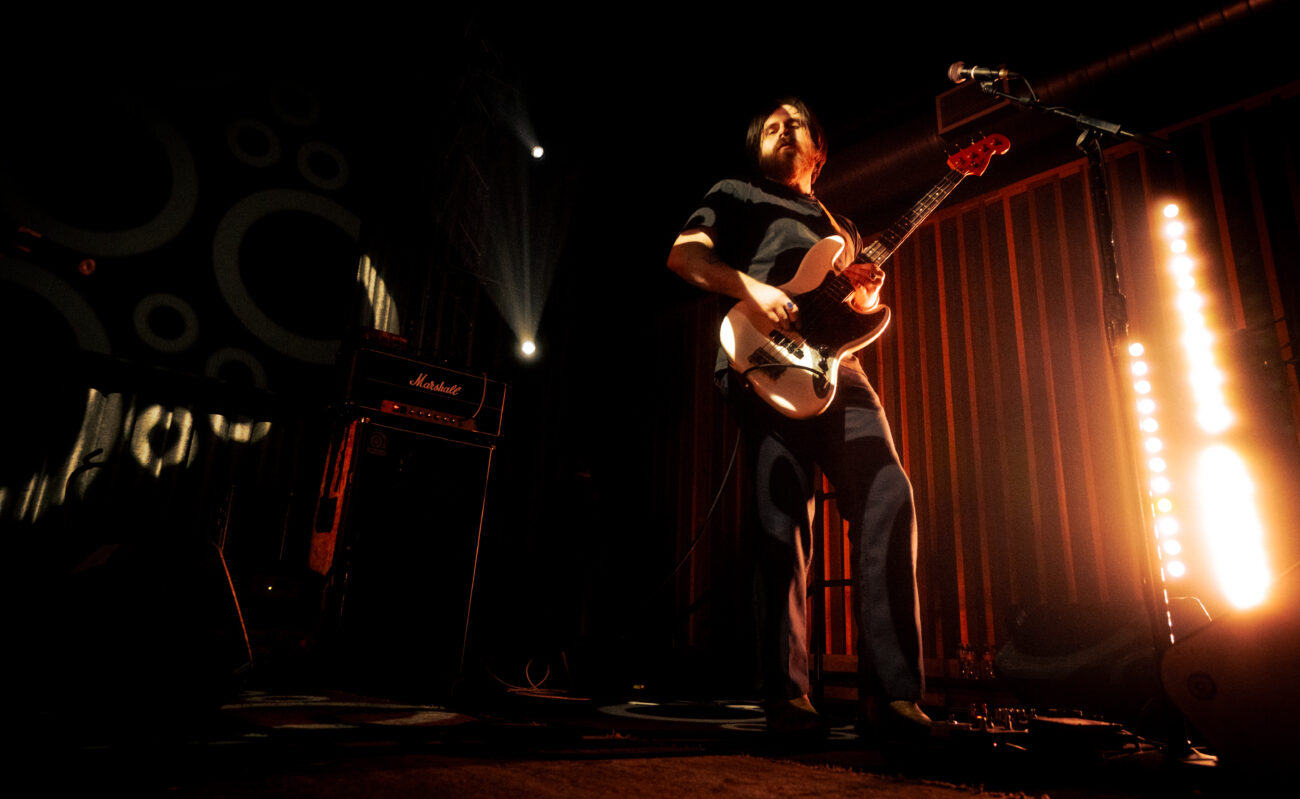
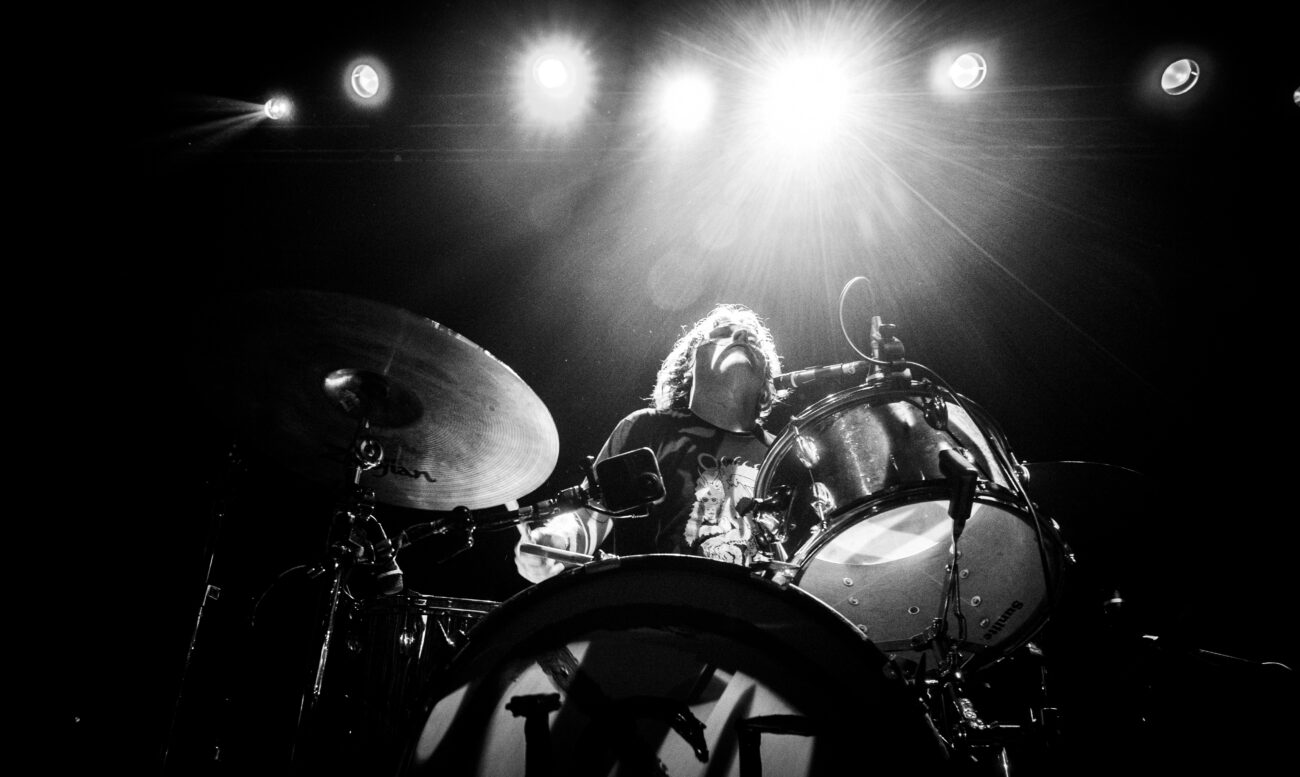
Anticipatory glances, nods, and smiles shot across the stage made it heavily apparent that their chemistry was long-developed. Both seasoned musicians and any layman passing through could verify Fuzz did not meet the night before, and it’s absolutely no surprise, nor coincidence.
In time apart, all three members of the band have built stand-alone reputations as artists. Moothart fronted a project under the moniker CFM, crafting explorative, guitar-based albums adjacent to the style he carries in Fuzz, and more recently has continued to deliver tracks under his full name – Charles Moothart.
Ty Segall has been damn-near relentless since those high school days, pressing 17 solo studio albums among numerous other collaborations to this date. Ranging from stripped down, acoustic folk rock to psychedelic heavy metal, Segall continues to contribute to contemporary rock.
To illustrate, I once saw Ty perform in the backyard of a surf shop in Los Angeles; nearly one a.m., he jammed a raw acoustic set at the end of a long bill for those still in attendance – quite a contrast to this iteration with Fuzz.
Last and definitely not least, bassist Chad Ubovich leads Meatbodies, a group usually classified by “garage punk” and “neo-psychadelia.” With their most current release being “Flora Ocean Tiger Bloom” in 2024, Meatbodies continues to tour from time to time. Earlier on, Ubovich played with Pangea (now known as Together Pangea) and in early stages of Ty Segall’s band.
A psych-rock supergroup, per se.
Understandably, music remains an inseparable axis of their friendship.
Charles: “That being said, music, writing music and bands and projects is the core of our friendship and it’s at the core of all of our identities, you know?
So, of course, music always comes back into the fold and like I just said, from an early age, Ty and I were always starting different bands.
Like, sometimes we would start a band that would record 10 songs in one day and my parents’ basement and then we’d play one show and we’d never do it again. You know what I mean?”
We’re all in our, like, mid-late 30s and it’s a different time for us. We’re not in our early 20s, just hopping in, being on floors and doing whatever the fuck we want, you know? So it’s a different time now, you know? But it all feels kind of organic in that way for sure.”
Having seen them perform live and jammed out to numerous concert recordings, I smirked at the insinuation of what “getting old” looked like, recalling moments like “Live at Rock en Seine, 2015”. At the same time, this led me to wonder if their revisitation to these tracks featured on “Fourth Dream” stirred memories (nostalgia, even?) for the guys – if any elements brought them back to their conception.
Evan: “Well, the music of Fuzz and what you guys play, you know, it’s nothing short of energetic. I know you’re like oh, mid-30s, I’m feeling older now, but when you guys are playing, is there still that mindset you get pulled back to? Playing some of those early tracks and coming back now and practicing or performing them – I don’t know if nostalgic is the right word…”
Charles: “Oh, for sure. I mean, 100%. You know, now this band is in a new time period and we live in a new reality. We live in a whole new world. I mean, for so many reasons, too many reasons to even go into right now and one’s that we all know. So it’s a whole different society. It’s a whole different world, it’s a whole different music industry. It’s a whole different landscape.
There’s both sides of the coin. It’s really fun to try to take some of the songs that we wrote and recorded when we were much younger and try to put a newer spin on them.
I go, ‘how would we do that now?’ Or ‘how would, how would I sing that now?’ Or ‘how would I play that riff?’ It’s fun to challenge yourself in that way. It’s really fun to be like, oh wow, that’s like something we would probably never write now.
And, you know, like, yeah, bring that raw, unbridled energy that we used to bring to the table when we were still figuring out who we were. I love, I love going back to the indie era of this band.
But at the same time, we’ve all also kind of fine-tuned our voices both singing and from a creative standpoint – our creative voices have all become more clear.
I love that, you know, and this band means so much to me personally, and it means a lot to all of us. It’s a very integral thing and for me it’s a very important piece of my development as a musician.”

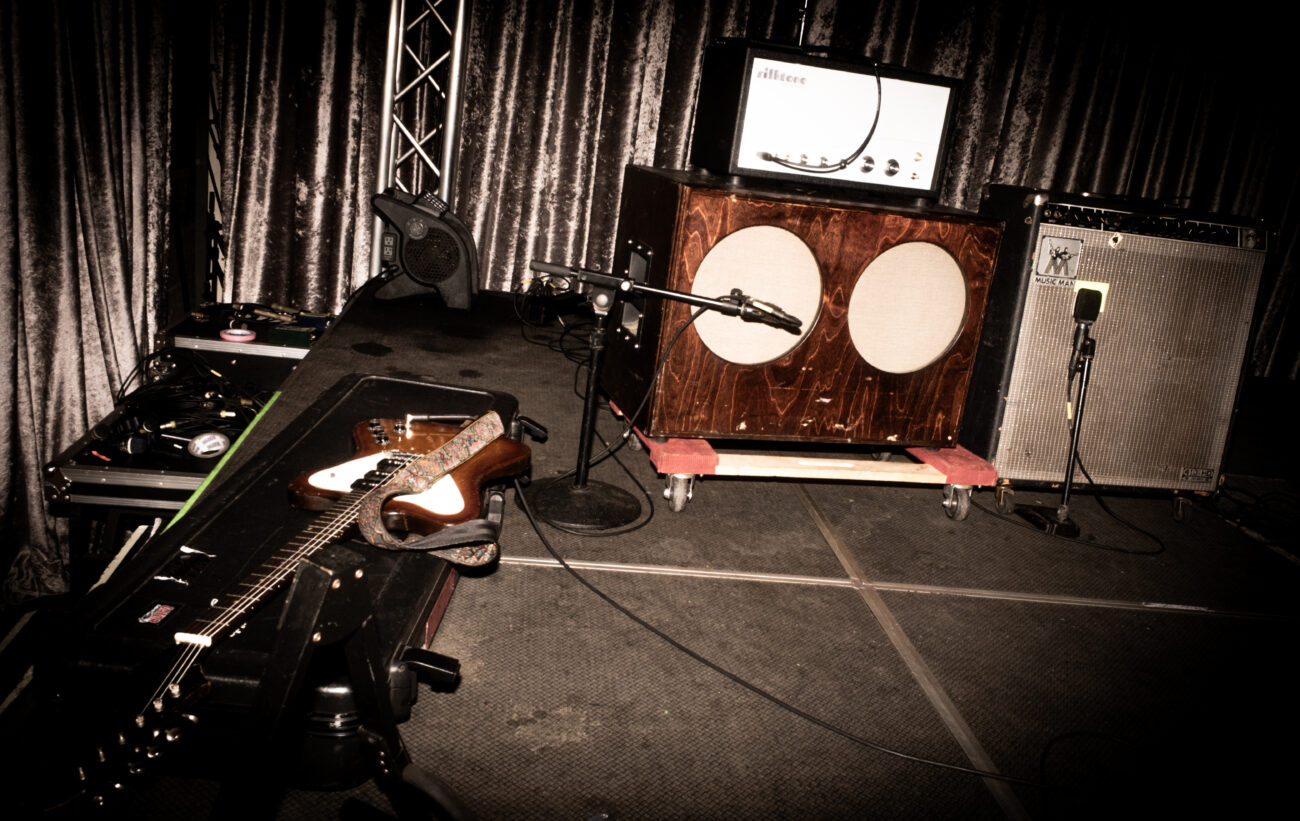
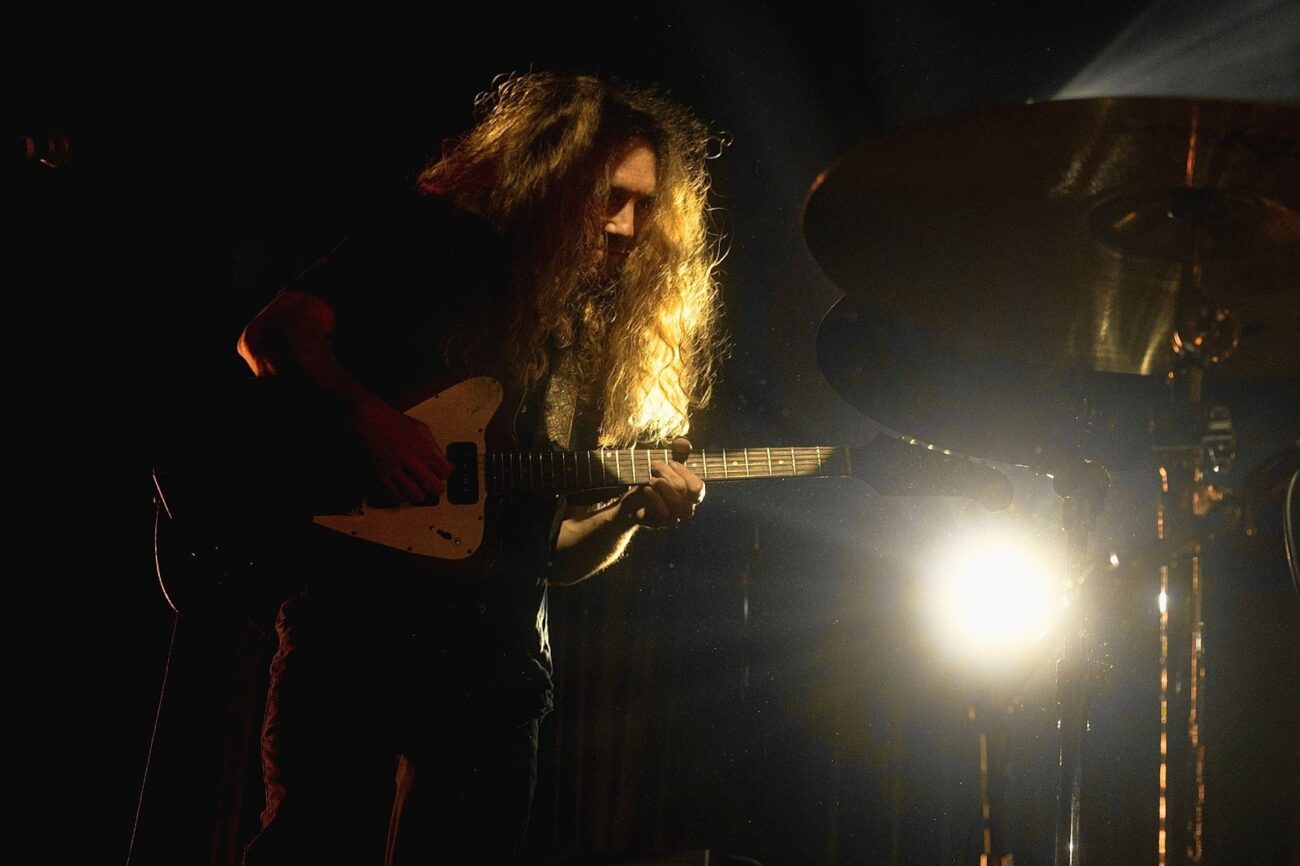
Featuring his Musicman HD-130 4×10 amp, Silktone head, and Gibson Non-reverse Firebird III.
A guitar player myself, I had to sneak in a gear question about Charles’s rig while on the subject of Fuzz revival.
Evan: “Are there pieces of gear that are specific to Fuzz and now you’re like, this is what I was planning on in 2012 or 2011 and I’m sticking with the same stuff? Or is it more similar to your daily personal rig? Like running these pedals through this amp, or this is exactly how it was for fuzz so I’m going back to that…”
Charles: “I mean, totally. The core of my guitar rig has not really changed for a long time. I’ve been using my Musicman combo amp, like the HD 130 4×10. That is my amp.I literally bought that amp right before I started playing guitar in Ty’s band. Long, long, time ago. Yeah. Throughout the years, I’ve had other amps that I’ve supplemented it with. I used to have a twin head, where someone had cut down a twin reverb into a head, and I had that with a 412 cab. Then I started using my V4 Ampeg head, which is one of my favorite amps of all time.
Very, very important to Fuzz as well, but it’s always been that Musicman 4×10. That’s my baby, that’s my sound. Like, without that amp, it would be lost. And on top of that, you know, obviously the Fuzz War pedal, that’s always been. Lately I’ve been using this company based in Sacramento called Silktone. They also make really incredible stuff and I’ve been playing one of their amps, but their overdrive pedal is amazing.
I have this really shitty Barringer delay – that’s another piece of gear that I swear by. One of my delay pedals broke when I was in Europe, and I just went to a music store and bought the cheapest delay pedal they had. I could just quickly get and ever since then I’ve just been obsessed. That was like, 10, over 10 years ago now.”
Evan: “That’s awesome.”
Charles: “Yeah, so those are definitely integral pieces. And you know, the guitar I’ve been playing is as well, but I haven’t been playing that since the beginning of the band or anything. It really comes back to the Fuzz War and my amp. That to me is the core identity of my setup.”
Evan: “So cool – thank you for that.
Do you feel like your influences there have changed? As far as, like, you’re writing on your own and, whether it’s a technique based thing or if it’s a style or somebody else’s music you draw from. I mean, I’d be certain that there’s new inspirations, but do you feel like it’s really shifted since then?”
Charles: “ I mean, yes and no. I think a lot of new things have entered the equation. I think certain things that were maybe really important back anywhere from five, ten, twelve years ago. Things are constantly changing. Some things can be really important to you and then disappear in your life for a handful of years and then come back again later too. Certain things about what we’re doing are still deeply part of us, like a love for the Groundhogs and Black Sabbath.
If that were to change, then this band wouldn’t make a whole lot of sense. Like if we all of a sudden didn’t like Black Sabbath, that’d be like, okay, well, we probably shouldn’t do this band anymore.
So, of course, when that when that comes to us all getting into the room together to play together again the musical conversation is totally different now because we’re all different human beings and it’s, and then that’s also part of the challenge, but also the beauty of being in bands with with your friends for a long periods of time.
You have to figure out how to grow together because you don’t want to feel like you’re stuck in 10 or 12 years ago. You gotta all grow together. Otherwise it’s not going to be a healthy thing. So, it’s a balance, you know?”
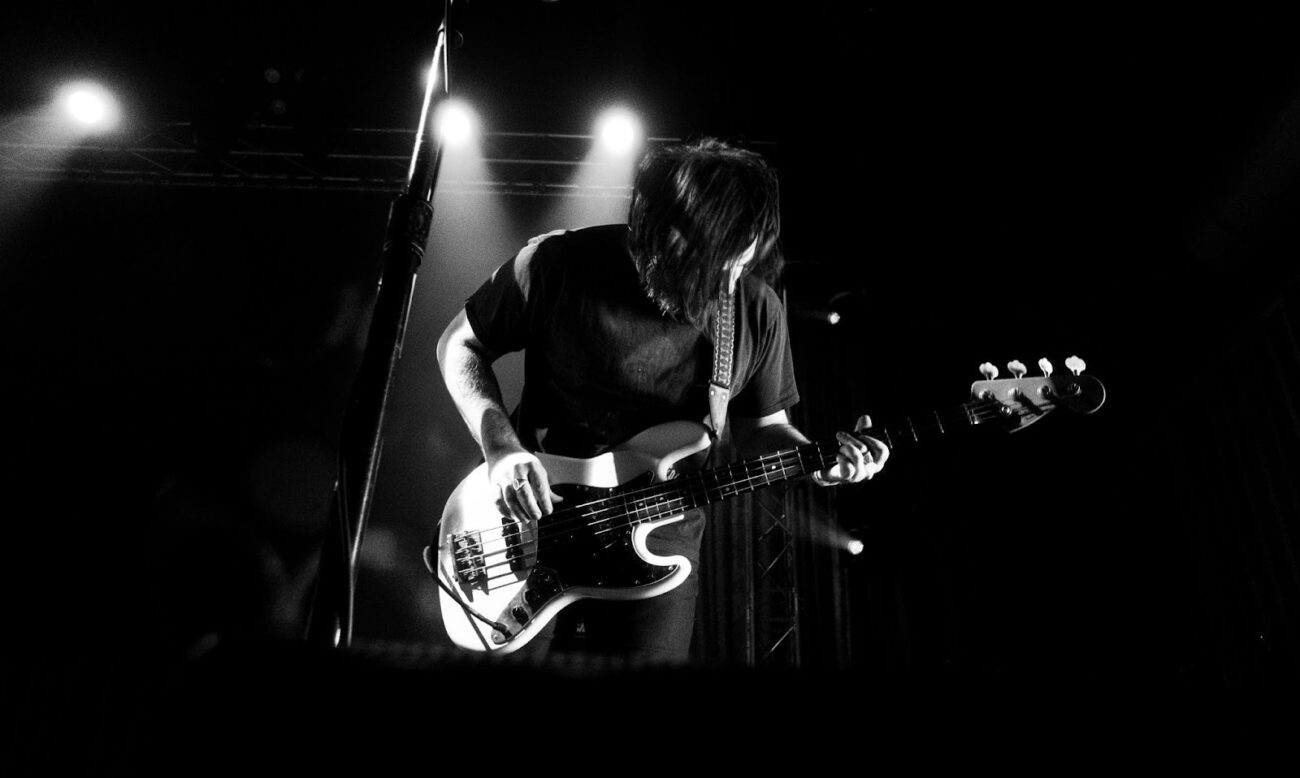
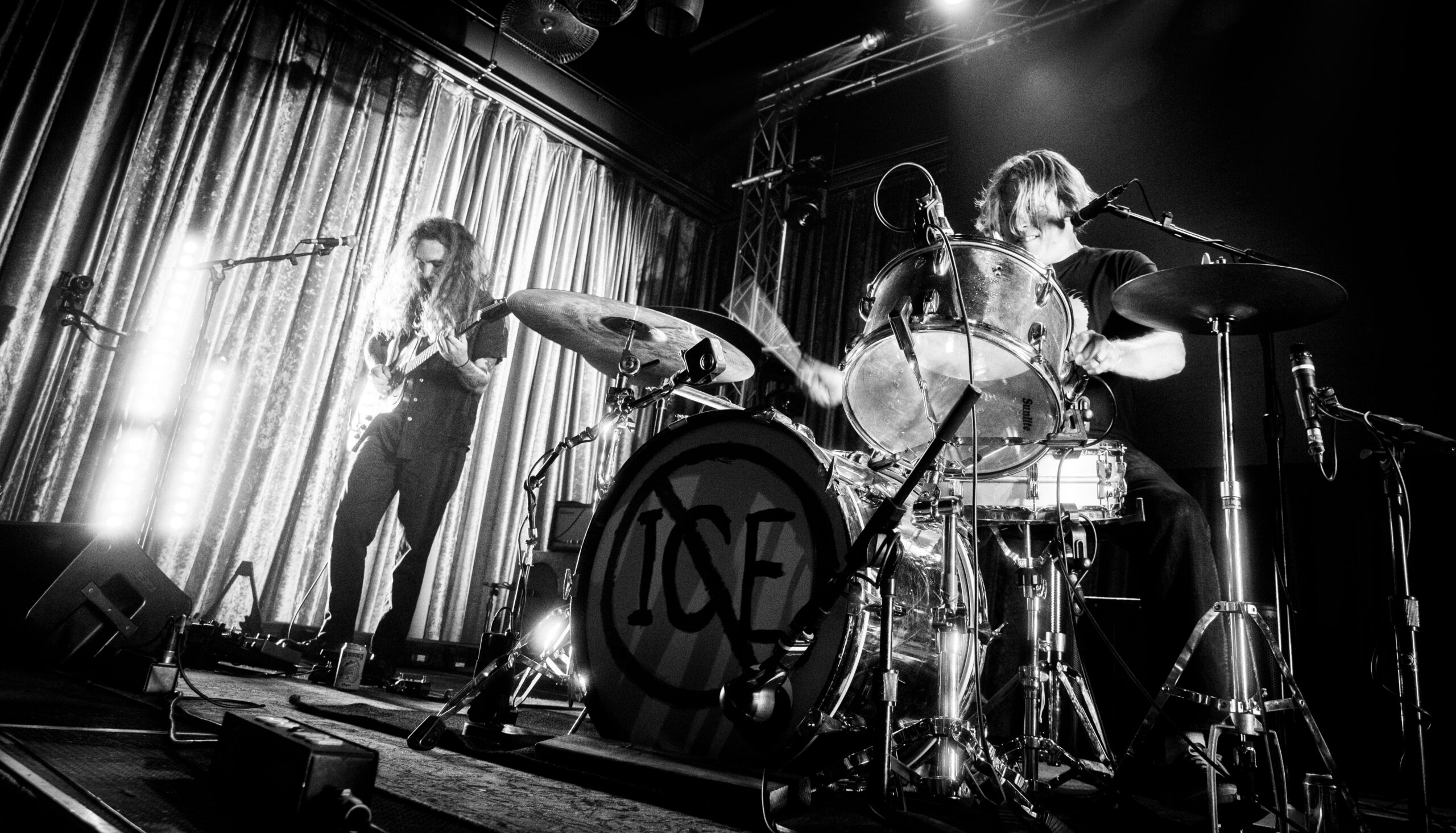
Thankfully, if their brain-scrambling performance on Sunday night was any indication, Fuzz still clearly enjoys Black Sabbath. Stationed sidestage as I photographed them, it was a direly unfortunate show to have forgotten my earplugs. I’d say it was worth incurring a bit of hearing loss.
For the time being, fans can be held over by tuning into “Fuzz’s Fourth Dream,” dialing back to older discography, or exploring alternate works of the band members while sitting tight for what’s next to come.