
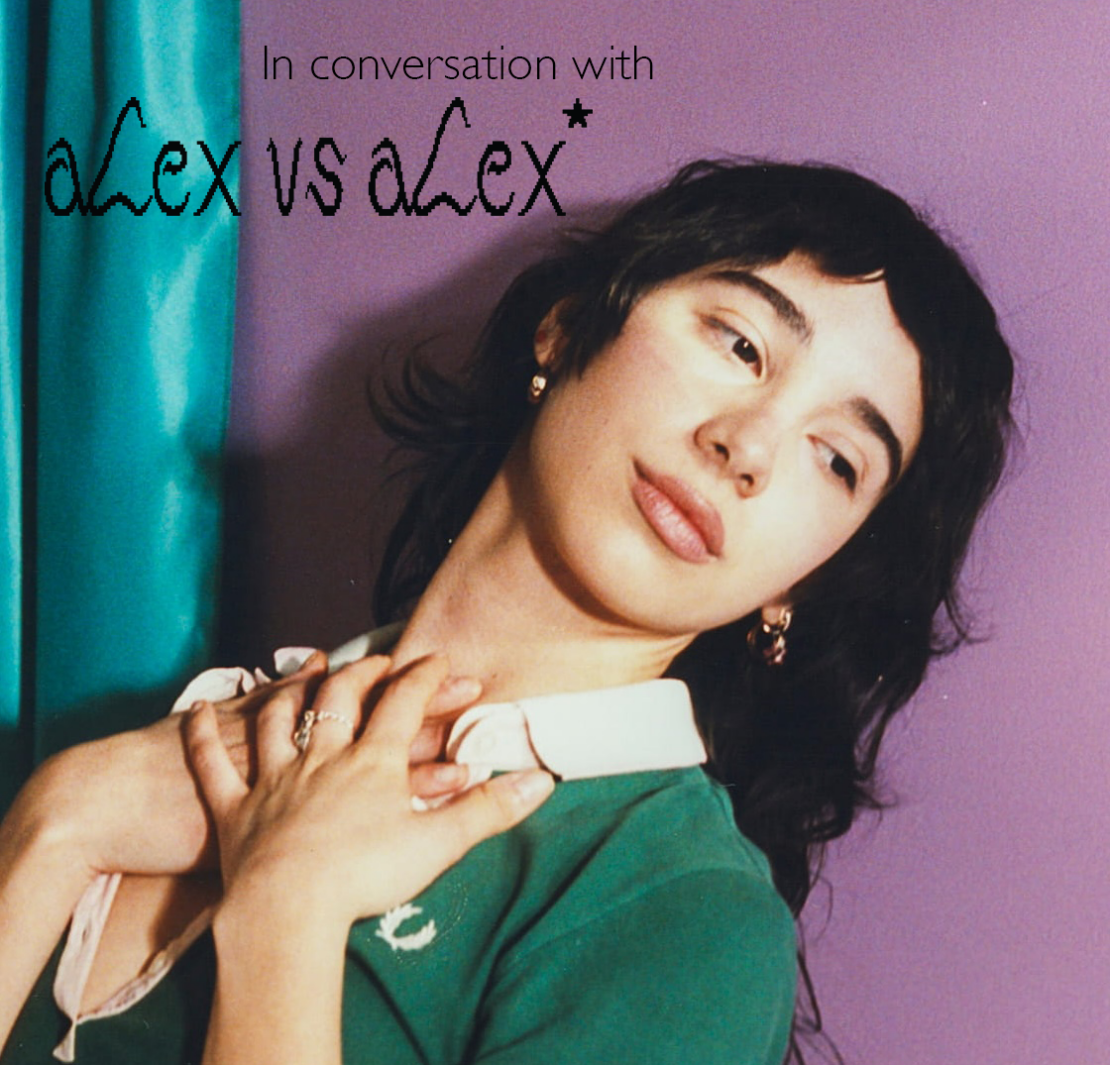
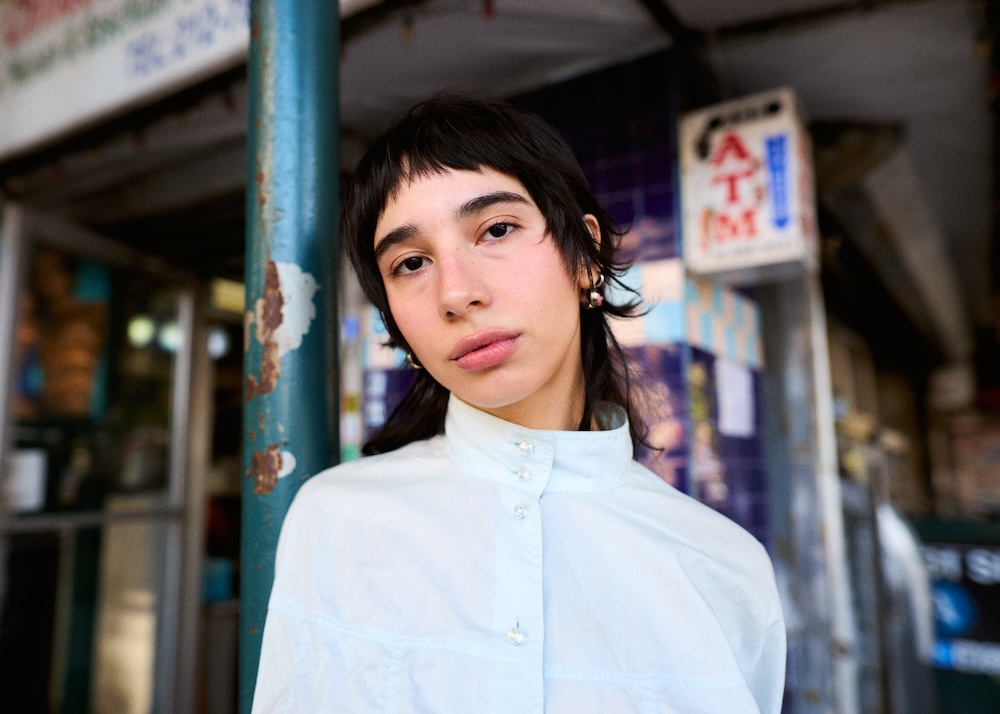
Within the realm of alternative pop, singer-songwriter Sofia Insua is actively challenging the boundaries of sound and exploring self-identity through experimentation: this is aLex vs. aLex. The independent music project of hers has been a space where R&B, electronic elements and fluid textures meet, since its inception in 2024.
Insua was born in and raised in Guatemala City and moved to New York shortly after graduating high school to pursue a career in the arts. Her music captivates through weaving a bilingual and unguarded sound.
Performing as aLex vs. aLex, the alternative pop artist has since opened for acts like Rusowsky and AMORE in New York, and recently headlined the Ciudad Sonora festival in her home country. Insua was also named in Rolling Stone’s “The Latin Artists We’re Rooting for in 2026” feature, published in January.
Here, Insua reflects on her upbringing, her years with the Guatemalan shoegaze band Easy Easy and what it means to represent her region on a global stage.
Q: Where did the name aLex vs. aLex come from?
A: My parents were almost going to name me “Alex,” so I’ve had some kind of attachment to this name — knowing that I was almost going to be given. At the end of the day, it’s just a way to explore the person I almost was and could’ve been through music.
Q: You were born and raised in Guatemala, where specifically are you from and what was that childhood/teenagehood like?
A: I was born and raised in Guatemala City and I grew up on this little hill. We only moved once but still [around the same area].
My grandparents moved into our first home and I was neighbors with all of my cousins and my mom’s siblings. It was like a whole family living together. We kind of had a big shared garden. My grandpa would give us batches of his homemade roasts.
That was definitely a really wholesome part of my upbringing. Having my cousins as neighbors and being really surrounded by nature.
I feel like everytime I go back and I’m having video calls with friends here in the city I now live, they’re always like “Woah, the birds are so loud.” I hadn’t really appreciated that as much until being away from that.
Q: How often do you go back to visit family and Guatemala City?
A: This is my 10th anniversary of having moved away. I left at 18. My mom was sending photos in the family group chat of the day they dropped me off at the airport.
Ever since then, I’ve been lucky to go back at least once a year except for my time in Berlin, because that was during the pandemic. So I think at that point it had been a couple of years of not going.
I’m going to play a show on Oct. 3rd in Guatemala City. It’ll be my first time in a couple of years since seeing my family.
I’ll be playing my first headliner show and my friend who organized [the event] is bringing a couple artists from the East Coast that I really love. I’ll be staying for like a month.
Q: I’m aware you’re based in both Berlin and New York City. How do you balance that and manage bouncing between both cities?
A: These days I’m spending most of my time in New York. Since I moved back from being in Berlin, I have kind of remained attached to certain projects and used them as excuses to go back, because I really loved my time there.
It also was a city that took me seriously and professionally for the first time, because I moved there when I was 22. I worked on some art research projects and sound design so it was very formative. I try to go back to keep using [the city] as a reference and also a reset from when
New York becomes too much.
Q: So referring back to the beginning of your musicianship, was there anything in your childhood or early environment in Guatemala that pulled you towards music as a calling?
A: My grandma that lived down the hill from me wanted all of her grandchildren to have some kind of music education, so she forced all her grandchildren to attend piano lessons. We had one piano and everyone would go to the same house to play piano — kind of fighting each other to not be next.
This is something random I gravitated towards in third grade, but I came home after school one day and brought my mom the phone book…this might’ve been in 2009. I brought her the book and asked her to sign me up for theater classes
I started doing musical theater. The national theater in Guatemala had this company that was for kids and the director would organize a season for a musical that she picked that year.
The second year that I was part of the theater group, the director encouraged me to audition for one of the leads. I got it and one of the requirements was taking singing lessons. I started doing vocal lessons and it really was because she saw something in me and encouraged me to work on that craft. Now we’re here.
Q:I know before going solo, you were a part of a Guatemalan shoegaze band, Easy Easy. How did that project come together? Did it teach you anything you still hold on to now?
A: For sure, it was something super out of the ordinary to come from a city that didn’t really have a scene, especially for alternative music. There isn’t that much support for local artists in general, unfortunately.
So, all my bandmates were a little older than me and they came from the punk and skate scene -– kind of like the alternative circles in Guatemala, which are still pretty small.
They originally had another lead singer, who went on to do solo work.
I used to be a huge fan of their music and I went to see a few shows during my senior year in high school. When I graduated, I released a song on SoundCloud and it got picked up by Guatemalan radio and long story short, the remaining bandmates heard the song and reached out.
I discovered them in 2015 and was like “wow, that’s so awesome that they’re all Guatemalan.” I was extremely flattered and we met up and just started working on music that the four of us would have loved to hear from other Guatemalan artists.
We all had different sources of where we would find music and influences, but we had a lot of chemistry together. So, we got together for the first time in 2016 and made an album in 2018.
Q: You shared there’s a small alternative scene. How would you describe first entering the underground music scene at 19 years old?
A: The way we consume music in my region was interesting, especially live music. The only times that I would go see any kind of live music was either in a huge stadium, which was generally reggaeton or salsa music. So, it was more like going out and party and not as much like “well we’re gonna go see this musician.”
There were these three sister bars that were next to one another and had music. They’re probably closed now, but going to those probably was what made me ask myself if there were any more alternative spaces.
In my senior year of high school I slowly started going to some events in -– it’s called zone four, that’s where the most alternative people in Guatemala City were, which is sectioned by zones.
When I came to [New York] after graduating high school, the school year didn’t start until August so I had a few months off before. I kind of started befriending artists. It was definitely very exciting to see more like-minded people.
Q: What college did you attend in New York and what was it you were studying?
A: I attended an acting conservatory, The American Academy of Dramatic Arts.
During high school, I was in this after school art program run by a Puerto Rican lady who went to Juilliard. She taught me music theory, piano, vocal lessons and all these things. She had lived in New York and was definitely the one to plant that seed in my head like, “you have to go to New York.” She prepared me for the audition and helped me put a list together of potential conservatories.
Q: At what point did you feel ready to step out of Easy Easy and start pursuing your own solo project?
A: From the beginning, I definitely knew that I wanted to, at some point, explore a solo project. So I had that idea on the backburner for a while.
It’s very time-consuming, and I was studying so I was okay with not working on my solo stuff yet, and I had moved to Berlin during the pandemic.
Once I came back to the city, it was when I had that shift and an opportunity to kind of start from zero because the city had changed so much after COVID. I had changed so much after COVID.
So, I kind of channeled those big changes and transitions. Also, I was 25 so I had a bit of a quarter-life crisis and was like “Oh sh*t, time is catching up and I need to start working on my own music.”
Q: How would you describe the current music you’re developing in terms of sound and aesthetic, and who are some influences that play into that?
A: I’m really interested in exploring my relationship to different environments, spaces and cities.
I worked on the first aLex vs. aLex EP when I first moved back here, so it was very influenced by New York and the scene here. The second EP I worked on when I was out in LA for a week.
As an experiment, I did a session a day with a different producer, and each song ended up being its own kind of world. So, it’s very genre-bending but it’s under that umbrella of alternative pop. It has a lot of R&B, electronic and indie-wave influences. It’s usually whatever I feel at the moment. I’ll start sessions by listening to a few songs that I’m excited about and I don’t necessarily stick to a rigid plan.
As for direct influences, I really love Becky and the Birds, Loukeman and all these more electronic artists. I love Blood Orange. The whole scene right now in Copenhagen of making really cool, alternative pop, is very chic.
Q: Your second EP, “cliché,” just came out August 27th. What was the story behind that project?
A: It was a very go-with-the-flow situation, with each producer that was on it and of finding that middle ground between both of us. I co-produced every song and there were always two people in the room, so I kind of had to gauge mutual interests in music.
It was a skillset, having to know what each other’s strong suits were and getting the best out of each other when you’re working on a new track.
Once I was in L.A., I was in the zone, doing like a self-imposed boot camp.
Q: Is there a favorite track from the EP or memory correlated to the making of one of them?
A: I think they were all really special in how they came about. “venus & romeo” was made with a friend, and the only one that was made before my trip to L.A. It was done remotely with my friend, Noah Williamson, who’s an incredible producer from Canada.
I discovered him because he produced a song with Sophia Stel and has his own project called Perfect Person. We met here in New York, like a year ago, and hit it off.
He then texted me out of the blue and asked if I had any little snippets of vocals I had done. I was on the train and I literally just looked through my videos and I had a video of me randomly singing a riff over and over. So he made that first “venus & romeo” harmonizer part and sent me a snippet of it.
I got home and plugged in my mic -– most of the vocals were recorded in my room -– but I plugged in my mic and sent him something on top of what he had sent me. Then he added something and sent it back, then I added something and sent it back and with that whole back and forth, we had all the parts of the song in a day. That was very special.
That set the tone for the rest.
Q: How important is it for you to represent Guatemala, through your music and by being a Central American artist in the states?
A: I’ve been doing music for 10 years. I’m definitely having some inner-child healing by making music and trying to be an artist that I would have liked to see come from my region while I was growing up.
It’s a thrill to be the first reference that a lot of people have to my country. I’ve always had a very clear goal of putting my region on the map, getting more people interested in what’s coming up from there and generating a flow towards creating better infrastructure for the artists there -– just being able to redefine what Latin music can be.
aLex vs. aLex is in constant motion, driven by exploration and sound. Insua will bring that sound to a stage at Primavera Sound in 2027.

