
When thinking of the happiest place on Earth, many imagine a distinct spot, one full of memories that shaped definitions of happiness, peace and home. However, the formalized title for the happiest place on Earth can only be attributed to one of the most famous parks in the world– Disneyland.
Walt Disney has taught us that a happily ever after can mean many things, but how about becoming someone who makes the impossible possible?
That’s where Walt Disney Imagineers come in, through the creation and innovation of all things related to Disney’s resorts, parks and themed hotels across the globe. With more than 140 disciplines in the program, imagineering is filled with creative spirits who work to make fantasy a reality.
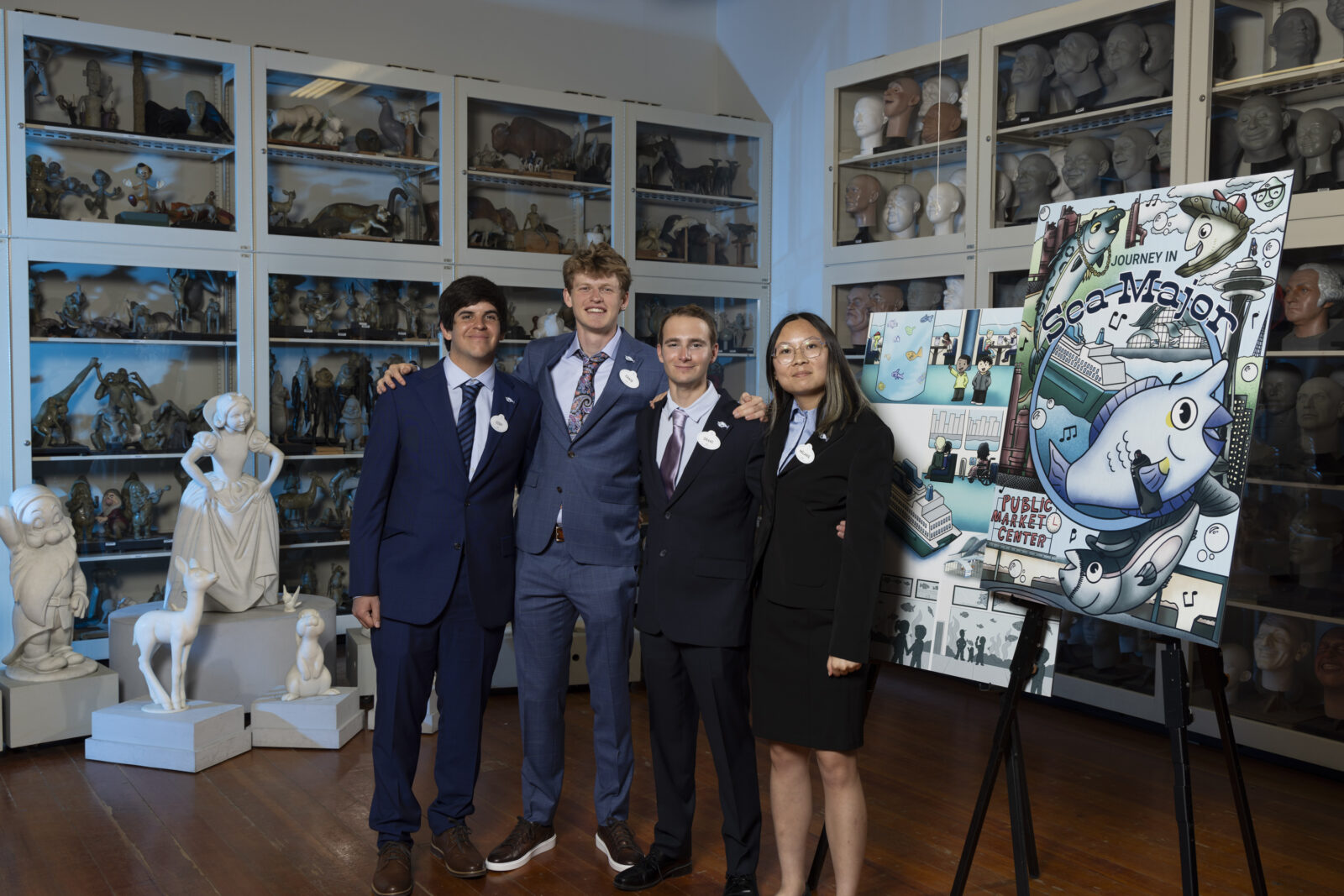
Each year, hundreds of university students across the country have the opportunity to pitch their dreams to Disney through the Imaginations Design Competition. In fall of 2024, four Cal Poly students took home third place for their design inspired by the Seattle ferry system and spent their summer interning with Walt Disney Imagineering.
Team Pike was composed of mechanical engineering juniors Chase Stafford and Cody Warren, electrical engineering graduate student Drake Small and 2025 art and design graduate Melanie Woo. The four came together through their mutual participation in Cal Poly’s marching band drum line.
The Imaginations Design Competition was created by Marty Sklar, who died in 2017, and is continued in his honor. The competition helps participants to showcase their talents by using their artistic, technical and communication skills through unique design submissions. The finalists are invited to the Walt Disney offices in Los Angeles to present their projects, as well as tour the studios and the Imagineering program, with the potential to be recruited by Imagineering.
This is the second time since 2020 that the competition has been held, and within this relaunch are some changes to the process that benefit participants regardless of whether they are finalists or not.
Team Pike’s Process
If you’re wondering how last year’s finalists made it onto the podium, Team Pike’s process is a good reflection of what imagineering is looking for in contestants.
When coming up with an idea, many questions floated around about what exactly the prompt wanted from the team. Through a method called the “blue sky process,” the team sat around a whiteboard and listed ideas that would develop the world within their project. The team eventually landed on creating the project centered around Seattle’s ferry system.
“Seattle actually has a fully functional ferry system, and they’re planning to make it more sustainable with new hybrid electric engines,” Small said. “When I saw that information, I thought that would be sustainable and feasible for our project and Disney might like to hear about that.”
They later started to think about how to make this project an experience, and more specifically a Disney experience. Being a mode of transportation, the ferry already took guests to different places, but the ride more so would be based on the story that it tells while moving from place to place.
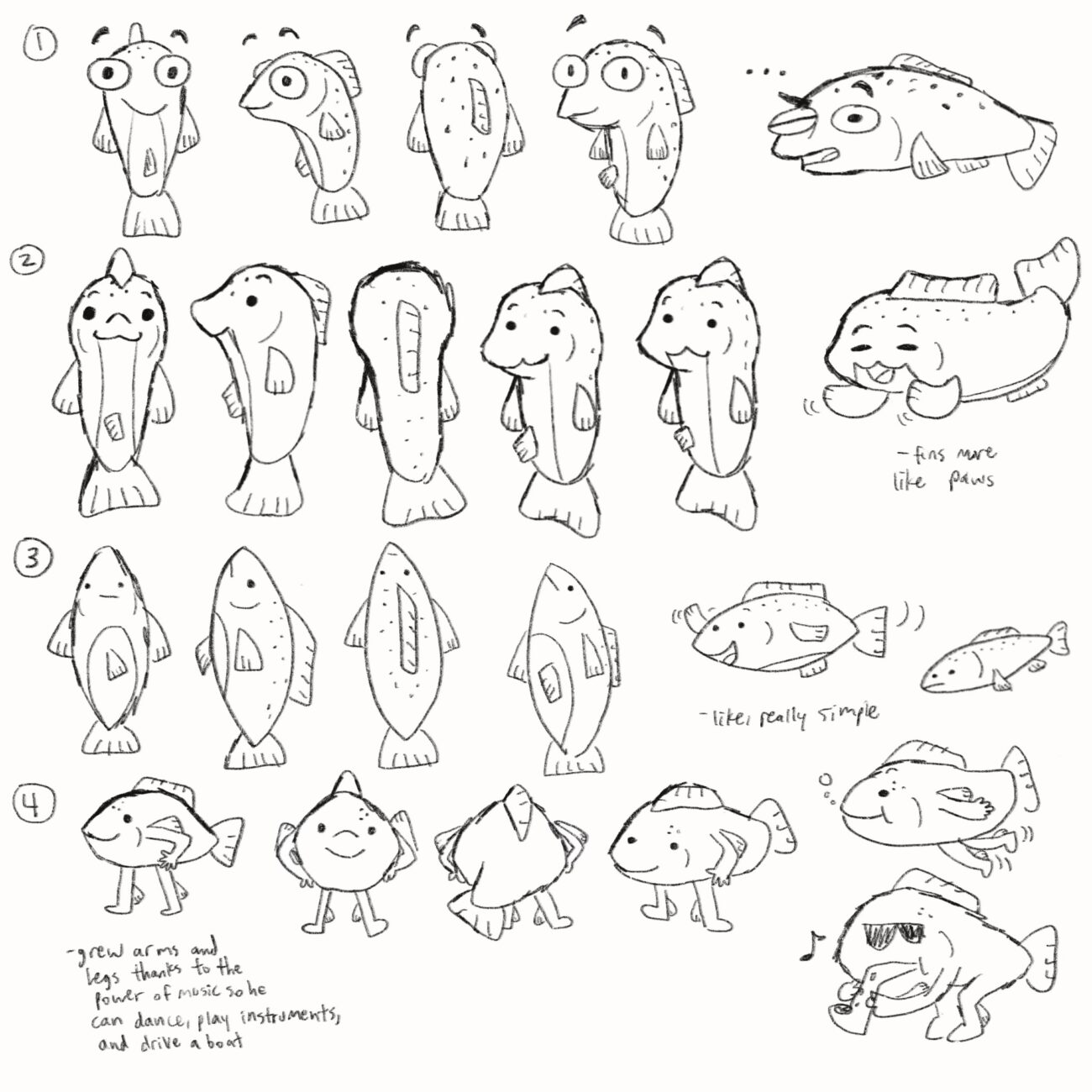
“We know that every good Disney project, whether it’s their theme parks, whether it’s a movie, or anything they make, has a good story. Usually, people get hooked onto that story and are emotionally invested into the character and that’s where we really pushed each other to have a good storyboard and a good character design,” Stafford said.
As Woo created the character designs, the team created the tale of Pike, a unicorn fish. The ferry travels alongside Pike to three different concerts (Pearl and Clam, Mackerel More and Sir Swims-A-Lot) and help him find his “groove” for what music he connects with.
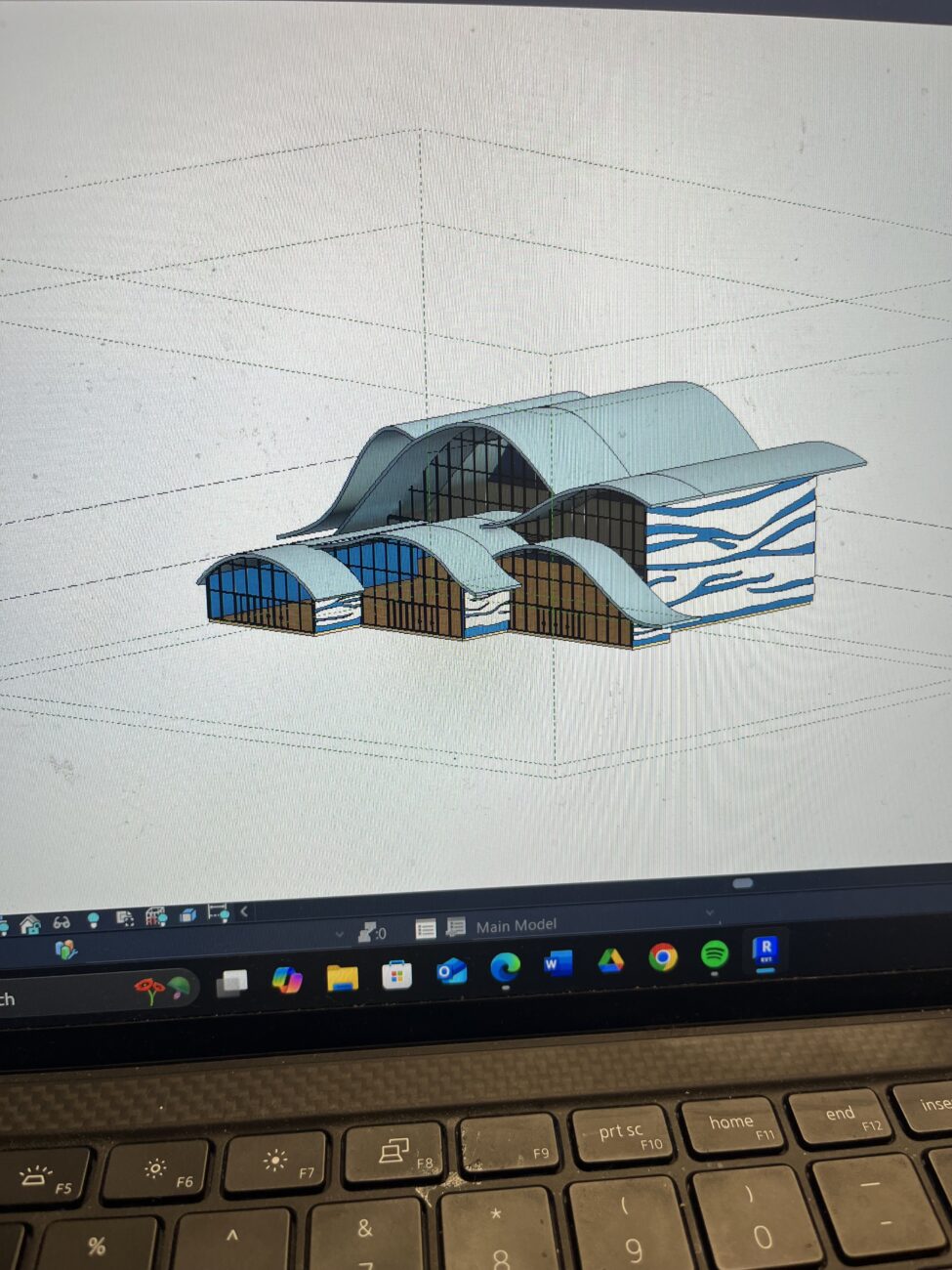
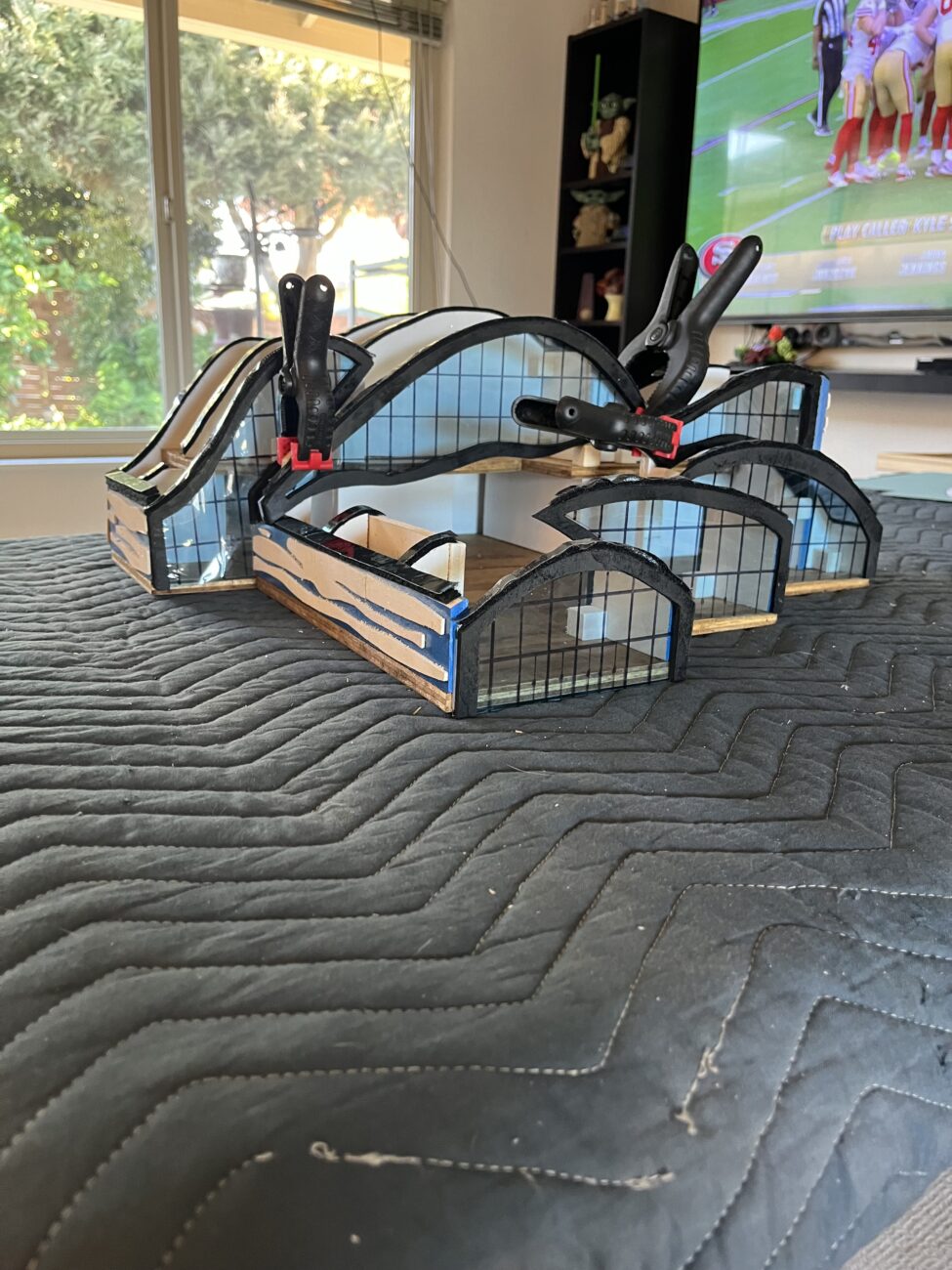
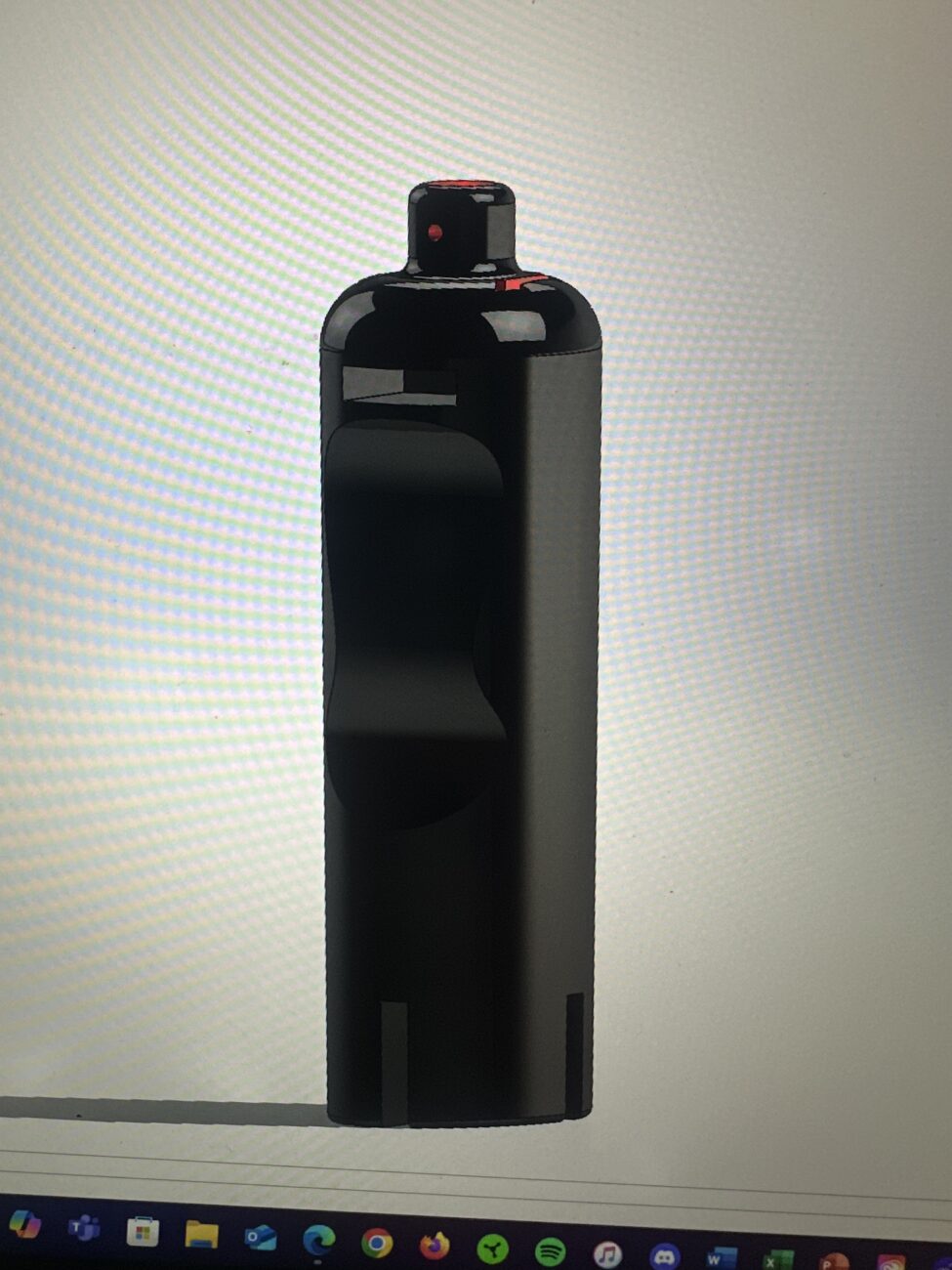
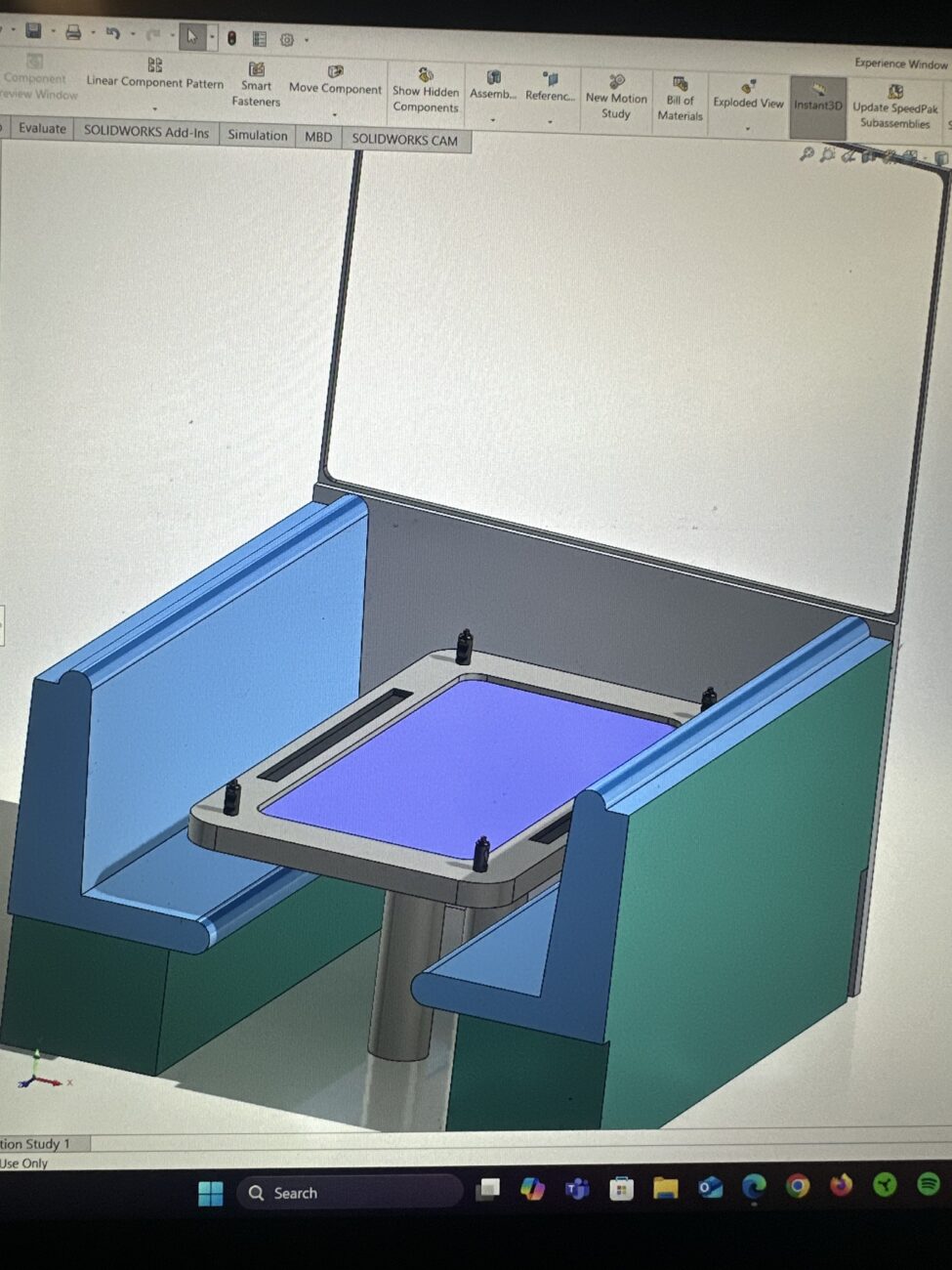
As the team moved on to the technical side of their creation, they created models and used CAD software to design the guest experience of the project. Through Small’s knowledge as a computer engineering major, Small designed the idea of using a spray can-inspired digital controller, similar to a TV remote, for guests to use on a TV screen.
By having the guests spray their own fish design, they build a fish choir which powers the ferry through their “musical essence.” Small wanted to make the usage of the spray can authentic to how it would be in real life by installing components which detect when the guest would shake the can. The team worked very closely on this aspect of the project to make sure the models they made and the props they created would emphasize human-centered design.
Stafford modeled and physically created the spray can with Small, implementing the printed circuit board onto the controller. Warren modeled the main station ferry while also crafting the actual model out of wood. Woo designed boarding passes for guests to keep as souvenirs for each station they disembark at, while also creating the stamps that would be used on the tickets.

A Guide to the Competition
The application for this year began on Aug. 25 and ended Oct. 17. The competition is open to everyone at Cal Poly, and students who become finalists have a chance to be recruited by Imagineering for internships and potentially employment.
Alumni such as Kyle Branch, who was one of the finalists for the Imaginations Design Competition in 2019 and is now currently an associate graphic designer for Disney, presented at an information session for the program. As alumni, they know what it’s like to be at Cal Poly and encourage students to showcase their talents in the competition and to especially utilize the resources that are already on campus.
A prominent resource within the competition is the Cal Poly Amusement Park Engineers & Designers club (CAPED) which is a multidisciplinary club that emphasizes fostering connections between students and the themed entertainment industry. CAPED has helped its members throughout their projects, including Stafford and Warren.
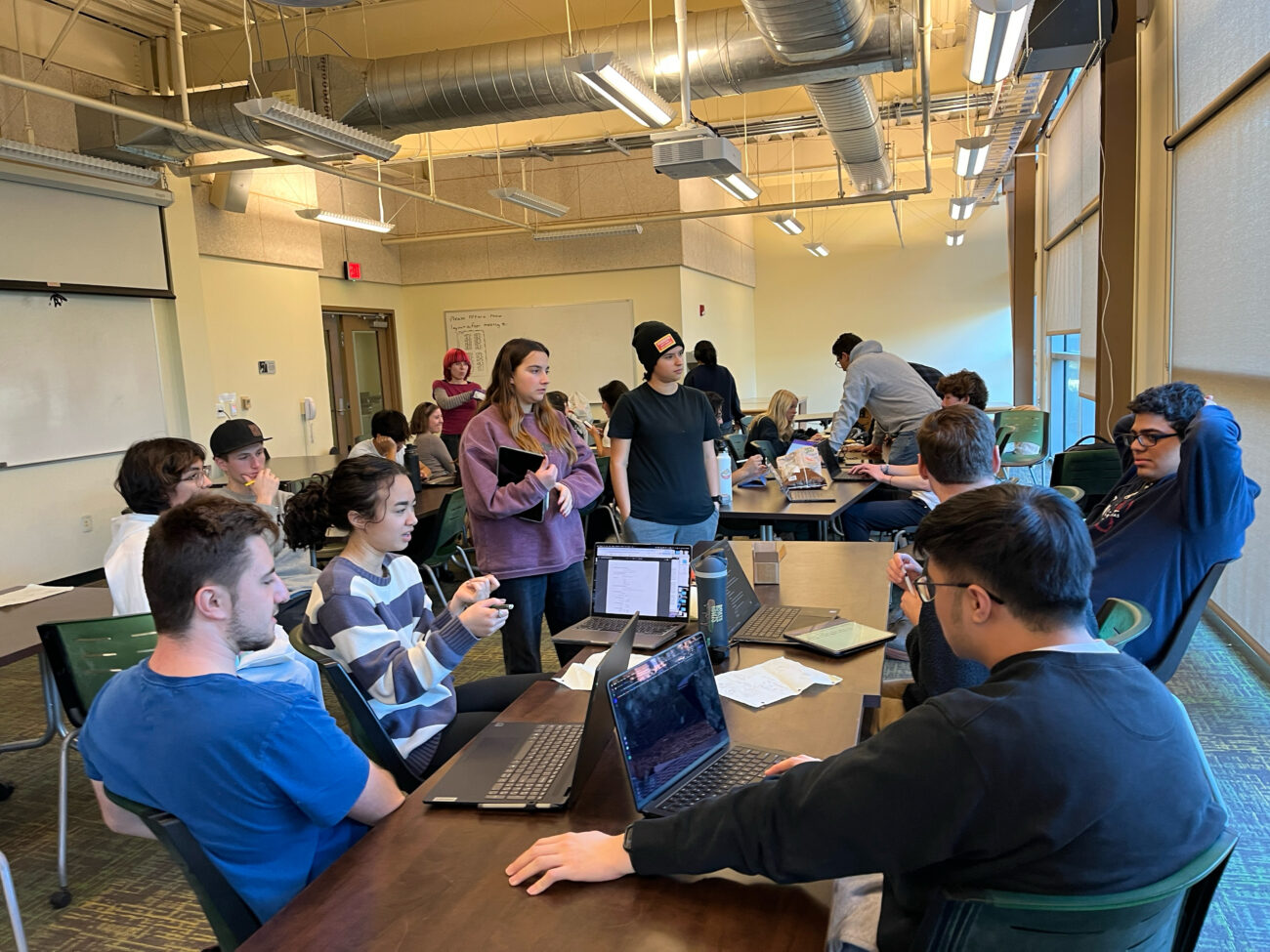
Other than introducing students to the world of themed entertainment, CAPED often hosts events where they bring in guest speakers from different themed industries and students at Cal Poly who are now interning at Imagineering. They participate in projects and competitions such as the Ride Engineering Competition as well as running their own competition, Parkitecture, to give others a chance to gain experience as they learn about the themed entertainment industry.
CAPED is the club to go to, especially with this competition, as they do their best to give you all the resources you need from finding teammates, to hosting workshopping idea events for the introduced prompt, as well as giving you insight to the industry and what to expect.
This year’s teams have until Nov. 20th (11:30 p.m. PST) to turn in their projects for submission. The judging process places emphasis on making sure the participant’s strengths are seen, assessing the projects through the participant’s choice of a technical or creative focus. Keep in mind that individual contributions matter, as you will be judged as an individual and as a team member.
The competition may seem to be overwhelming as a beginner, but there are resources, tips and advice specific to Cal Poly students that can help to navigate the competition. Alumni and finalist Branch participated in the competition four times, and he recommends a lighter course load to have time to create and innovate your project, forming relationships with others that would make good teammates and learning scale to accurately design and create physical models for the final.
Team Pike recommends making sure everything flows like a story when implementing so many aspects of a project together, making sure the project is accessible and inclusive to everyone, and having fun while creating an effective product you believe in. The finals also include Q&As after presenting so you need to know your answers or play to your strengths. Finally, for those who feel they don’t know how to go about their projects, you have access to imagineers as mentors throughout the process so you won’t be alone, especially as a beginner.
Even though Team Pike’s project had many technical sides to it, the team wanted to be judged by their creativity as that was the real heart of the project. The biggest thing the team learned from their time together is that no matter what skills each person has, as long as they care and believe in the project, success is in reach.
This opportunity carries the motto of “Learn by Doing” into application, allowing students to be guided by their limitless imagination, where doing is improving and learning is inspiring. Each person has a role they fulfill and everyone has the means to create and go to infinity and beyond in their designs.
With the Imaginations Design Competition underway for 2025, each team is charting their own course to success.

