
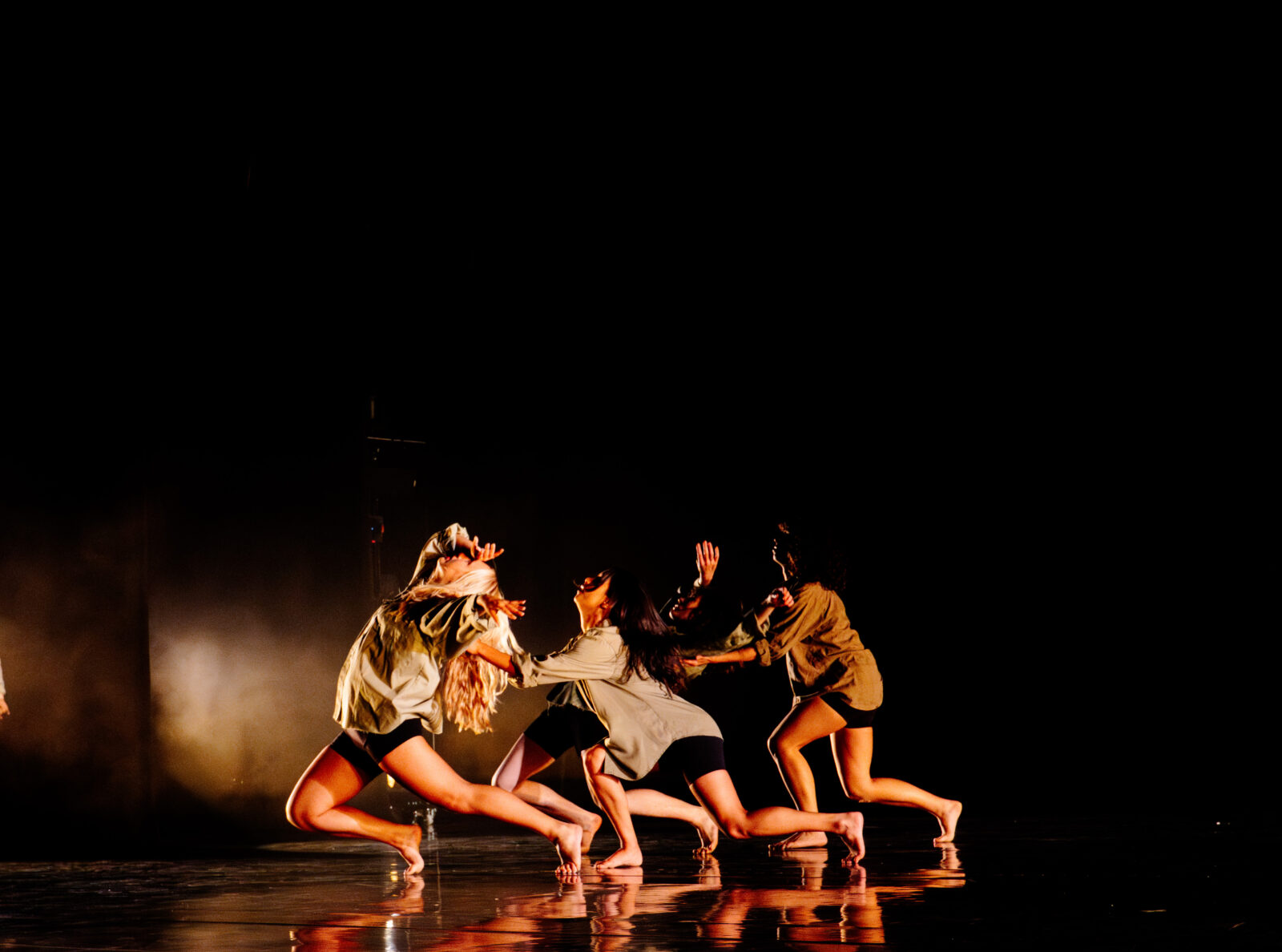
As dancers strike their final poses and wait for the last flicker of light to fade before dashing off stage to make way for the next piece, Drew Mahecha-Sherrard leans into his headset mic to call the next cue. The show must go on, and he’s there to make sure it does.
In the audience, choreographers and directors track every transition, spacing and flow. It’s only a rehearsal, but the pressure is already at its highest level.
Each spring, Cal Poly’s Theatre and Dance Department mounts one of its largest productions of the year, the Spring Dance Concert. This year’s show, themed “Where We Land,” took place from May 21-23 at the Spanos Theatre.
With over 100 dancers, 20 choreographed pieces and a crew of student technicians and directors behind the scenes, few see the labor that keeps the production moving. Months of preparation culminate in just two days of tech rehearsal before opening night.
Mahecha-Sherrard, a junior double-majoring in theatre and environmental management and protection, served as a stagehand for the second time for this year’s concert. His responsibilities included sweeping and mopping the stage for the dancers, unlocking green rooms, making time calls and coordinating with performers. Mahecha-Sherrard was an essential communicator throughout the show.
“Once you get the flow of calling cue after cue, it’s nice,” he said. “But it takes a lot of rounds of ‘Oh no, we’re screwed,’ and then, ‘Oh wait, never mind, we’re fine.’ It’s like exposure therapy for things going wrong.”
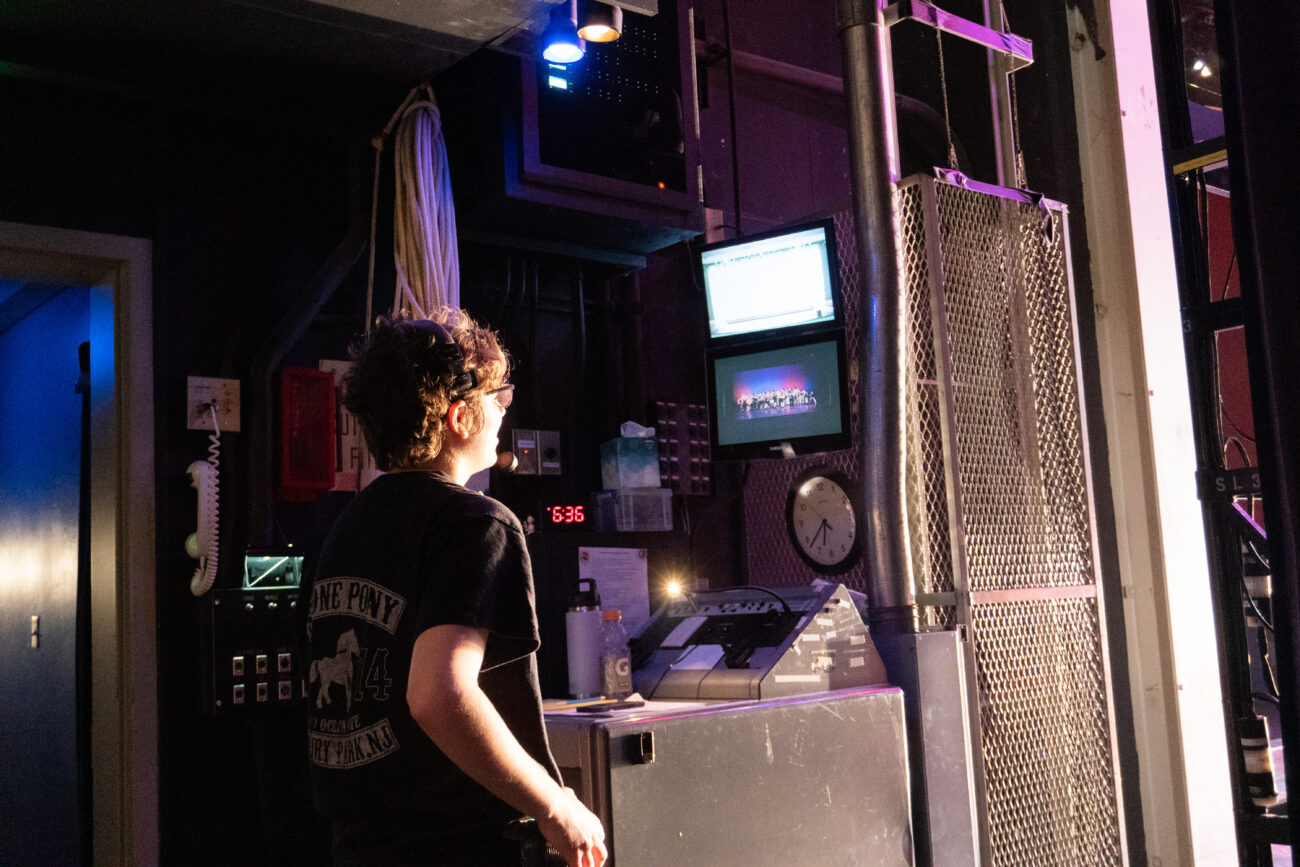
curtain call, ready to cue the curtains to close. | Adilene Gomez Santiago
The pressure peaks during the week of the show, as the dancers, choreographers, and production crew have only two days to pull everything together — lighting, audio, blocking, quick changes and final spacing.
Monday is dedicated to programming lights and adjusting cues to match the choreographers’ visions, while Tuesday is a full run-through of the show, complete with a timed curtain call and final problem-solving. Then, the curtain rises.
“Things don’t always run smoothly. But that’s the point of tech, to find the errors and fix them,” he said. “Even when we’re behind schedule, we need to keep a calm face for the talent. Freaking out doesn’t help, you just ride the storm.”
Though hidden from the audience, the backstage team’s work is vital. One particularly unique responsibility is the “alcohol mop”— a technique used to make the stage floor slightly sticky for the pointe pieces, ensuring dancers don’t slip. Mahecha-Sherrard and his crew complete this task during intermission, so the ballet pointe piece can follow without delay.
“There are a lot of small details like that that people don’t realize are essential to a performance,” he said. “There’s a really corny saying that ‘we make the magic happen,’ and it’s a little bit true. You could do the show without us, but it would be difficult and messy.”
Communication and trust are the foundation of the production. Crew members receive detailed packets from the dance directors that outline everything from cast lists to quick changes and technical needs. Choreographers work closely with lighting designer David Beals to finalize creative choices and each dance piece has an assigned “ambassador” who acts as a liaison between the dancers and Mahecha-Sherrard to ensure all dancers are ready to go on stage.
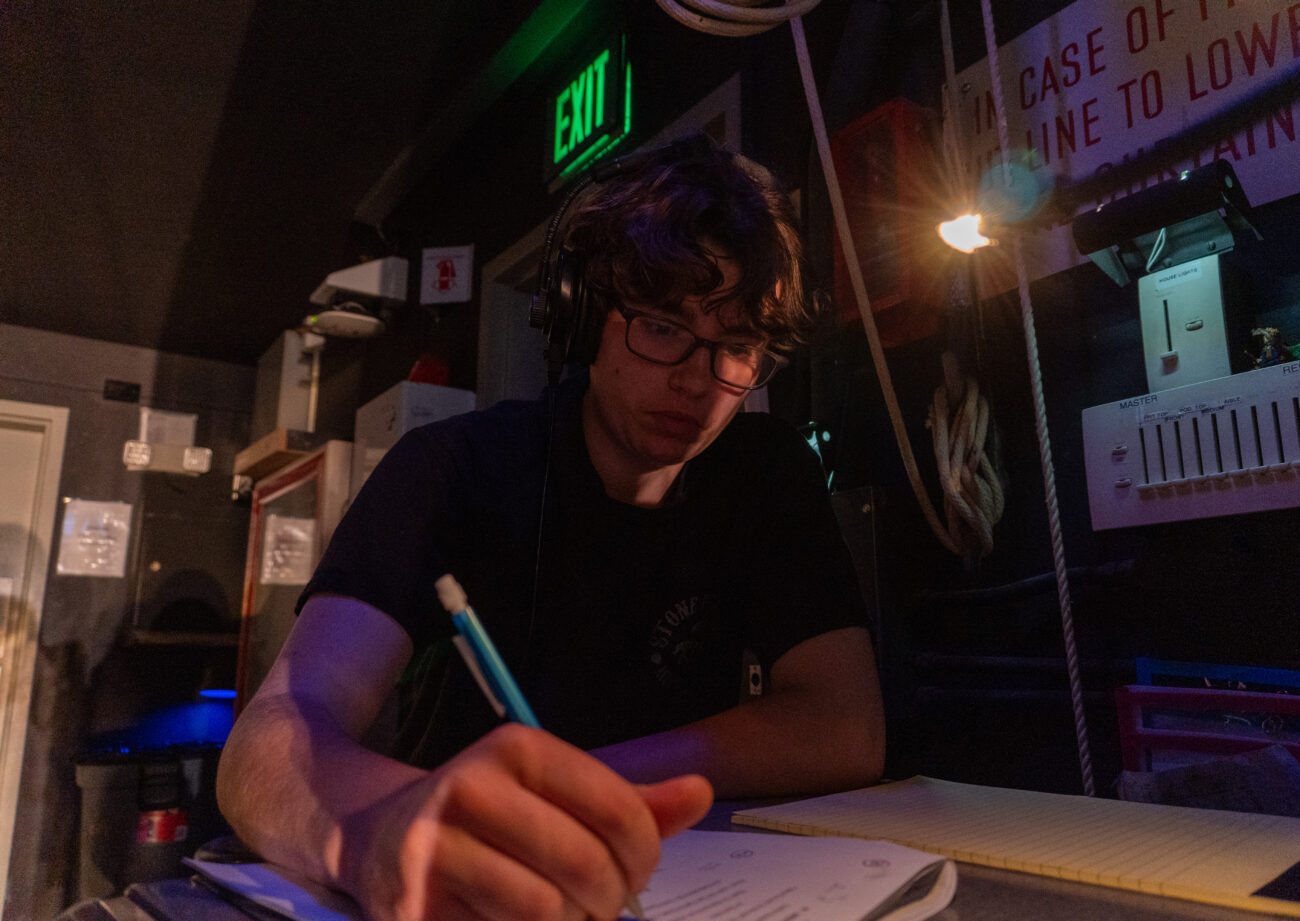
from quick costume changes and what dancers are wearing to prompts like reminding them to check their tap shoes for loose screws. | Adilene Gomez Santiago
“There’s no set communication standard,” Mahecha-Sherrard said. “But it’s very courteous. Everyone’s doing their best to help the show run smoothly.”
Week 8 of the quarter brings academic chaos, coinciding with tech week and opening night, which started on Wednesday, May 21, and continued through Friday, May 23. For Mahecha-Sherrard, class cancellations due to a professor’s conference turned out to be a stroke of luck.
However, most dancers and directors were busy juggling full course loads alongside show preparations, often bringing their homework to work on while they waited for their call on stage.

Megan Waller and Hannah Bielcik, middle right, thank the dancers and production crew for their hard work. | Adilene Gomez Santiago
At the helm of the show’s creative direction are three student choreographers and directors: Hannah Bielcik, Emily Olster and Maegan Waller. Selected in February, the trio promptly began planning auditions, organizing rehearsal schedules and developing this year’s concert theme, “Where We Land.”
“We kept coming back to how the relationships around us shape us,” Waller said. “Where we land might be unknown, but the connections and shared experiences guide us.”
This year’s dance concert featured 134 dancers and 22 choreographers, with rehearsal schedules running like clockwork. Each piece is given a two-hour weekly time slot, resulting in roughly 20 rehearsals per week.
Each director is also dancing in four pieces and choreographing one, committing over 10 hours of rehearsal each week this quarter, on top of multiple dance classes and academic responsibilities.
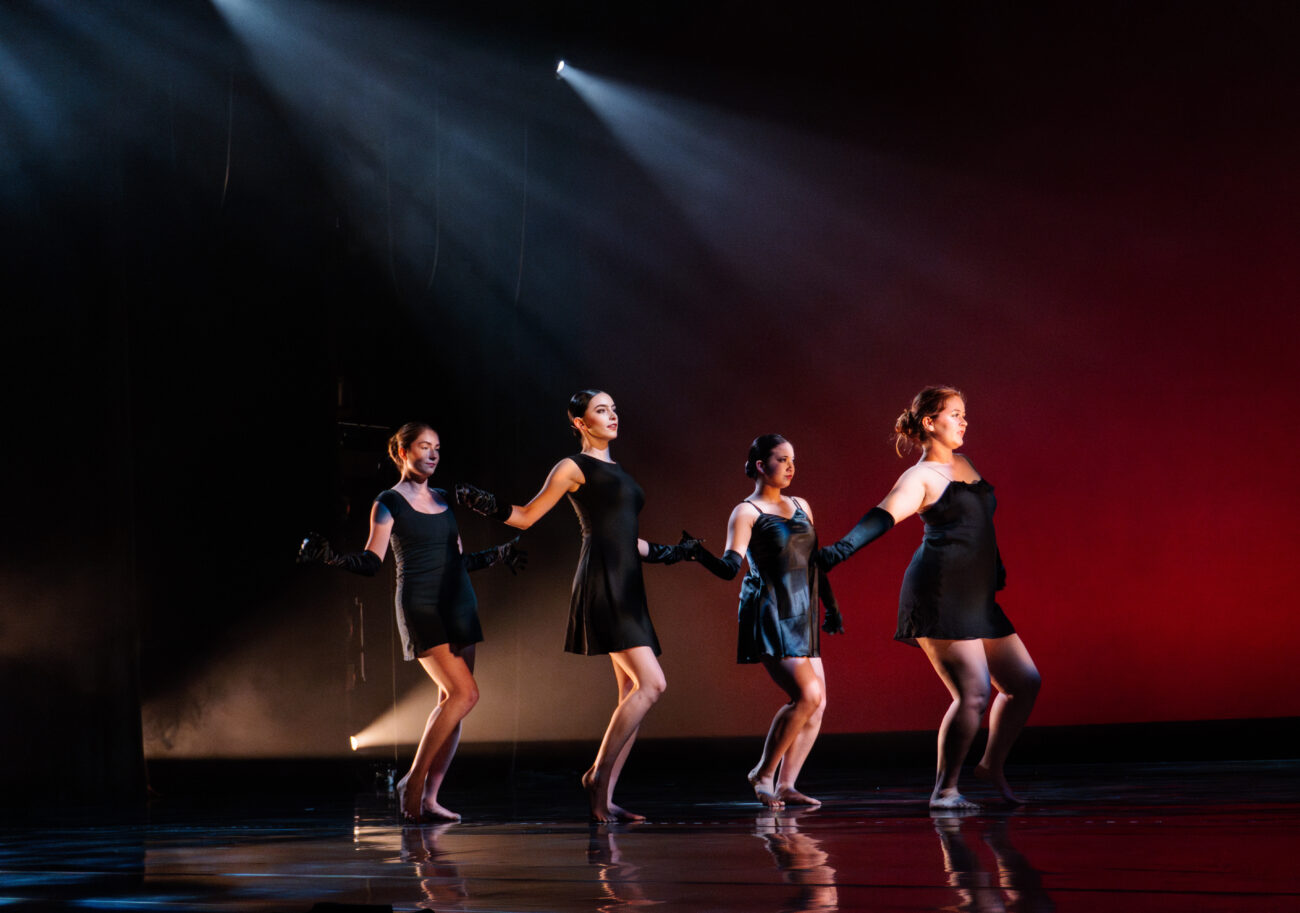
alongside fellow student dancers.
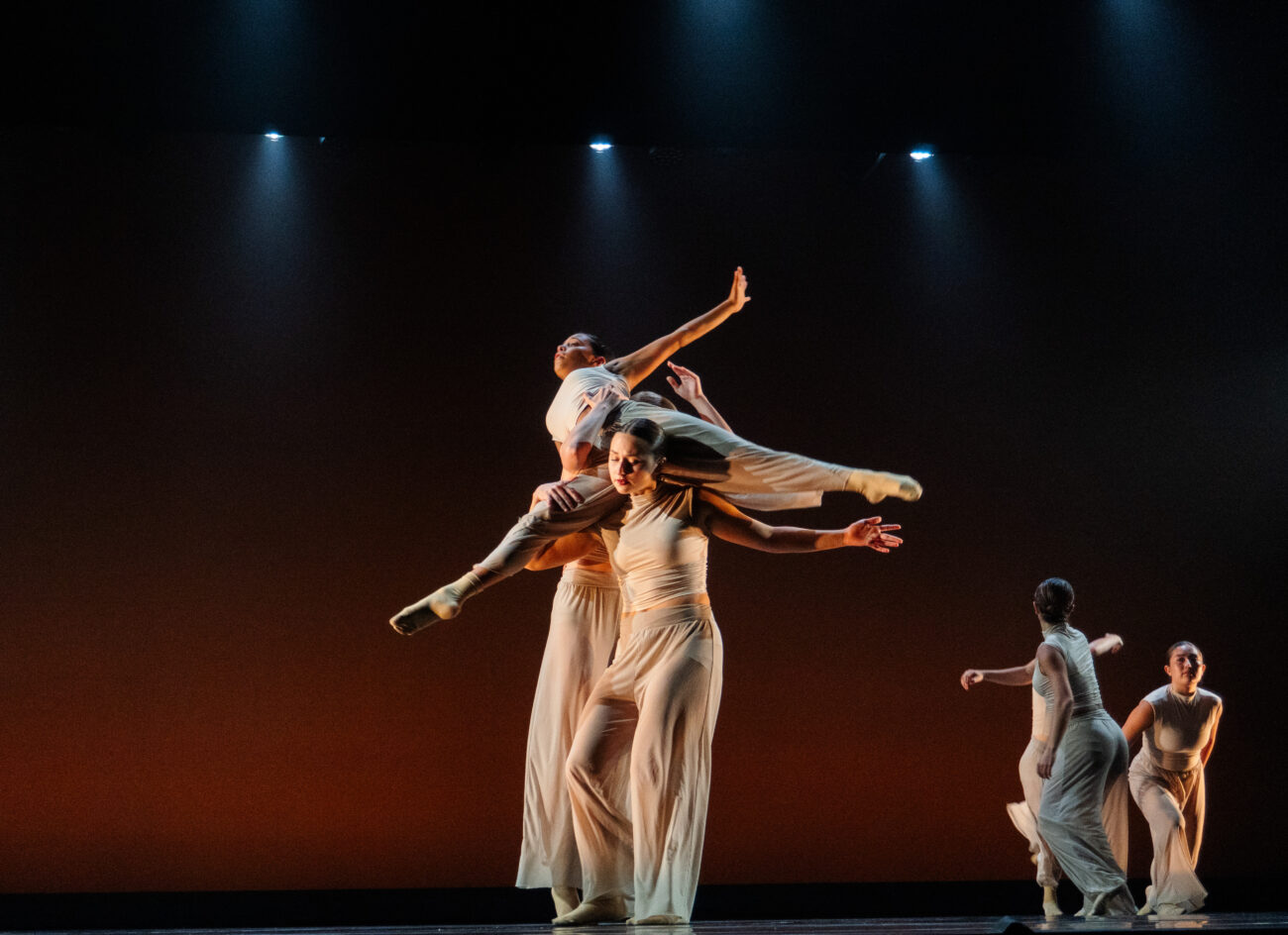
Back.”
“It’s like Sudoku,” Bielcik said, referencing the difficulty of coordinating the dancers and choreographers, each with their own class schedules and commitments.
“We’re constantly making spreadsheets, communicating with cast members, vetting lighting cues, organizing costumes and updating schedules,” she said. “We probably couldn’t do this if we didn’t love the art form so much.”
The love of the craft is what drives them to give so much of themselves to the show, the directors said. Every element that is built upon until opening night of the show is touched by a student’s hand. From creating forms of communications, assisting in perfecting lighting cues, to providing nail polish remover in the dressing room and assisting with costumes as a dancer walks in asking for help.
“We’re constantly an open line to all of the choreographers and all of the cast,” Olster said. “We’re receiving emails and texts consistently, and we left it that way so we’re very open to be helping [the cast,] which we’re super happy to do.”
As the curtain falls each night of the show, what remains is more than just a polished performance — it’s a testament to collaboration, passion and the invisible threads that hold the production together.
“This whole week, we’ve talked about how much we want to try to stay present. It’s so chaotic at times, amazing and stressful, and there’s so much going on,” Waller said. “But I think we really want to just also try to take the time to breathe, remember why we do it, remember what we love about it.”

