
This story originally appeared in the Burnout Issue of The Peak. View the full issue here or more stories on our page.
Shorter days, holiday cheer, seasonal depression — an unconventional and discombobulated mix of things that unironically make up the sociological elements of the colder seasons. For university students, academic stress may start creeping in, slowly deteriorating one’s self-confidence in one of college’s emotionally hardest terms — winter quarter.
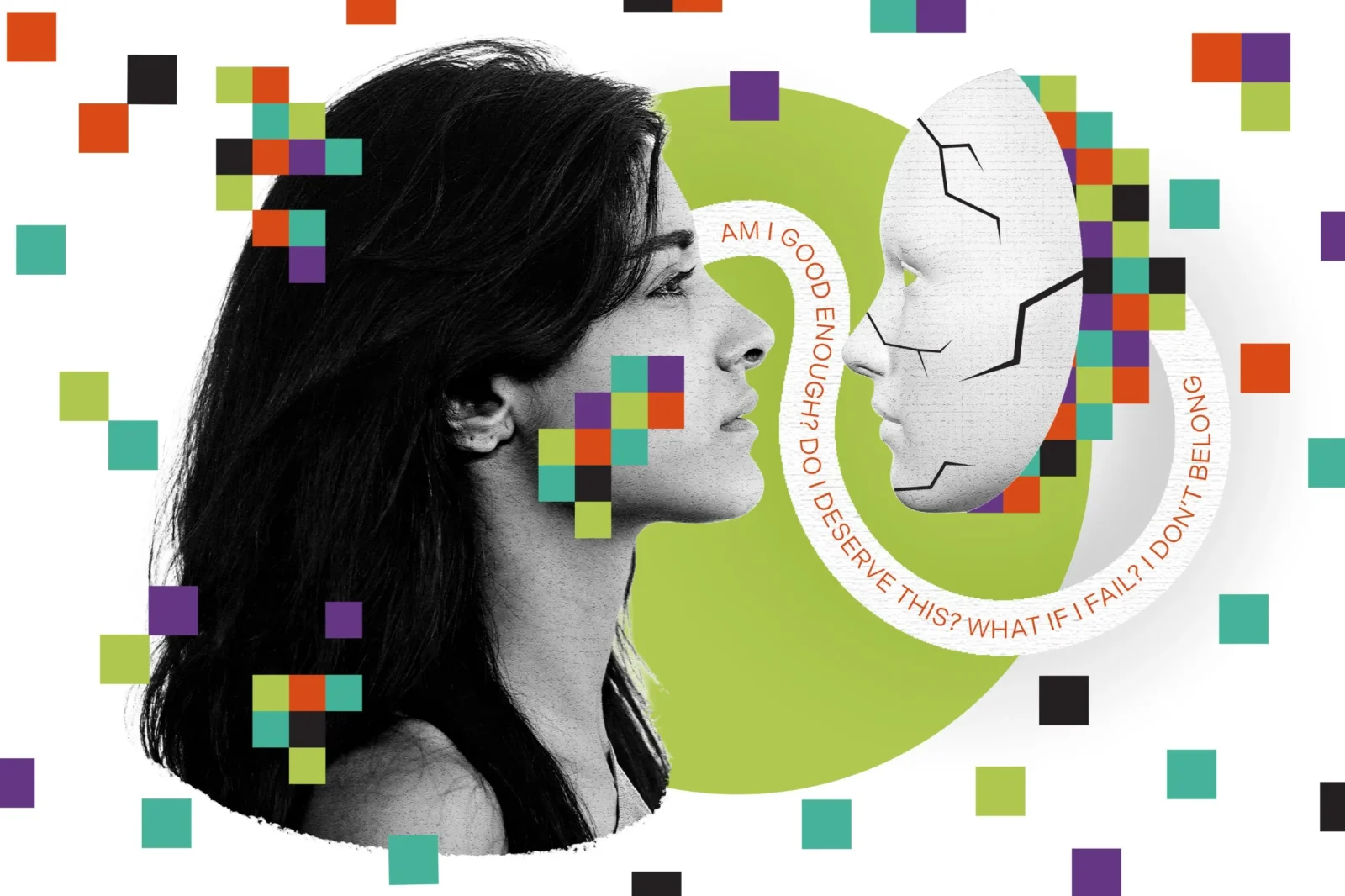
You may fall subject to impostor syndrome: chronic doubt in one’s abilities despite clear success.
The feeling stems from responding negatively to positive feedback, self-producing the image of a fraud and “impostor” to represent yourself in what you’re doing.
Lucy Bencharit, a psychology professor at Cal Poly and describes the phenomenon as a “self-fulfilling prophecy.”
“You view all of your interactions according to the lens you already feel coming in,” Bencharit said. “It’s easy for us to draw on our evidence around us to get support for any of those ideas.”
Cal Poly students said they doubt their abilities in and out of the classroom, extending to leadership roles and finding their unique place on campus.
Students’ perspectives on imposter syndrome
ASI president Marc Cabeliza is familiar with impostor syndrome, experiencing it throughout his high school and college years.
“There are portions where, before I go into a meeting or afterwards, I go like, ‘Am I the right person for this job?” Cabeliza said. “Am I representing the student voice as best as I can?’ And that’s something that is always in the back of my head.”
Cabeliza ran against three people in his race for ASI president, who he described as “amazingly qualified people,” including a good friend of his. He felt impostor syndrome at its peak during the election season, but it settled down when he started the job.
Despite being the leading voice for the student body, Cabeliza recalled the impostor syndrome he felt upon arriving at Cal Poly.
As a successful high school student, Cal Poly was the first time he felt behind academically. Cabeliza said he once felt he like didn’t belong due to cultural differences between his home and Cal Poly.
“I remember at SLO Days, I was like, ‘Wow, there’s not a lot of people who look like me,’” Cabeliza said. Only 14% of the Cal Poly student body is Asian, and as a Filipino immigrant, Cabeliza felt isolated being surrounded by the reminders of Cal Poly’s historically predominantly white institution status.
Computer engineering junior, Alexandra Mull shared similar feelings. She said her confidence in her abilities dipped once she started attending her first classes at Cal Poly her freshman year.
“I have just met a ton of really smart and amazing people, which has made me feel like I am less qualified to be here than everybody else, but I’m trying to work through that so far,” Mull said.
“Especially in engineering, there have been times where I’ve been in a classroom of 40 people and I’ve been like one of maybe two girls,” Mull added.
Bencharit has taught courses such as cross-cultural international psychology, and her research studied how cultural contexts like race, social class, gender and other factors influence emotional values and behavior, especially in the workplace. She notes that imposter syndrome can be a result of cultural alienation and background.
“They [students] don’t have a lot of examples from their cultural context for being successful in academic settings,” Bencharit said. “That then interferes with their ability to thrive.”
Cabeliza lived in the yakʔitʸutʸu dorms his freshman year, where he was surrounded by different cohorts such as Cal Poly Scholars and the Educational Opportunity Program (EOP), easing his cultural experience with the university.
“Everyone in my dorm looked like me or had the same experiences as me,” Cabeliza said. “That helped a lot of knowing that I’m not alone here at Cal Poly.”
The “solutions”
Impostor syndrome is a complex internal human issue requires attention to emotional detail, digging into the layers of why you feel you’re not good enough. Bencharit referenced the “Stanford duck syndrome,” a term comparing the calm presence of a duck above water with frantically paddling feet under water, to how a student would react under pressure.
“Everybody’s paddling like crazy, and just nobody sees it,” Bencharit said. “Because we are in an independent culture where students are told that any problem that you might have, that’s on you, students see that as a personal flaw.”
Katelyn Nightengale, the former president of the Gamma Phi Beta sorority, defines herself as ambitious and a “go-getter,” finding it as a strength when she experienced imposter syndrome.
“I felt that the more I learned about everything and became more knowledgeable with how our organization worked, policies, procedures, I became more confident,” Nightengale said.
Seeking and keeping community, especially, has been key for these students to feel uplifted when confronted with imposter syndrome — from sorority sisters to faculty.
“I feel like knowing they have my back and I have their back is what helps me build confidence in my role,” Nightengale said about her 306 sorority sisters.
“Rely on the people around you,” Cabeliza said. “Whether it’s your family, your siblings, or maybe even your friends, or honestly, even a professor.”
On the side of academics, Mull advised connecting with your professors to find an uplifting social connection.
“Seeing somebody who’s come from industry and or has just been in academia their whole life and really knows their stuff and knows how to apply it, look at you and say, ‘I believe in you, I know that you can do this, let’s work through it together,’ that really does also help,” Mull said.
“There’s people out there who, regardless if you think they do or not, believe in who you are as a person,” Cabeliza said. “Sometimes it’s just a small encouragement that matters.”
Chances are, the people encouraging you are frantically paddling underwater beside you.

